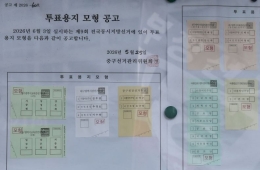
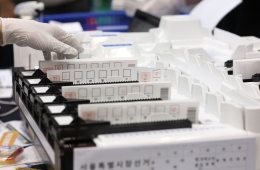
Unprecedented Ballot Paper Shortage... Legal Experts Say "Margin of Votes Key in Election Nullification Lawsuit"
NEC Holds Firm on "No Rerun Election"
People Power Party Strongly Protests, Demands "Election Nullification"
Civic Group Files Complaint Alleging "Dereliction of Duty"
The unprecedented 'shortage of ballot papers' crisis has triggered intense aftershocks. The National Election Commission (hereafter referred to as the NEC) has refused to suspend the vote counting and is maintaining its stance against holding a re-election. However, the People Power Party is claiming a violation of voters' suffrage and has announced plans for strong legal action, including a lawsuit to nullify the election. With signs that this incident may escalate from a mere mishap into a major legal dispute, experts predict that the 'vote margin' between the elected and non-elected candidates will become the key point in determining whether the election results are invalidated.
On June 4, the Civic Group for the Livelihood of Ordinary Citizens (Seominwi) announced plans for legal action by filing a complaint with the Seoul Metropolitan Police Agency at around 9:30 p.m. that day. The complaint accuses the chairperson and secretary general of the NEC, the chairperson and secretary general of the Seoul Election Commission, and the chairperson and secretary general of the Songpa-gu Election Commission of abuse of authority and dereliction of duty.

Greater Focus on Negligence Rather Than Willful Misconduct
Legal professionals have placed more weight on the idea that the NEC's ballot shortage constitutes clear 'poor management' and 'negligence' due to complacent demand forecasting, rather than willful 'dereliction of duty' or election fraud that would warrant criminal punishment.
An advisor at a law firm and former NEC official (hereafter referred to as Mr. A) pointed out, "The NEC, considering the early voting rate (20%), reduced the number of printed ballots for the main election to 50% instead of the customary 80-90%, which was a complacent decision. This is clearly a flaw in election management." However, Mr. A added, "Rather than being a criminally punishable dereliction of duty or intentional election fraud, it should be regarded as a deficiency and negligence resulting from poor management."
The key issue is whether this flaw in election management affected the outcome of the election. Mr. A explained, "If the shortage of ballot papers caused voters to wait for long periods or to leave without voting, this could be seen as a restriction of voting rights. If the number of voters who could not cast their ballots exceeds the vote margin between the elected and non-elected candidates, and it is judged that this could have affected the election results, it may be grounds for invalidating the election."
For example, if 1,000 voters were unable to vote and the gap between the first and second place candidates is less than 1,000 votes, there is a possibility that the election outcome could have been reversed, making this a key issue in an election nullification lawsuit. In particular, how to interpret voters who arrived before 6 p.m. but left while waiting is also a point of contention. A legal professional stated, "If a voter turned back after being informed that there were no ballot papers, this could be regarded as interference with the right to vote due to external factors, and may be viewed differently from a simple voluntary abstention."
Nullification Injunctions and Civil Damages: A Difficult Road Ahead
Even if a lawsuit to nullify the election is filed, it remains uncertain whether an injunction will be granted or a re-election will actually be held.
The legal community sees little likelihood of an injunction for election nullification being granted. An election law expert explained, "It must be acknowledged that there is urgency—that is, damages that are difficult to remedy without suspending the effect of the election. However, for local elections, there are already prompt appeal and election lawsuit systems in place, so the likelihood of an injunction being granted is low." As for individual civil claims for damages related to violation of suffrage, the expert said, "It is difficult to translate violation of suffrage into property damage, and as there are separate legal avenues, it will be difficult for such claims to be upheld."
Hot Picks Today
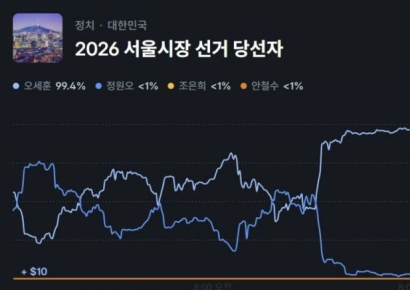 Foreign Investors Lament Huge Losses in an Instant as Oh Sehoon Overtakes Jeong Wonoh in Seoul Mayoral Election Bets
- "I Can No Longer Work With Such an Incompetent Group"... Songpa District Official Slams Election Commission
- "Ballot Boxes Must Leave to Confirm Oh Sehoon," Authorities Say, but "Re-vote Needed"—Jamsil 7-dong Blocks Vote Counting
- Following NVIDIA and TSMC, Even Foxconn Joins: Chairman Chey Tae-won Expands 'AI Alliance' in Taiwan
- "Older Candidate Wins Election as Age Decides Tie with 2,077 Votes Each"
Another issue is that the NEC printed and delivered additional ballot papers on site. A lawyer with a background as a prosecutor criticized, "There are no clear legal provisions regarding the additional printing of ballots on election day. If the NEC can arbitrarily print more ballot papers, this provides strong grounds for those claiming election fraud." He further pointed out, "There are almost no precedents in which the NEC's mistakes have been acknowledged in past election nullification lawsuits. Due to the structural limitation that the NEC functions as a judiciary-centered organization (with heads of election commissions concurrently serving as presiding judges), court decisions tend to be lenient, which is problematic."
© The Asia Business Daily(www.asiae.co.kr). All rights reserved.