Trump Suggests Direct Talks With Mojtaba... Final Gamble in Iran Negotiations
Mediating a Lebanon Ceasefire Proposal
Rubio: "Final Approval from Iran's Top Leadership Still Pending"
U.S. President Donald Trump has made a decisive move in the peace negotiations with Iran. While the U.S. negotiation proposal is essentially ready, Trump stated he is willing to meet with Mojtaba after the final approval from Iran's supreme leadership was delayed.
In an interview released on June 3 (local time) on the New York Post podcast "Pod Force One," President Trump was asked if he would like to meet Iran's new leader Mojtaba Khamenei. He replied, "I've never thought about it, but that's a good question," adding, "Yes, I'd like to meet him." He continued, "I want to meet everyone," and said, "Depending on how things progress, I will probably meet him at some point."

President Trump emphasized that Mojtaba, who is currently believed to be in seclusion, is "clearly involved" in the peace negotiation process. He said, "Iranians respect him greatly," and added, "I've heard that his health is not good, but he is giving approvals in the negotiation process."
Indeed, Secretary of State Marco Rubio also hinted at significant progress in the negotiation during a House Foreign Affairs Committee hearing on the same day. Secretary Rubio stated that the issue of handling Iran's highly enriched uranium (HEU), the biggest sticking point in the peace talks, "is clearly addressed in the documents exchanged between the two sides."
However, he also noted, "As of this morning, we have not yet received final approval from their chain of command," implying that the key to concluding the negotiations lies with Mojtaba Khamenei.
The Biggest Obstacles: Nukes and Lebanon
The main obstacles in the current negotiations are the nuclear issue and the Lebanon front. The U.S. is demanding that Iran either export or dispose of its HEU, while Iran strongly opposes this, viewing it as a matter of national sovereignty. Additionally, as the conflict between Israel and Hezbollah has become a variable in the peace negotiations, the U.S. is making every effort to manage the Lebanon issue as well.
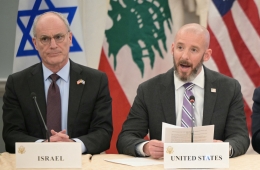
Secretary Rubio appeared at a Senate Foreign Relations Committee hearing on the same day, stating, "Leaders from Lebanon's legitimate government and the Israeli government have been gathered at the State Department for two consecutive days," adding, "We hope to see a joint statement and action plan announced today."
He explained that the plan would focus on building a security system "independent from Hezbollah and malign influences."
The U.S. government has recently determined that Israel's airstrikes in Lebanon are jeopardizing the U.S.-Iran negotiations and has thus taken a proactive role in mediation. President Trump's recent phone call with Israeli Prime Minister Benjamin Netanyahu, in which he expressed strong displeasure with profanity, is evidence of this.
Previously, President Trump reportedly urged Prime Minister Netanyahu to scrap plans for airstrikes on Beirut, saying, "You are crazy. If it weren't for me, you'd be in jail," and, "Because of this, everyone hates Israel," according to Axios. President Trump effectively acknowledged this report in a media interview that day.
The U.S. is currently simultaneously pursuing stabilization of the Lebanon front and the Iran nuclear negotiations, seeking to reach a peace agreement. Secretary Rubio stated, "Operation Epic Fury has ended," and defined the neutralization of most of Iran's military power and weapons production facilities by the U.S. as a "victory."
Hot Picks Today
 Jung Won-oh: "Congratulations to Oh Se-hoon on His Election... I Humbly and Sincerely Accept the Citizens' Choice"
- "Election Fraud" "Invalidate the Count": All-Night Standoff at Jamsil 7-dong as Ballot Boxes Blocked... 470 Police Deployed
- Justice Party Demands Resignation of Election Commission Chair for Fueling Election Fraud Conspiracy Theories
- "Creating Gray Hair with Flour"... Young Chinese Man Gains Tens of Thousands of Followers in 2 Weeks by Imitating Jensen Huang
- Oh Sehoon Achieves Dramatic Comeback in Fierce Battle... June 3 Local Elections: Democratic Party Wins 12 to 4
However, since Secretary Rubio publicly mentioned that "final approval has not been received," it remains to be seen whether the negotiations will be successfully concluded.
© The Asia Business Daily(www.asiae.co.kr). All rights reserved.