[Dream of Becoming a Top 3 AI Power, Interim Report]③"Science and Technology Return to the Heart of National Policy"... Remaining Challenges
Restoration of R&D Budget and Abolition of PBS
Pushing Forward to Become a Top Three AI Power
Full-Scale Transition of Nuri Rocket to the Private Sector
Innovation Needed in Basic Science, Talent, and the Research Ecosystem
"The most significant achievement is that science and technology have once again become central to national policy."
This is the assessment of Jinho Jung, President of the Korean Academy of Science and Technology, regarding the first year of the Lee Jaemyung administration. While there have been achievements such as the restoration of research and development (R&D) budgets and the normalization of the research environment, he notes that structural innovation necessary for Korea to become a leading science and technology powerhouse is only just beginning.

Reference image to aid understanding of the article. The Asia Business Daily Database
View original imageIndeed, the greatest change in the field of science and technology over the past year has been the normalization of the research environment. The government expanded the national R&D budget for 2026 to the 35 trillion won range, making it the largest ever. The budget for basic research was also significantly increased, and efforts were made to abolish the Project-Based System (PBS) and the preliminary feasibility study for national R&D—both long-standing wishes of researchers. These measures reflect a strong commitment to reducing administrative burdens for researchers and enabling them to focus on their work.
President Jung highlighted, "Raising the R&D budget to a record high, creating a Deputy Prime Minister for Science, Technology, and Artificial Intelligence (AI), and starting to consider the capitalization of meaningful failures are signals of a paradigm shift. These go beyond mere recovery and represent a transition of Korean science and technology from a follower model to a challenger model."

Jinho Jung, President of the Korean Academy of Science and Technology. Courtesy of the Academy
View original imageAI policy has been a core pillar of the Lee Jaemyung administration’s science and technology agenda. The government presented the goal of becoming one of the world's top three AI powerhouses as a national project and pursued the establishment of a national AI computing center, securing advanced graphic processing units (GPUs), and developing proprietary foundation models. The position of Chief of Future AI Planning was newly created in the Presidential Office, and the Ministry of Science and ICT was elevated to the status of a Deputy Prime Minister-level ministry for the first time in 17 years.
Kwon Onam, President of the Korea Federation of Science and Technology Societies, also described the past year as "a time to restore the research ecosystem." He stated, "Expanding the 2026 R&D budget to the largest ever and significantly increasing the basic research budget sends a clear message that science and technology are the foundation of the nation's growth." He added, "Abolishing the preliminary feasibility study for R&D and the PBS represents a meaningful institutional reform to allow researchers to focus on research rather than administration."
The Fourth Nuri Launch... Opening the NewSpace Era
In the aerospace sector, the most notable change is the increased participation of private companies. In particular, the successful fourth launch of the Nuri rocket last November is regarded as a symbolic event marking the shift from government-led space development to a new era of private-led space industry.

Nuri No. 4, successfully launched last November at Naro Space Center in Goheung, Jeonnam. Provided by Korea Aerospace Research Institute
View original imageHee-Young Heo, President of Korea Aerospace University, explained, "The fourth launch of Nuri signifies that Korea has entered the NewSpace era. The fact that private companies are now actively participating in space development projects, which had previously been driven by the government, is highly significant."
He continued, "Major companies such as Hanwha Aerospace, Korea Aerospace Industries (KAI), Korean Air, and LIG Nex1 are competitively entering the fields of launch vehicle and satellite development, making the space industry an emerging growth engine. Above all, maintaining policy consistency over the long term is crucial for the space industry."
Companies also view this year as the starting point for establishing the foundation for the industrialization of space development.
A representative from the aerospace industry said, "A cooperative system between the government and companies is being established so that continuous rocket launches can continue even after the Nuri R&D project. A space and aerospace cluster centered on Gyeongnam and specialized zones in various regions are also being promoted. It is a positive development that space development is expanding from the R&D phase to an industrial ecosystem." However, he added, "Because space industry requires a long time for both technological development and industrialization, policy and budget continuity are critical. In particular, it is essential to secure infrastructure, such as low Earth orbit satellite communication networks, to create a market where private companies can achieve economies of scale."
"Beyond Budget Restoration, the Research Ecosystem Must Be Redesigned"
The science and technology community believes that the remaining four years of the Lee Jaemyung administration should be a time for Korea to transform into a leading science and technology nation, achieving a balanced advancement in future strategic technologies such as AI, space, advanced bio, quantum technology, and energy, as well as basic science.

Kwon Onam, President of the Korean Federation of Science and Technology Societies. Courtesy of the Korean Federation of Science and Technology Societies
View original imagePresident Jung identified the "structural reorganization of the R&D research ecosystem" as the most urgent task. He emphasized, "Rather than simply increasing the budget, it is essential to reform the very framework of R&D investment methods. We must create a virtuous cycle in which mission-oriented research for securing national strategic technologies and creative, researcher-led basic research are not separated but reinforce each other."
He continued, "Instead of the government artificially designing the ecosystem, it is important to innovate the system so that the research field itself can generate optimal convergence and innovation. We must establish a structure in which top-down and bottom-up research can create synergy."
Hot Picks Today
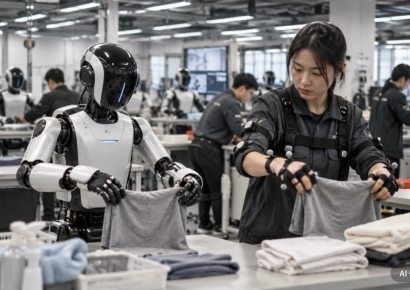 “Washing Dishes and Folding Clothes 200 Times a Day”... China’s “Robot Trainers” Earn Up to 1.2 Million Won a Month
- "Even New York Taxi Drivers Are Talking About the KOSPI; South Korean Market to Top 9,000 Again Within a Year"... 'Wall Street's Stock-Picking Ace' Names His Picks
- “Made 2 Billion Won in One Year in Prison,” PPP Lawmaker Retorts: “If You’re Jealous, Go There Yourself”
- City Bus Driver Who Fell Asleep at the Wheel While 'Drunk' Bought Meth via 'Drop-Off'... Sentenced to 2 Years and 6 Months
- Idol Member Posts Letter Saying "Suspending Activities Due to Pregnancy"... Turns Out She's AI?
President Kwon identified the stability and continuity of research investment as core tasks. He pointed out, "Investments in science and technology must not fluctuate according to political cycles. It takes much more time and cost to restore a collapsed research ecosystem and researchers’ trust." He added, "While intensive investment in AI and strategic technologies is important, the foundation of such efforts should be the robust development of basic research. Above all, preventing the outflow of outstanding talent and creating an environment in which young researchers can continue their work stably are key to national competitiveness."
© The Asia Business Daily. All rights reserved. Unauthorized AI training and use prohibited.