"Blue Tteokbokki? Is It Really Necessary?" Political Color Controversy Intensifies Ahead of Election
Movement of "Color Censorship" Emerges to Avoid Controversy Over Party Colors
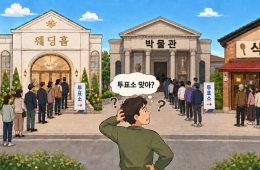
As early voting for the June 3 local elections began, an unexpected wave of "color censorship" is sweeping social media. This is because exposing colors reminiscent of the official shade of a particular political party can potentially spark controversy.
Major parties in the National Assembly use signature colors to increase visibility and reinforce their identity as part of their promotional strategies. For example, the Democratic Party of Korea uses blue, while the People Power Party uses red as their official color.

The issue is that, as the main voting day for the local elections approaches, some social media users are reacting sensitively to posts that display certain colors. Previously, rapper Lee Youngji faced backlash after posting a photo on Instagram with her hair dyed red, with some accusing her of "deliberately revealing a political stance."
As a result, Lee Youngji dyed her hair black again and posted an apology. She said, "I was well aware that this is an important time, but in my eagerness to communicate, I kept posting recent updates without much thought," adding, "I will reflect and learn from this."
Singer Lee Seunghwan also faced difficulties after posting a certification shot of himself participating in early voting while wearing a red T-shirt, which led some users to question his intentions.

Given these circumstances, some users are posting humorous yet sad photos on social media to avoid controversy over political colors. One netizen, for example, posted a tteokbokki photo alongside another tteokbokki photo with a blue filter for their early voting certification post. This seems to have been an effort to prevent the red sauce of the tteokbokki from sparking political color controversy. Some users expressed surprise, saying they admired the effort to maintain political neutrality.
Meanwhile, under current election law, there is no provision prohibiting people from wearing clothes of a certain color on election day.
Hot Picks Today
 "Dozens Ready to Buy": Robotic Hand Maker Thrives Amid Humanoid Boom
- "I Secretly Made 100 Million Won from Stocks Without My Wife Knowing. How Can I Tell Her Without Getting in Trouble?"... Husband's Dilemma Sparks Buzz
- "Despite Warnings Like 'Do Not Go, You May Not Survive'... Debate Erupts in Japan Over Off-Season Mount Fuji Rescue Costs"
- "Target Price Raised from 650,000 to 1,850,000 Won" Semiconductor Substrate Latecomer Rapidly Narrows Technology Gap [Click e-Stock]
- Jensen Huang Looks On as Samsung Unveils HBM5 Model for the First Time: "Will Meet Demands of Nvidia and Other Customers"
However, Article 166-3 of the Public Official Election Act stipulates that it is prohibited to wear items such as armbands or badges that could influence the election. In addition, wearing clothes with a candidate's name or number is also banned.
© The Asia Business Daily(www.asiae.co.kr). All rights reserved.