Oil Price Shock from the Middle East Fuels Rate Hike Expectations for July
Inflation Rises from 2.2% in March to 3.1% in May
Impact Spreads Beyond Gasoline to International Airfares and Laundry Costs
Government Says "Middle East Impact Still Limited"
Governor Shin Hyunsong: "Policy Direction on Inflation Is
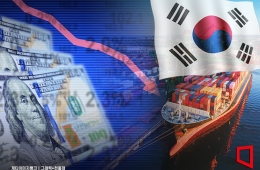
The main reason for consumer prices in May recording the largest increase in 26 months was the "supply shock" triggered by the Middle East war. The impact of rising international oil prices has spread beyond gasoline prices, affecting everything from international airfares to even laundry costs, permeating daily life. As Shin Hyun-song, Governor of the Bank of Korea, noted, "Even when considering prices, growth, exchange rates, and real estate, the policy direction is relatively clear," leading the market to speculate that a base rate hike could come as early as July.

On the 17th, Korean Air employees are cleaning the aircraft fuselage to welcome spring at the Korean Air maintenance hangar in Jung-gu, Incheon. Photo by Jinhyung Kang aymsdream@
View original imageAftermath of the Middle East War...Petroleum Shock Drives Prices Higher Since March
Last month’s consumer price inflation of 3.1% marked the largest increase in 26 months since March 2024 (3.1%). The consumer price inflation rate had declined from 2.3% in December last year to 2.0% in both January and February this year. However, as the impact of the Middle East war became more pronounced, the rate rose to 2.2% in March and 2.6% in April, then jumped by 0.5 percentage points in just one month. The most significant driver was, without question, petroleum products. Due to the prolonged Middle East war and soaring international oil prices, petroleum product prices surged by 24.2% last month, widening the increase from the previous month’s 21.9%. By item, gasoline prices soared by 23.1% and diesel by 33.3%, marking the steepest rise in 3 years and 10 months since July 2022, at the outset of the Russia-Ukraine war. Although processed food prices, such as those for industrial food products (up 0.8%), are stabilizing thanks to reduced factory prices, rising oil prices offset these gains, pushing up industrial goods prices by 4.2%.
The shock from petroleum products was directly transmitted to public services (up 1.8%) and personal service prices (up 3.7%). With the fuel surcharge rising, international airfares surged by 33.5% year-on-year—the largest increase in 31 years since the relevant survey began in February 1995. This was further fueled by increased travel demand during the May holiday season. Lee Dowon, Director of Economic Trends and Statistics at the Ministry of Data and Statistics, explained, "With many red-letter days (holidays), seasonal travel demand increased significantly. The inclusion of airfares and fuel surcharges in group travel expenses, along with domestic airfares, car rental fees, and hotel accommodation costs, led to widespread increases in travel and lodging prices." Additionally, service prices were pushed higher by categories such as housing repair fees and laundry fees, which were affected by rising petrochemical costs.

Shin Hyun-song, Governor of the Bank of Korea, is attending the Monetary Policy Committee's plenary session held at the Bank of Korea in Jung-gu, Seoul on the morning of the 28th and is striking the gavel. Photo by Joint Press Corps/20260528
View original imageWhat’s Different from 2022...A Stronger Case for a Rate Hike
Authorities believe the current situation differs from the surge in prices seen during the 2022 Russia-Ukraine war. At that time, explosive price hikes were driven by a combination of "demand-side" factors, such as revenge spending after COVID-19, and "supply-side" factors from the war. Director Lee said, "Currently, with overall domestic consumption demand subdued, the supply shock from the Middle East is the main driver, so signs of inflationary pressure spreading to other areas such as processed foods, agricultural and fisheries products, and dining out remain limited." A Ministry of Economy and Finance official also said, "It is hard to say the impact of the Middle East war has fully spread yet."
Hot Picks Today
 "Why Owners Spend Hundreds of Thousands to Replace Working Air Conditioner Refrigerant with the Old Type"
- "To Predict When AI Semiconductors Will Slow Down, 'Look Here': Korea Ratings Identifies New Risk Channel"
- Faster Than Her Mother... Stranger Dramatically Saves Child Running Into Traffic
- Jennie Faces Unexpected Backlash Over 'Year-Long Project' Launch: "Please Cut Ties"
- "The Flavor That Won Over Ahn Yujin" Now at Convenience Stores... 500,000 Units Sold Out in 5 Days, What's Behind the Craze?
Nevertheless, as the upward trend in prices is likely to persist, the case for a Bank of Korea rate hike has grown stronger. Governor Shin said after the Monetary Policy Committee's decision to keep the base rate unchanged on the 28th of last month, "Whether we look at prices, growth, exchange rates, or real estate, the path forward is relatively clear. Raising the base rate going forward will provide an opportunity to manage various factors consistently." The next Monetary Policy Committee meeting to decide on the base rate is scheduled for the 16th of next month. If a rate hike materializes, both businesses and households could face greater burdens. Companies would be confronted with the "triple burden" of a strong dollar, high oil prices, and high interest rates. The real estate market, already facing supply shortage concerns, may see transactions further shrink as mortgage rates rise. There are also concerns that increased interest burdens on households could dampen consumption and hinder economic recovery.
© The Asia Business Daily. All rights reserved. Unauthorized AI training and use prohibited.