Deducting One Hour for Overtime of Time-Selected Public Officials Unjust... Supreme Court Overturns Ruling After 8 Years
Supreme Court Overturns Lower Court, Citing Violation of Equality Principle
Union Urges Immediate Action to Eliminate Discrimination
The National Time-Selected Public Officials Labor Union (Chairperson Jung Sunghye) announced on June 1 that the Supreme Court has ruled that the longstanding practice of uniformly deducting one hour when calculating overtime pay for time-selected public officials violates the constitutional principle of equality.

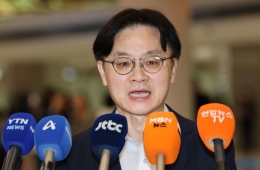
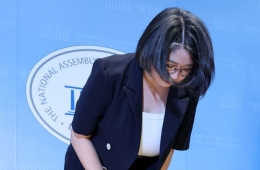
Jeong Sunghye, Chairperson of the Nationwide Part-Time Public Officials Labor Union under the Korean Confederation of Trade Unions Public Officials Labor Union Federation (photo), stated on the 29th regarding the Supreme Court ruling, "This is a historic decision in which the Supreme Court clearly expressed awareness of the issues concerning unpaid labor and discriminatory treatment that part-time public officials have endured for years." Provided by the Part-Time Public Officials Labor Union.
View original imageAccording to the union, on May 29, the Supreme Court overturned the appellate court's decision and remanded the case to the Seoul High Court in a lawsuit (2021Du61741) filed by two union members seeking the return of overtime pay.
Time-selected public officials are general government officials who work between 15 and 35 hours per week. They are appointed through open or career competitive exams and are guaranteed job security until retirement. The union explained that the current overtime pay system was designed based on full-time officials, resulting in a deduction of one hour before the overtime allowance is paid.
The plaintiffs, who are time-selected public officials working 20 hours per week from 9 a.m. to 2 p.m., filed the lawsuit arguing that even when they work continuously until 6 p.m. without a separate meal or break, one hour is still deducted. The union asserted that, as a result, structural discrimination—where they do not receive fair compensation for all actual working hours despite performing the same duties—has continued until retirement.
The Supreme Court determined that the one-hour deduction rule for full-time officials was established in consideration of meal and break times during overtime work after regular working hours. However, this is fundamentally different from overtime work performed by time-selected public officials within their regular working hours. Therefore, according to the union, the Supreme Court concluded that applying the same one-hour deduction rule to time-selected public officials constitutes unjustifiable discrimination and violates the constitutional principle of equality.
This lawsuit was filed in July 2018 after the union made multiple requests for system improvements to the Ministry of Personnel Management that were not accepted. This Supreme Court decision comes after eight years. Another group lawsuit (2022Du31105) filed in the same year by Chairperson Jung Sunghye and 20 others is scheduled for a verdict on June 5.
Chairperson Jung Sunghye stated, "This ruling is a historic decision in which the Supreme Court has clearly recognized the issue of unpaid labor and discriminatory treatment that time-selected public officials have endured for years. Receiving fair wages for actual hours worked is the most fundamental principle of labor." She further urged, "Relevant regulations must be revised immediately to eliminate discrimination against time-selected public officials."
Hot Picks Today
!["Don't Use Chinese-Made Products": One U.S. Warning Triggers a 5 Trillion Won Jackpot for Korean Batteries [Weekend Money]](https://cwcontent.asiae.co.kr/asiaresize/93/2025121709393659037_1765931975.jpg) "Don't Use Chinese-Made Products": One U.S. Warning Triggers a 5 Trillion Won Jackpot for Korean Batteries [Weekend Money]
"Don't Use Chinese-Made Products": One U.S. Warning Triggers a 5 Trillion Won Jackpot for Korean Batteries [Weekend Money]
- "Dividend Payouts of 40 Million Won Before Their First Birthday"...'Baby Shareholders' Put Ordinary Workers at a Disadvantage
- Order Volume Surges by 9,000%...How Generation Z in China Finds Fulfillment With Just 20,000 KRW [China.zip]
- "Planning a Trip to Japan?"... Accelerating Yen Strength [Weekend Money]
- '12 Billion Bottles of Surplus' – Enough for the World to Drink for 3 Years... Wasn't MZ Just Trending Recently?
Cha Hyunil, the attorney representing this case, commented, "It is difficult for anyone to accept calculating four actual working hours as only three hours. I hope this Supreme Court ruling becomes another turning point in correcting the institutional discrimination and unfairness experienced by time-selected public officials."
© The Asia Business Daily. All rights reserved. Unauthorized AI training and use prohibited.