Samsung Electronics Surpasses 2,000 Trillion Won Market Cap for First Time Ever (Update)

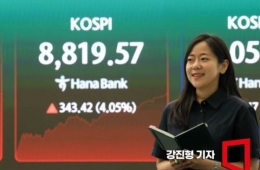
On June 1, Samsung Electronics surpassed a market capitalization of 2,000 trillion won on a common stock basis for the first time ever during intraday trading. Including preferred shares, its market capitalization exceeded 2,200 trillion won.
As of 10:52 a.m. on the same day, Samsung Electronics was trading at 347,750 won, up 9.70% from the previous trading day, marking a new all-time high. The market capitalization of common shares reached 2,037 trillion won, while that of preferred shares was 187 trillion won.
On the previous day, global investment bank Goldman Sachs released a report significantly raising its earnings forecasts and target stock prices for Samsung Electronics and SK hynix, citing the prolonged shortage of memory semiconductors. The company predicted that soaring demand for high-bandwidth memory (HBM) driven by increased investment in artificial intelligence (AI), along with the boom in general-purpose memory, would last longer than expected. Accordingly, it raised the target price for Samsung Electronics from 320,000 won to 480,000 won, and for SK hynix from 1.8 million won to 3.5 million won.
Hot Picks Today
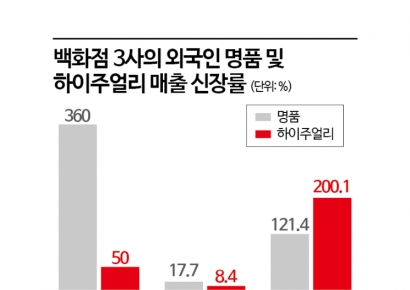 "Buying in China Is a Rip-off" "Saved 550,000 Won on Van Cleef Necklace in Korea"... Surge of Foreign Luxury Shoppers
- 'An Hourly Wage of 1 Million Won'... 40,000 Applicants Flock to Unique Lotte World Part-Time Job Promising Fun
- [Breaking] Samsung Electronics Common Shares Surpass 2,000 Trillion Won Market Cap for First Time
- "Worse Than the War That Killed 3 Million"... Why Japan's Crisis Is So Dire
- "183 Pyeong with Swimming Pool, Cabanas, and Two Gardens: Three-Story 'Super Penthouse' Tempts Wealthy Investors [Real Estate AtoZ]"
Goldman Sachs also projected that the supply-demand situation next year for all memory semiconductor segments—including conventional DRAM, NAND, and high-bandwidth memory (HBM)—would become even tighter than this year. The company anticipated that this supply shortage would persist at least until 2028. The report analyzed that this memory semiconductor supercycle would be accompanied by the most severe memory chip shortage in history.
© The Asia Business Daily(www.asiae.co.kr). All rights reserved.