"Is Prison a Hotel?" vs. "Is Summer a Punishment?"... Heated Debate Over 1.2 Billion Won for Air Conditioning in Prisons
Concerns Grow Over Heat-Related Illness Amid Overcrowding
Cooling Facilities to Be Upgraded in Vulnerable Housing Units
Sharp Debate Over Guaranteeing Inmates' Right to Life and Health

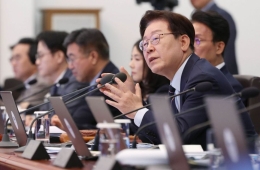
The Ministry of Justice conducted the second on-site inspection of correctional facilities on the 15th at Anyang Prison in Dongan District, Anyang City, Gyeonggi Province. Photo by Yonhap News
View original imageWith the summer season approaching in earnest, debate over air conditioning in correctional facilities has reignited. As room temperatures in detention centers exceed 34 degrees Celsius and cases of heat-related illnesses are reported, arguments are intensifying between those insisting on the need for minimum cooling facilities and critics who say that installing air conditioners for inmates using taxpayer money is excessive.
According to the Ministry of Justice and industry sources on May 31, there are currently no air conditioning units in the living spaces of inmates within correctional facilities. Cooling is only provided in staff offices or in medical buildings. Furthermore, there are no legal standards prescribing appropriate indoor temperatures, so correctional facilities are not legally obligated to take measures to maintain a suitable temperature.
Recently, the National Assembly Research Service published a report titled "Can a Hot Summer Become a Punishment?" urging the establishment of indoor temperature standards within correctional facilities. The report emphasized the need for the Ministry of Justice to set temperature management standards to protect the lives and health of inmates.
The Ministry of Justice plans to allocate approximately 1.2 billion won this year to enhance cooling facilities, focusing on housing units where inmates vulnerable to heat-related illnesses reside.
The main targets of this initiative are housing units where elderly people, people with disabilities, and patients—groups particularly susceptible to heat-related illnesses—are housed. Air conditioners will be installed mainly in the corridors of these housing units, and some female housing units are also included in the plan.
Currently, air conditioners are not installed in general inmate rooms, where only electric fans are provided. Even these fans are operated in a way that forces a 10-minute shutdown after 50 minutes of use to prevent overheating.
Between July 1 and 10 last year, seven cases of heat-related illness were reported in five facilities: Gongju, Gwangju, and Yeongwol prisons, as well as Ulsan Detention Center and Cheonan Open Prison. There have also been fatalities. In 2016, it was belatedly revealed that two inmates in an investigation cell at Busan Prison died of heatstroke.
The issue is exacerbated by overcrowding. According to the Ministry of Justice's "2025 Correctional Statistics Yearbook," as of April this year, the nationwide occupancy rate of correctional facilities reached 126.9%. There have even been cases where more than 10 people are housed in cells designed for five.
However, negative responses continue to appear online. Internet users have criticized the move, posting comments such as "Are prisons hotels now?", "Who will take responsibility for the victims' suffering?", and "Elderly people in tiny rooms should be prioritized over inmates."
The Ministry of Justice has been aware of this public sentiment. In 2019, the National Human Rights Commission of Korea recommended that the Ministry of Justice establish indoor temperature standards for correctional facilities in relevant laws. In July 2020, the Ministry expressed concern that legislating such standards could lead to a surge in state compensation lawsuits. Nevertheless, as criticism of the lack of air conditioning in correctional facilities during heatwaves persisted, the Ministry has decided to move forward with facility improvements this year.
Hot Picks Today
 "Common in Korea, but One Drop at the End... The Global Craze for the 'Taste of Korea'"
- "Target Price Raised from 650,000 to 1,850,000 Won" Semiconductor Substrate Latecomer Rapidly Narrows Technology Gap [Click e-Stock]
- "Still Not Planning to Have Children?" China Pours 24 Trillion Won Into Emergency Measures
- "I Secretly Made 100 Million Won from Stocks Without My Wife Knowing. How Can I Tell Her Without Getting in Trouble?"... Husband's Dilemma Sparks Buzz
- "Please Make More"... Jensen Huang Sends Another Signal to SK hynix HBM with Signature (Comprehensive)
Meanwhile, similar debates are occurring overseas. Last year in Texas, after temperatures inside prisons rose to 48 degrees Celsius, a court granted a temporary injunction in response to a lawsuit filed by inmates. In Japan, the Kyoto Bar Association recommended in 2018 that the warden of Kyoto Detention Center install air conditioners to protect the lives of inmates.
© The Asia Business Daily(www.asiae.co.kr). All rights reserved.