Robust Exports Boost Korea's Economic Growth... Semiconductors Drive Record-High May Performance (Comprehensive)
Exports in May Reach USD 87.75 Billion, Up 53.2%
Surpasses USD 80 Billion for Three Consecutive Months
Semiconductor Exports Hit All-Time High, Up 169.4%
KIET Raises GDP Growth Forecast to 2.5%
Bank of Korea Revises Upward to 2.6%
Last month, exports surpassed USD 87.7 billion, setting a new all-time high for the month of May. This marks the first time that exports have exceeded USD 80 billion for three consecutive months. Robust semiconductor exports led the overall strong performance, prompting not only the Korea Institute for Industrial Economics & Trade (KIET) but also the Bank of Korea to raise their economic growth forecasts for this year.
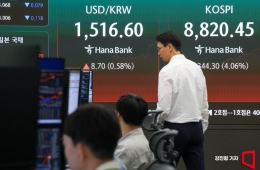
According to the "May Export and Import Trends" announced by the Ministry of Trade, Industry and Energy on June 1, exports last month reached USD 87.75 billion, up 53.2% from the same period last year. The export growth trend that began in June last year has continued for 12 consecutive months. May exports set a new record for the highest monthly total, with total exports surpassing USD 80 billion for three consecutive months for the first time ever.

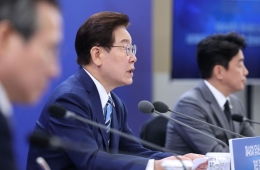
Minister of Trade, Industry and Energy Kim Jeonggwan stated, "With positive export growth recorded in May 2026, Korea has achieved a trade surplus for 12 consecutive months since the launch of the current administration, and the trade balance from January to May has broken the previous annual record for the largest trade surplus." He diagnosed that "despite increased imports due to higher oil prices caused by the Middle East war, exports achieved a higher growth rate as IT products centered on semiconductors, as well as promising consumer goods such as cosmetics and agri-fisheries products, performed well."
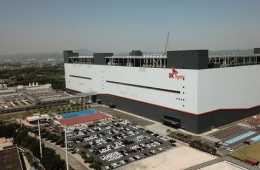
Semiconductors set an all-time monthly high in May, leading the overall export growth. Last month, semiconductor exports amounted to USD 37.16 billion, an increase of 169.4% year-on-year. A ministry official explained, "Due to increased facility investment by major US big tech companies, the fixed price of memory has continued to rise, resulting in record-high monthly performance and more than USD 30 billion in exports for three consecutive months." The official added, "In particular, both DRAM (USD 18.6 billion, up 369.8%) and NAND (USD 1.7 billion, up 206.8%) memory semiconductors showed high growth rates."
With the unexpectedly strong boom in semiconductor exports, both KIET and the Bank of Korea have significantly raised their real GDP growth forecasts for Korea this year. On May 26, KIET announced the "Economic and Industrial Outlook for the Second Half of 2026," raising its GDP growth forecast from 1.9% to 2.5%. On May 28, the Bank of Korea also revised its 2026 GDP growth forecast for Korea from 2.0% to 2.6%. A KIET official stated, "While export growth driven by semiconductor-focused investment is stronger than expected, Korea has managed to hold its ground against risk factors arising from the Middle East war. Korean semiconductors are enjoying secondary benefits from the hyper-competition in artificial intelligence (AI) among big tech companies, and this situation is likely to continue at least until the first half of next year."
In May, 12 out of the 20 major export product categories, including semiconductors, saw export growth. Computer exports (USD 4.18 billion, up 290.7%) increased due to higher demand for solid-state drives (SSD) for AI servers, while exports of wireless communication devices (USD 1.46 billion, up 12.6%) grew due to increased domestic production following strong sales of new products. Display exports (USD 1.47 billion, up 9.4%) also increased slightly, influenced by the launch of new mobile products, resulting in positive growth across all IT categories.
Petroleum product exports (USD 5.25 billion, up 46.6%) increased as high export prices persisted due to rising oil prices. However, export volume decreased by 23.8%. Biohealth exports (USD 1.44 billion, up 5.2%) continued to grow for the seventh consecutive month, supported by the expansion of prescriptions for high-priced new product lines in major countries. Cosmetic exports (USD 1.18 billion, up 24.2%) set a new May record due to growing preference for K-beauty. Agri-fisheries exports (USD 1.07 billion, up 4.7%) recorded overall growth, even though exports of preferred foods (such as coffee, tobacco products, and alcoholic beverages) and processed seafood products (such as dried seaweed and canned goods) declined, as processed agricultural products (such as noodles and bread) increased.

In May, exports increased in seven out of nine major export regions. Exports to China (USD 18.9 billion, up 80.9%) posted a triple-digit growth rate for semiconductors, the largest export item, while consumer goods such as agri-fisheries products and cosmetics also performed well, resulting in positive growth for seven consecutive months. Exports to the United States (USD 15.97 billion, up 59.1%) saw strong results for semiconductors, computers, and electrical equipment related to AI investment, although automobiles and auto parts underperformed. Steel exports to the US also increased, focusing on construction materials, despite the presence of tariffs.
Exports to ASEAN (USD 15.85 billion, up 58.4%) reached a record monthly high, with balanced growth in semiconductors, petroleum products, displays, and petrochemicals, which are key export items. Exports to the European Union (EU) (USD 6.19 billion, up 2.4%) saw sluggish automobile exports, but semiconductor and computer exports registered triple-digit growth. Other items such as petrochemicals and general machinery performed well, resulting in six consecutive months of growth. However, exports to the Middle East (USD 1.27 billion, down 7.7%) declined for many items, including automobiles and auto parts, due to continued logistics disruptions caused by the Middle East war. On the other hand, certain items such as general machinery and petrochemicals showed strong performance due to increased demand within the region.
Imports in May increased by 20.8% to USD 60.8 billion. Energy imports (USD 11.75 billion) rose by 15.9%, while non-energy imports (USD 49.05 billion) increased by 22.0%. Crude oil imports, affected by the Middle East war, saw a decrease in volume, but the rise in import prices due to higher oil prices led to a 25.0% increase, reaching USD 8.5 billion. Non-energy imports such as petroleum products (USD 2.55 billion, up 71.0%) and semiconductor equipment (USD 2.56 billion, up 71.0%) also increased.
As exports grew much more than imports, the trade surplus in May reached USD 26.95 billion, an increase of USD 20.03 billion from a year earlier. As a result, the cumulative trade surplus for January to May this year reached USD 101.91 billion, breaking the previous annual record for the largest trade surplus.
Hot Picks Today
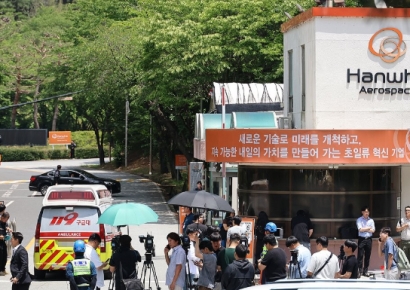 Hanwha Aero Daejeon Plant Explosion: 5 Dead, 2 Injured
- Fire at SK hynix Cheongju Plant... 3,600 Evacuated After Hydrofluoric Acid Leak
- "Buying in China Is a Loss" "Saved 550,000 Won on Van Cleef Necklace in Korea"...Foreign Luxury Shoppers Flock In
- "Worse Than the War That Killed 3 Million"... Why Japan's Crisis Is So Dire
- "183 Pyeong with Swimming Pool, Cabanas, and Two Gardens: Three-Story 'Super Penthouse' Tempts Wealthy Investors [Real Estate AtoZ]"
Minister Kim stated, "Uncertainties in the trade environment remain, such as the outcome of the Middle East war, US tariffs, and the EU's steel tariff rate quotas (TRQ). The government will work closely with major countries to mitigate trade risks for Korean companies and foster a stable export environment, while also actively supporting corporate production and export activities through the stable introduction and supply chain monitoring of key imported raw materials such as crude oil and naphtha."
© The Asia Business Daily(www.asiae.co.kr). All rights reserved.