U.S. Expands AI Chip Export Controls to Overseas Subsidiaries of Chinese Companies
Key Channels Such as Malaysia Identified
Evidence Emerges of Securing Semiconductor Chips
"Regulatory Uncertainty Expected to Increase"
The U.S. Department of Commerce has stepped in to address regulatory loopholes after it was revealed that Chinese companies have been securing NVIDIA's cutting-edge artificial intelligence (AI) semiconductors through overseas subsidiaries in regions such as Malaysia, Singapore, and the Middle East.

Exterior view of NVIDIA headquarters in Taipei, Taiwan. Photo by EPA Yonhap News
View original imageOn May 31 (local time), the U.S. Department of Commerce announced new guidelines extending advanced AI chip export controls to overseas subsidiaries of companies headquartered in China. This means that sales will be blocked not only for direct exports to China, but also for overseas companies whose parent or headquarters is based in China. This regulatory gap appears to have emerged because the 'AI proliferation' rules, introduced late in the Biden administration, were effectively not enforced by the Donald Trump administration last year.
Industry sources suggest that over the past year, hundreds of thousands of AI chips may have flowed to China-related companies. In particular, subsidiaries of Chinese AI companies in Southeast Asia, such as Malaysia, are analyzed to have played a key role as conduits. However, the new guidelines do not prohibit the use or maintenance of AI chips that have already been installed, so there is not expected to be an immediate major disruption to existing data center operations.
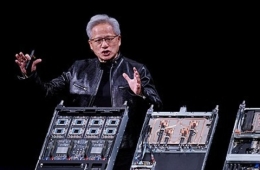
Experts believe that this measure could increase regulatory uncertainty not only for NVIDIA and AMD, but also for the entire semiconductor supply chain passing through Southeast Asia. Previously, AMD CEO Jensen Huang described the Chinese AI chip market as "a multi-billion-dollar opportunity." NVIDIA's market share in China's data center GPU market once reached as high as 95%, but has now dropped to nearly zero due to direct U.S. export restrictions and Chinese government guidance to use domestic semiconductors.
Chris McGuire, a technology and national security expert and former State Department official, pointed out on his social media platform X (formerly Twitter) that this loophole allowed Chinese companies' overseas subsidiaries to purchase NVIDIA Blackwell chips without a license, calling it "a huge problem." He also called on the U.S. government to verify the actual quantities shipped so far and the specific scale of the damage.
He further highlighted the need for stricter due diligence regarding AI chip orders from foundry (contract manufacturing) companies such as Taiwan's TSMC, pointing to this as "another loophole." While U.S. export control regulations require TSMC to conduct strengthened due diligence on orders that could be AI chips, he argued that most of the licensing requirements necessary for these rules to function are not being enforced. He stated, "If Chinese companies can manufacture chips at TSMC, then restricting China's access to AI chips and advanced semiconductor manufacturing equipment becomes meaningless."
Hot Picks Today
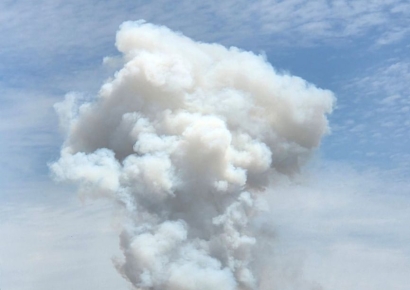 After Promise of Automation Following 8 Deaths, Hanwha Daejeon Plant Faces Another Serial Explosion Tragedy
- [Exclusive] Chey Tae-won: "There's Nothing NVIDIA Doesn't Do"... Beaming at Jensen Huang's 'AI CPU Roadmap'
- "It Was 1 Million Won Three Years Ago, Now It's Free... Take Them for Nothing": Why Farmers Are in Despair
- "Why Aren't There Political Parties for Superintendent?"... Man in His 60s Booked After Tearing Ballot Paper in Dispute
- Thanks to 5-Year-Old Friends Holding the Door, Girl Escapes Kidnapping Attempt
The market is closely monitoring the potential impact of these strengthened regulations on companies. According to U.S. financial media outlet Benzinga, following the initial release of the global AI chip export control draft, NVIDIA's stock price declined by 1.8% while AMD's fell by 2.2%. The outlet reported that a similar, though relatively limited, market reaction may be reflected on June 1 as well.
© The Asia Business Daily(www.asiae.co.kr). All rights reserved.