[6·3 Election] Gwangju-Jeonnam's First Education Chief Race Turns Into 'Legal Battle' and 'Risk Controversy'
Unified Voices on '1.2 Million Won Annual Stipend'... Divergence on Funding Solutions
Daejung Kim Pushes Back Against 'False Negativity'... Aiming to Prove Innocence
Jeongseon Lee and Ganho Jang Fall to 'Defendant' Status Amid Negative Campaign Blowback
Sukkyoon Kang's '5-4-3 School System Reform'... Facing Dual Challenges of Low Recognition and Feasibility
With only three days left until the inaugural Jeonnam-Gwangju Integrated Metropolitan City Superintendent of Education election, competition among candidates over policy proposals has escalated into a series of legal accusations and risk-related controversies, causing voter sentiment among undecided voters to fluctuate.
Notably, three of the candidates have, as if coordinated, made the annual 1.2 million won student stipend their main pledge. However, instead of rigorously verifying how such astronomical funding would be secured, the candidates have engaged in negative campaigning that is increasingly being taken up by the judicial authorities.

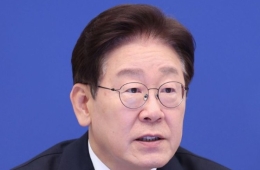
(From left) Sukyoung Kang, Jeongseon Lee, Daejung Kim, Jang Ganho, candidates for Superintendent of Integrated Education
View original imageUnified Voices on '1.2 Million Won Annual Stipend'... Divergence on Funding Solutions
The most prominent feature of this election is that the main candidates commonly propose cash stipends equivalent to about 1.2 million won per household per year (100,000 won per month). However, their approaches to securing these funds and their macro-level policy directions differ significantly.
First, candidate Daejung Kim, leveraging his experience implementing a 1.2 million won annual student education stipend during his previous tenure as Jeonnam Superintendent, has put forward the creation of a massive 1.5 trillion won education scholarship fund as a means to ensure stable financing.
His plan is to go beyond mere cash welfare, seeking to strengthen infrastructure to counteract the threat of local extinction. In addition, he has promised to establish a new education office in the eastern part of Jeonnam, which could be marginalized after integration, thereby targeting the votes of each region with tailored pledges.
In contrast, candidate Jeongseon Lee has emphasized the immediate impact of a customized educational environment that parents can feel. Lee's signature proposal is to offer a 'basic education stipend' of 1.2 million won per year to every elementary, middle, and high school student, along with providing 'one AI tutor per student' as a core initiative. The aim is to drastically reduce private education costs through public sector intervention.
Additionally, Lee plans to narrow educational gaps between urban Gwangju and outlying areas of Jeonnam by prioritizing the placement of outstanding teachers in island and rural regions, thereby raising the overall standard of education.
Challenger candidate Ganho Jang has also responded by proposing the comprehensive expansion and linkage of the child allowance system up to the third year of high school, promising a 'basic education stipend of 100,000 won per month (1.2 million won per year) up to high school seniors.' Jang claims, "Breaking the vicious cycle where parental income disparities lead to disparities in children's educational opportunities is not populism, but the enhancement of education's public value."
A former teacher and former head of the Jeonnam branch of the Korean Teachers and Education Workers Union, Jang also pledges to break established administrative interests by promoting school autonomy and expanding site-centered educational budgets.
Meanwhile, the most radical structural reform proposal comes from candidate Sukkyoon Kang, who has distanced herself from the cash stipend competition. Kang has announced the nation's first pilot implementation of a '5-4-3 school system reform,' which replaces the current 6-3-3 system (6 years elementary, 3 years middle, 3 years high school) with 5 years of elementary, 4 years of middle, and 3 years of high school.
She further promises institutional overhauls such as establishing a Jeonnam-Gwangju public broadcasting station modeled after EBS and introducing the 'Five-Day Care School' program, guaranteeing 100% state responsibility for care during weekends and evenings. Through these proposals, Kang is positioning herself as a distinctive alternative within the education sector.
Pledges Overshadowed by Negativity... Daejung Kim's 'Head-on Response' vs. Jeongseon Lee and Ganho Jang as 'Defendants'
However, as the election enters its final stage, these policy battles are being overshadowed by the candidates' vulnerabilities and legal disputes. Given the high ethical standards required for the superintendent of education, last-minute risk management has become the biggest variable.
The greatest impact has come from Daejung Kim's strategy of 'simultaneous legal complaints.' Kim's camp has flatly denied the rival camp's allegations of 'casino visits during overseas business trips and attempted bribery of 1 billion won,' calling them "blatant falsehoods and malicious slander."
In order to block what he views as excessive negativity and prove his integrity, Kim has filed an official complaint with the judicial authorities against Jeongseon Lee, who raised the allegations, and Ganho Jang, who spread past investigative rumors, on charges of violating the Public Official Election Act (spreading false information) and defamation. His strategy is to solidify his lead by demonstrating his innocence through a forceful legal response.
Jeongseon Lee, who counterattacked with the '1 billion won inducement' allegation, has now become a defendant after being sued by Kim's camp for violating the Public Official Election Act. With an ongoing trial related to alleged abuse of power in the hiring of an auditor who was a former classmate, and now an additional lawsuit, his legal risks have reached their peak.
Likewise, Ganho Jang has also been sued by Kim's camp, putting a brake on the momentum he had been building toward the end of the race. Within educational circles, some point out that becoming a defendant just before the election reinforces Jang's hardline image associated with the Korean Teachers and Education Workers Union's emphasis on struggle. The combination of the 'declining basic academic skills' frame—often cited as a weakness of progressive superintendents—with the 'legal dispute' frame is making it difficult for him to win over moderate voters.
Sukkyoon Kang, meanwhile, has largely avoided controversy but faces the challenge of 'time and recognition.' Raising her low name recognition, which is around 5% in polls, within three days is her most urgent task. In particular, while Kang's '5-4-3 school system reform' proposal represents a sweeping, macro-level discourse to change the national education framework, doubts remain as to whether it can be realized within the three-year term of the superintendent, given the need for consultation with the Ministry of Education and alignment with existing legal frameworks.
Superintendent Election Lacking Structural Funding Verification... Undecided Voters in Focus
A local education official commented, "All three candidates have pledged stipends worth about 1.2 million won per year, but there has been no economic fact-checking on how the integrated education office could sustainably afford this within its limited budget." He added, "As the first integrated superintendent election devolves into intense negativity, political disillusionment among undecided voters is reaching its peak."
Hot Picks Today
!["Worse Than the Thai Baht?"... Won Hits 1,560: What’s Happening [Exchange Rate Surges Past 1,500]①](https://cwcontent.asiae.co.kr/asiaresize/93/2026032713450493637_1774586703.png) "Worse Than the Thai Baht?"... Won Hits 1,560: What’s Happening [Exchange Rate Surges Past 1,500]①
"Worse Than the Thai Baht?"... Won Hits 1,560: What’s Happening [Exchange Rate Surges Past 1,500]①
- Added Hyundai Motor to Samsung and SK hynix... What Is the '20x' Leverage Product? [Weekend Money]
- "$2.3 Billion for a Potato?"... Woman Sues Outback After Falling, Cites Emotional Distress
- "Why Did I Leave This Here?"...Forgotten Lottery Ticket in Truck Wins $50,000 Prize
- "The Cockroaches Are Coming"... Outraged Gen Z Group Holds First Street Protest
Ultimately, the final point of interest in this first integrated superintendent election is whether Kim's 'simultaneous legal complaint' strategy—deployed three days before the election—will serve as a wedge to block negative campaigning and rally his base by proving his innocence, or whether the downfall of Jeongseon Lee and Ganho Jang into defendants, with the resulting loss of moral authority and heightened legal risk, will shape the outcome.
© The Asia Business Daily(www.asiae.co.kr). All rights reserved.