"What Does Your Father Do? When Are You Getting Married?" Gen Z Ranks Top Worst Interview Questions
87% of Job Seekers Say "Company Image Changes After Interview"
Most Unpleasant Question: "Personal Questions" at 33%
More than 8 out of 10 Gen Z job seekers perceive interviews not simply as part of the hiring process, but as an opportunity to evaluate the company itself.

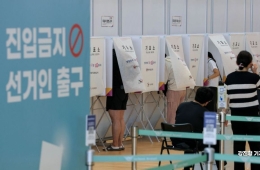
On the 28th, students are seen attending interviews at the "2025 Korea High School Graduate Talent Recruitment Expo" held at KINTEX in Goyang, Gyeonggi Province. This photo is unrelated to the article. May 28, 2025. Photo by Dongju Yoon.
View original imageOn May 28, Jinhaksa Catch released the results of its survey on “interview experiences,” conducted with 1,652 Gen Z job seekers.
According to the survey, 87% of respondents said that their impression of a company changed after an interview. Among them, 58% reported that their perception became more positive, while 33% said they experienced both positive and negative changes. Only 9% said their view became more negative after the interview.
The attitude and questioning style of interviewers, as well as the overall interview process, were found to be key factors in shaping perceptions of a company’s culture and organizational atmosphere.
Four out of ten respondents with interview experience said they had been asked uncomfortable or inappropriate questions during the process. The most common type of unpleasant question was “personal questions” unrelated to the job, such as those about marriage, childbirth, or family relationships, accounting for 33%. This was followed by excessive pressure questions (19%), insincere attitudes from interviewers (12%), ambiguous questions (12%), questions belittling education or major (11%), appearance-related questions (6%), and attempts to provoke negative comments about previous employers (5%).
When asked what makes for a good interview, applicants cited preparedness and respect from interviewers as the top qualities. Multiple responses were allowed, and “prior review of application documents” was the most important factor at 53%, followed by “an atmosphere of attentive listening and respect” at 51%. Other valued elements included providing interview allowances (20%), offering feedback regardless of the outcome (20%), sufficient advance information (20%), starting and proceeding on time (14%), giving candidates the opportunity to ask questions (14%), and providing a separate waiting area and on-site guidance (9%).
Hot Picks Today
!["Big Gains for Holders... Up 566% and Still More to Go" Target Price Raised, But Here’s Why Caution Remains [Weekend Money]](https://cwcontent.asiae.co.kr/asiaresize/93/2025090513580721483_1757048288.jpg) "Big Gains for Holders... Up 566% and Still More to Go" Target Price Raised, But Here’s Why Caution Remains [Weekend Money]
"Big Gains for Holders... Up 566% and Still More to Go" Target Price Raised, But Here’s Why Caution Remains [Weekend Money]
- "Data Centers Ignite ESS Order Rally Expectations for This Company [Weekend Money]"
- "Achieving 1 Billion Won Through Stocks" Office Worker Remains Optimistic Despite Mandatory Paid Leave and Halved Salary
- Secretary Hegseth: "U.S.-China Relations at Their Best in Recent Years"...Tones Down Tough Rhetoric on China
- "Best Homeroom Teacher"... Hong Kong Education Sector in Shock Over Spread of "Princess Carry" Photos
When it came to interview attire, 47% preferred business casual, while 43% favored formal suits, and only 10% preferred a free dress code. As for preferred interview formats, task or presentation interviews were most popular at 29%, followed by panel interviews (26%), group discussions (25%), and artificial intelligence (AI) interviews (19%).
© The Asia Business Daily(www.asiae.co.kr). All rights reserved.