Marriage Brokerage Agency Employees Who Sent Photos of Vietnamese Women: Supreme Court Says "No Joint Principal Punishment with Corporation"
Marriage Brokerage Agency CEO and Staff Sent Vietnamese Women's Photos
Supreme Court: "Marriage Brokerage Agency Is the Corporation, Not the Individual Representative"
"Employee Liability Should Be Determined by Dual Liability Provisions"
The Supreme Court has ruled that employees of an international marriage brokerage agency, who were indicted for sending facial photos and physical information of Vietnamese women to an unspecified number of people via messenger, cannot be punished as co-principals together with the corporation. The reason is that the general criminal law provisions on accomplices cannot be applied between the legal entity as the perpetrator and its affiliated employees.

According to the legal community on June 1, the Supreme Court (Presiding Justice Shin Sookhee) recently overturned the appellate court decision and remanded the case for retrial in the appeal of Park (the company CEO), Bang (team leader), and Oh (employee), who were indicted for violating the Act on the Management of Marriage Brokerage Business. The Supreme Court acquitted Park and reversed the lower court's ruling, which had imposed fines on the other employees.
In May and July 2021, they were brought to trial on charges of sending KakaoTalk messages containing Vietnamese women's facial photos and information such as height and weight to subscribers of the company's website, soliciting them to enter into formal contracts. The prosecution argued that their actions violated the Marriage Brokerage Business Act, which prohibits advertisements that might promote discrimination or prejudice based on race, gender, or similar grounds.
The court of first instance found all three guilty, sentencing CEO Park and team leader Bang each to a fine of 2 million won, and employee Oh to a fine of 1 million won. In contrast, the appellate court held that the subject of the legal violation was the marriage brokerage agency, which is a corporation, not the representative as an individual, and acquitted Park. However, it found the two employees guilty as co-principals with the corporation, reasoning that even though they were not the main subject, their participation in the act constituted joint principal liability with the corporation.
However, the Supreme Court took a different view. It pointed out that the relationship between a corporate employer and the actual perpetrator employee cannot be regarded as the same as co-principals under criminal law, and therefore, special statutory provisions on dual liability should be applied to the employees, not the general law on accomplices. The court also added that, in the case of Park who was acquitted, if there was inconsistency in the prosecution's indictment, the court should have exercised its authority to clarify the issue through an explanatory procedure.
Hot Picks Today
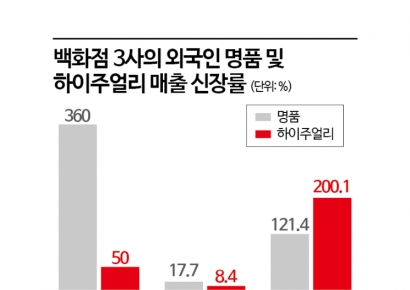 "Buying in China Is a Rip-off" "Saved 550,000 Won on Van Cleef Necklace in Korea"... Surge of Foreign Luxury Shoppers
- 'An Hourly Wage of 1 Million Won'... 40,000 Applicants Flock to Unique Lotte World Part-Time Job Promising Fun
- BTS and BLACKPINK Fill Wembley and Tokyo Dome, but in Korea They Struggle for Stadium Slots Amid Turf Concerns [K-pop’s Home Lacks a Performance Dome]
- "Worse Than the War That Killed 3 Million"... Why Japan's Crisis Is So Dire
- "183 Pyeong with Swimming Pool, Cabanas, and Two Gardens: Three-Story 'Super Penthouse' Tempts Wealthy Investors [Real Estate AtoZ]"
The bench stated, "The appellate court erred in acquitting the representative without exercising the explanatory authority to have the prosecution clarify or amend the indictment, and in finding the employees guilty as co-principals of the corporation. This reflects a misunderstanding of the legal principles regarding dual liability and co-principals, and a failure to properly deliberate the case," thus overturning and remanding the case for retrial.
© The Asia Business Daily(www.asiae.co.kr). All rights reserved.