Up to 2.48 Million Won Fair Allowance for Fixed-Term Workers in the Public Sector... Non-Regular Worker Measures Implemented
Follow-up Measures to Improve Treatment of Non-Regular Public Sector Workers
382,000 Won for Those Working Less Than One to Two Months
Starting in 2027, the government will introduce a 'fair allowance' and 'adequate wage' system for fixed-term workers in the public sector. The pre-screening system for non-regular worker recruitment will also be expanded to include subsidiaries and funded institutions, aiming to prevent the excessive use of non-regular workers in advance.
On May 29, the Ministry of Employment and Labor announced that, as a follow-up to the "Measures to Improve the Treatment of Non-Regular Workers in the Public Sector," jointly released with related ministries, it has prepared and will implement the "Guidelines for Improving the Treatment of Non-Regular Workers in the Public Sector" and the revised "Operation Plan for the Pre-Screening System for Non-Regular Worker Recruitment in the Public Sector." The revisions focus on improving unfair employment practices toward non-regular public sector workers, and on clarifying the standards for compensating labor value and employment instability.

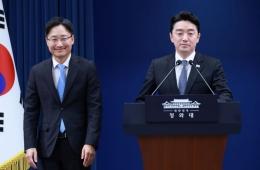
Kim Younghoon, Minister of Employment and Labor, is speaking about improvements to subcontracting operations in the public sector at the Labor Safety Ministers' Meeting held on April 16, 2026, at the Government Complex Seoul in Jongno-gu, Seoul. Photo by Jo Yongjun
View original imageAccording to the guidelines, from 2027, the fair allowance and adequate wage systems will apply to fixed-term workers directly employed in the public sector, including central government agencies, local governments, public institutions, local public enterprises, subsidiaries, and funded or invested institutions. The fair allowance is introduced to compensate for the employment instability of fixed-term workers employed for less than one year who are not eligible for severance pay. It will be paid in a lump sum at the end of the contract period, calculated based on the actual period worked.
Those who work less than one to two months will receive 382,000 won, and those who work less than eleven to twelve months will receive 2,488,000 won. This payment will also be provided to ultra-short-term workers in proportion to their working hours. The adequate wage will apply to fixed-term workers directly employed in the public sector whose monthly fixed wage falls below the designated standard. The government plans to uniformly raise monthly fixed wages so that they reach at least 118% of the minimum wage.
The government will also seek to improve the practice of dividing non-regular worker contracts into shorter terms. Except in cases where it is unavoidable due to the nature of the work, institutions will be encouraged to sign employment contracts of at least one year. Practices such as delaying the contract start date due to holidays will also be discouraged. Management of non-regular worker status at each institution will be strengthened. Each institution will be required to review the size and wage levels of its non-regular workforce annually, and if the number of non-regular workers increases by 10% or more compared to the previous year, the reasons for the increase must also be managed. Higher-level agencies will be required to guide and inspect compliance with the guidelines at their affiliated organizations and subsidiaries at least once a year.

The pre-screening system to prevent the abuse of non-regular workers will be completely overhauled for the first time in seven years. The institutions subject to review will be expanded from mainly central government, local governments, and public institutions to also include subsidiaries and institutions funded or invested in by local governments. When dispatch or outsourcing is used, or when hiring short-term non-regular workers, it will be necessary to review whether the work is regular and continuous. The review will also include whether contracts of less than one year or ultra-short-term work are unavoidable, and whether a budget for adequate wages and fair allowances has been allocated.
Hot Picks Today
 "I Invested KRW 10 Million, Only KRW 2 Million Is Left" ... 77% Plunge Sends Retail Investors Who Piled Into Samsung Electronics and SK hynix Leveraged ETFs Crying Out
- "There's a Drink Like This?"... Chinese Beverage With "Korean" in Its Name Rakes in 85 Million Won in Monthly Sales
- "No Need to Hire a Model"... The 25-Year-Old Woman Who Entered Social Media with a Face That Cost Just 1,500 Won [AI Content: The Bright and Dark Sides] 1
- U.S. FTC Investigates OpenAI, Anthropic Over 'Hacking Controversy'; Summons Executives
- "The leggings are all see-through. It's so embarrassing to look at," complaints prompt Lululemon to fire development staff.
The pre-screening committee will be composed of at least five members, with a mandatory requirement that at least 40% are external members. The Ministry of Employment and Labor plans to establish regional expert groups to support external member pools. Kim Younghoon, Minister of Employment and Labor, stated, "We have institutionalized these measures to create workplaces in the public sector where the labor value of non-regular workers is respected, setting an example as a model employer. Together with related ministries, we will ensure that these improvements are felt in the field through guidance, labor inspections, and evaluations."
© The Asia Business Daily. All rights reserved. Unauthorized AI training and use prohibited.