"Despite Recession Fears, the Market Holds Steady... Record-High Card Delinquencies, Yet Stocks Hit New Highs [Weekend Money]"
Influence of the Upper Class on Consumption Grows
Lower-Class Spending Slows, but Impact Remains Limited
U.S. stock markets continue to reach new record highs, yet consumer sentiment is declining. Analysts say this reflects a shift in the U.S. economy, where corporate investment now has a greater impact than consumer spending.
!["Despite Recession Fears, the Market Holds Steady... Record-High Card Delinquencies, Yet Stocks Hit New Highs [Weekend Money]"](http://www.asiae.co.kr/news/img_view.htm?img=2026051208405358610_1778542853.png)
According to Hana Securities' report titled "Asset Allocation Window: What Is Supporting the U.S. Economy Right Now," the overall sentiment in the U.S. economy is weakening, but capital is flowing into asset markets.
The three major U.S. indices are on the rise. As of May 28 (local time), the S&P 500 Index closed at 7,563.63, up 43.27 points (0.58%) from the previous trading day. The Dow Jones Industrial Average increased by 24.69 points (0.05%) to 50,668.97, and the Nasdaq Index ended at 26,917.47, up 242.74 points (0.91%). Both the S&P 500 and the Nasdaq set new all-time highs.
The U.S. economy is experiencing a slowdown. Credit card delinquency rates have exceeded 13%, the highest level since the financial crisis. The University of Michigan's final consumer sentiment index for May dropped 5 points from the previous month to 44.8, marking its lowest level.
The report analyzes that this trend is due to changes in the U.S. consumption structure. The influence of upper-income households on U.S. consumption has grown compared to the past. The top 10% of U.S. households hold approximately 87.5% of U.S. stocks and account for 67.5% of total wealth. The benefits of rising asset prices are concentrated among the upper class. Even if consumption among lower-income groups—who are directly exposed to credit card debt and housing costs—slows down, the economy remains stable as long as upper-class consumption is sustained. This marks a shift in the economic structure.
It is now corporate investment, more than consumer spending, that drives the U.S. economy. In the U.S., investment in data centers, servers, and other computer and peripheral equipment has increased by 73% year-on-year, and by about 149% since the end of 2022. The expansion of capital expenditures (CAPEX) by big tech companies is stimulating not only the semiconductor industry but also sectors such as power and network equipment. The U.S. economy is thus shifting from a consumption-driven model to one centered on artificial intelligence (AI) and CAPEX.
Hot Picks Today
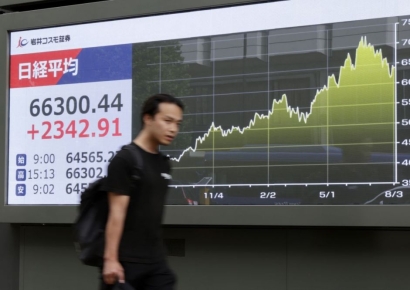 "Ruined Because of Korea" Even with a Sharp Rally, No One Buys... Japanese Market Sways with KOSPI
- '1,670,000 Won to 1,170,000 Won': SK hynix Hits Lower Limit Shock, Pre-market Opening Price Controversy
- [Breaking] US Imposes 15% Tariff on Polysilicon Derivatives... Takes Effect in 120 Days
- "Don't Be Sad, Mom Was Very Happy"... Son Battling Illness for Life Saves Four Before Passing Away
- A Korean Must-Have Item, But...Experts Warn: "Wearing Them Like That Is Dangerous"
Youngjoo Lee, a researcher at Hana Securities, said, "The key variables in the U.S. market are not just the slowdown in consumption, but whether AI investment can continue and whether asset prices can be maintained. To understand the U.S. market, it is important not only to watch for signs of weakening consumption, but also to examine which areas are absorbing liquidity and capital."
© The Asia Business Daily. All rights reserved. Unauthorized AI training and use prohibited.