[Exclusive] Medical Academy Opens Its Doors to Corporate Leaders for the First Time in 22 Years
Sanghoon Lee, CEO of ABL Bio
Becomes Full Member in the Biological Sciences Division of the Academy
First Pure Corporate Executive to Join
![[Exclusive] Medical Academy Opens Its Doors to Corporate Leaders for the First Time in 22 Years](http://www.asiae.co.kr/news/img_view.htm?img=2026052910290581453_1780018145.png)
The National Academy of Medicine of Korea (hereafter referred to as the Academy), the nation’s most prestigious academic organization in the field of medicine, has accepted its first full member from a purely corporate background. This is the first time in 22 years since its founding in 2004. This move is seen as an effort to broaden the connection between the medical community and the industry, in line with the era of medical science where basic research, clinical research, and industrialization are increasingly interconnected.
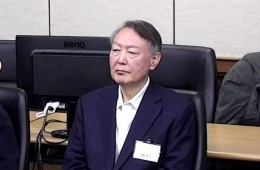
According to sources in the medical and bio industries on May 28, the Academy recently selected 63 new regular members for this year, and Sanghoon Lee, CEO of ABL Bio (from the biology division), was among those selected. While there have been entrepreneur members such as Jeong Sun Seo, Chairman of Macrogen (former professor at Seoul National University Medical School), and Woongyang Park, CEO of Geninus (professor at Sungkyunkwan University School of Medicine), all of them have academic backgrounds as professors at universities. Sanghoon Lee is the first member whose career has not included any academic appointments.

A regular member of the Academy is often called a “professor of professors.” Candidates must have graduated from a medical school or related university at least 25 years prior, and have accumulated more than 20 years of research experience in their field. On top of this, representative papers (at least 30), academic books, editorial activities for journals, and experience in holding key positions in academic societies or universities are all considered in the evaluation. Until now, only medical school professors or researchers from research institutes have passed this rigorous selection process.
Sanghoon Lee is regarded as someone who has maintained his identity as a researcher while managing a company. He graduated from the Department of Biology at Seoul National University College of Education and earned his PhD from Ohio State University in the United States. After gaining experience in new drug development at global pharmaceutical companies such as Genentech and AstraZeneca, he founded ABL Bio in 2016. He has achieved several global technology transfer deals based on bispecific antibodies and blood-brain barrier (BBB) penetration technology. Despite his role as a CEO, he has also published numerous papers in SCI-level journals (prestigious academic journals indexed in the Science Citation Index).
The selection of a bio company CEO as a regular member is drawing attention because the Academy has taken a somewhat different approach compared to other national academies. While the Academies of Medicine, Science, and Engineering are referred to as “sibling institutions,” their relationship with industry has differed. The National Academy of Engineering of Korea has included major industry figures such as Taemoon Roh, CEO of Samsung Electronics, and Taekjin Kim, CEO of NC, as regular members, and dozens of business leaders join every year. Their selection criteria explicitly include industrial contributions, and there is a dedicated council of top corporate executives. The National Academy of Sciences of Korea, while focusing on academic achievements, has also opened its doors to researchers from both academia and industry. In contrast, the National Academy of Medicine of Korea has maintained a relatively conservative stance regarding industry participation.
![[Exclusive] Medical Academy Opens Its Doors to Corporate Leaders for the First Time in 22 Years](http://www.asiae.co.kr/news/img_view.htm?img=2026052907580280847_1780009082.jpg)
This change is driven by a strong internal commitment within the Academy. Hansang Won, President of the Academy, told The Asia Business Daily in a phone interview that this year’s activity goal was set as “the transition to medical science.” The intention is to move away from the exclusivity that only physicians can research medicine and medical science. He stated, “If academia and industry cannot achieve results together, there is no reason for academia to exist in this era,” making clear his intention to expand exchanges with industry.
This vision is already being put into practice. For the first time this year, the Academy held an exchange event with Korean-American scientists in conjunction with the American Society of Clinical Oncology (ASCO) annual meeting. ASCO is a major global stage where clinical data on new anticancer drugs are presented, bringing together both global pharmaceutical and bio companies and academia. President Han also added that the Academy is considering ways to further expand networking with bio companies this year.
Hot Picks Today
 Is the Stock Market Decline Just Beginning? "An Even Bigger Crisis Is Coming," Warns Rich Dad Author
- [Exclusive] SK hynix to Build Headquarters in Central Seoul... Plans New Office on Former Le Meridien Gangnam Site
- "With My Young Daughter Present": Active Police Officer Goes Shirtless and Verbally Abuses Parent... Police "Fact-Finding Underway"
- It Was a Sensation in Korea Too..."Can't Live Without It" - Japanese Elementary Students Also Obsessed With This
- "Prettier Than Idols?" "Tight Outfits Stir Debate"... Why the Virtual Female Weathercaster Is Causing a Stir
Internationally, it is not uncommon for industry leaders to participate in academic organizations in the medical field. For example, executives from global pharmaceutical companies, such as Jennifer Taubert, Chairman of the Pharmaceutical Division at Johnson & Johnson, are involved in subcommittees of the U.S. National Academy of Medicine (NAM). This indicates that formal channels connecting academia and industry have long been institutionalized abroad.
© The Asia Business Daily. All rights reserved. Unauthorized AI training and use prohibited.