[Why&Next] Why the Farmers and Fishermen Savings Fund Has Survived for 40 Years Despite Three Abolition Recommendations
Symbolic Value of Rural Support Policy Remains
Agricultural Sector Calls for Raising Annual Limit from 2.4 Million to 6 Million Won
Government Pushes for Greater Efficiency and Fund Management Reform
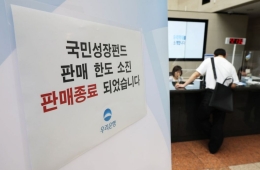
The Fund for Promoting Savings for Farming and Fishing Households has once again received the lowest rating in this year's government fund evaluation. Repeated criticism over declining participation and low effectiveness led to three abolition recommendations in 2019, 2022, and last year, but the system has survived due to opposition from farmers' organizations. Once called a financial product for farmers and fishers, this system has persisted for nearly 40 years amid ongoing debates over whether it should be continued or abolished.
![[Why&Next] Why the Farmers and Fishermen Savings Fund Has Survived for 40 Years Despite Three Abolition Recommendations](http://www.asiae.co.kr/news/img_view.htm?img=2026052810582879697_1779933508.jpg)
Once "the only investment tool for farmers and fishers"... A 40-year-old policy fund receives the lowest rating again
According to the Ministry of Planning and Budget’s "2026 Fund Evaluation Results" released on May 28, the Fund for Promoting Savings for Farming and Fishing Households received a "very poor" rating, the lowest possible, due to poor operational performance and an inadequate asset management system. Established in 1986, the savings plan allows farmers and fishers to deposit a certain amount, with the government providing additional incentives. Currently, the maximum monthly deposit limit is 200,000 won (2.4 million won per year). Upon maturity at either three or five years, the product—available exclusively to farmers and fishers—offers the base interest rate plus government incentives.
In its early years, the plan was very popular due to high interest rates and tax-exempt benefits, even being called "the only investment product" in rural areas. However, after savings schemes for urban workers were abolished in 1994, fairness issues emerged. In 2003, a bill to abolish the law on this savings scheme was pre-announced.
At that time, there were 824,000 accounts with total deposits reaching 2.1 trillion won, but only 47.2% of participants were full-time farmers or fishers. The government provided an additional legal incentive interest rate of 1.5–2.5% on top of the 5.5% base rate, along with tax-exempt status, resulting in a high maintenance cost. Around 600 billion won per year was also injected into various agricultural support programs such as the Rice Income Compensation Fund.

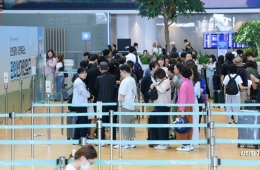
Participants are moving agricultural products at the "Press Conference Urging the End of Agricultural Product Price Collapse, Cessation of On-site Disposal, Guarantee of Fair Prices, and Dismissal of Minister Song Mireyong" held by Farmers' Path with the People near Cheongwadae in Jongno-gu, Seoul, on the 13th. Photo by Yonhap News Agency
View original image"Urban savings plans have been abolished"... Recurring discrimination controversies
Farmers' organizations opposed the abolition, arguing it was "the only long-term investment product for farmers and fishers" and "a policy that helps reduce farm household debt and bridge the urban-rural income gap." Political circles also joined in, causing the government's abolition efforts to fall through. Even after several additional abolition recommendations, the government hesitated to discontinue the scheme, citing regional backlash and the symbolic significance of the policy. The system has been largely neglected since the 2010s, resulting in a steady decline in its competitiveness.
With the monthly savings cap stagnating at 100,000 won for a long time, criticisms mounted that the fund's ability to help participants build substantial assets had weakened. In 2017, the government raised the annual cap to 2.4 million won, but this did not reverse the trend of declining enrollment. After a conditional continuation assessment in 2018, abolition recommendations followed in 2019 and 2022, and both last year and this year, the fund once again received the lowest evaluation.
Hot Picks Today
 "What Will Retail Investors Do With No Ammo Left?... Samsung Electronics and SK Hynix See Another Rosy Outlook"
- "Switching from Stocks to Savings?"... Up to 19.4% Annual Interest Rate Offered from June 22
- [Exclusive] Bought for 16.6 Billion Won from Kang Hodong, Sold to Noh Hongchul for 15.2 Billion Won: Even Hotspots Become Loss Sales... Gangnam Small Buildings Face 'Tearful Discounts' [Real Estate AtoZ]
- "My Stocks Alone Crashing in a Bull Market? Turns Out... 82% Are in the Same Boat"
- Trump Urged "Buy Quickly"...Stock Soared 39% Overnight
The fund's size has continued to shrink. Its revenue fell from 63.1 billion won in 2024 to 49.1 billion won in 2025, and to a planned 46.5 billion won this year. The total amount of government incentives also declined, from 62.4 billion won in 2024 to 49.1 billion won in 2025, and 45.6 billion won in 2026. The agricultural sector argues that the annual deposit limit should be raised from the current 2.4 million won to 6 million won to increase the scheme's effectiveness. In contrast, the Ministry of Planning and Budget has recommended the introduction of a full consignment system through the pension fund investment pool to improve fund management efficiency. An official from the ministry explained, "If public fund surpluses are entrusted to professional institutions and managed collectively, the efficiency of asset management for small-scale funds can be improved." Sejong = Lee Dongwoo, Reporter
© The Asia Business Daily(www.asiae.co.kr). All rights reserved.