[Future in Urban Mining] ⑤ 'Core Minerals' Copper and Nickel Supply Crisis... Companies Dig Up Cities Instead of the Ground
Copper Prices Jump 40% in a Year
As Supply Falls Short, Korea Zinc, LS, and Others
Extract Metals from Waste Electronics and Batteries
Copper prices have surged by more than 40% in the past year. On May 27 (local time), the London Metal Exchange (LME) reported that copper was trading at $13,540 per ton, up 40.7% from $9,623 a year ago. This sharp increase in demand is the result of the expansion of artificial intelligence (AI) data centers and intensifying competition for resource security. Nickel and lithium, both key battery materials, have also emerged as strategic minerals with the advent of the era of electric vehicles and physical AI.
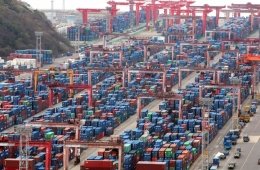
While demand is soaring, mineral supply is struggling to keep up. The supply of copper ore, the raw material before smelting, has failed to match the rising demand, intensifying the competition for securing raw materials. As a result, domestic metals and materials companies are shifting their focus from mining the ground to "mining the city." This refers to the so-called "urban mining" business, which extracts valuable metals from waste electronic devices and used batteries. While Korea Zinc is standing out in this field, companies such as LS, POSCO, and Ecopro are also expanding their activities in this sector.

At the casting process of Smelting Plant 1 at LS MnM Onsan Smelter, molten metal is produced by melting ore raw materials such as chalcopyrite and recycling materials such as copper scrap. The molten metal undergoes melting and refining to produce copper. LS MnM
View original imageLS MnM, the non-ferrous metal materials company of LS Group, is a leading example. With copper ore prices fluctuating and the acquisition of mines becoming increasingly difficult, the company turned to diversifying its sources of raw materials early on. Starting with the acquisition of Toricom, a precious metals recycling specialist, in 2008, LS MnM established the largest domestic recycling production facility in Danyang, Chungbuk in 2011, enabling the extraction of metals from waste scrap. That same year, it acquired a 20% stake in ERI, the largest waste electronics and electrical products recycling company in the United States, primarily to secure priority access to raw materials.
This strategy of reducing dependence on mines has rapidly gained traction as an alternative for overcoming difficulties caused by a sharp drop in smelting fees. LS MnM’s revenue increased from 1.01548 trillion won in 2023 to 1.49432 trillion won in 2025, while its subsidiary Toricom posted sales of 589.7 billion won last year. Donghwi Koo, CEO of LS MnM, stated, “We will advance our supply chain management system and become a trusted partner.”
![[Future in Urban Mining] ⑤ 'Core Minerals' Copper and Nickel Supply Crisis... Companies Dig Up Cities Instead of the Ground](http://www.asiae.co.kr/news/img_view.htm?img=2026052811202179775_1779934821.jpg)
Copper is not the only metal being extracted from urban mines. With rising demand for energy storage systems (ESS) and electric vehicle batteries, key battery minerals such as lithium, nickel, and cobalt have also become targets for recycling. These minerals are concentrated in specific countries, so any disruption in the supply chain can shake the entire industry. For Korea, which lacks domestic mineral resources, recovering metals from waste batteries is virtually the only way to secure mineral sovereignty.
The POSCO Group is the most proactive in this area. At a plant established by POSCO Holdings in Poland in August 2022, waste batteries are crushed to produce "black mass," a powder containing lithium, nickel, and cobalt. This material is sent to the POSCO HY Clean Metal plant in Yulchon Industrial Complex, Jeonnam, where 12,000 tons are processed annually to extract 2,700 tons of nickel, 800 tons of cobalt, and 2,500 tons of lithium carbonate. This is equivalent to opening a new mine, but achieved through waste batteries.
Ecopro, a battery materials company, is taking a similar approach. Through its subsidiary Ecopro CnG, the company recovers metals from waste batteries and scrap—a strategy that began in 2016 when then-chairman Dongchae Lee emphasized recycling as a way to reduce cathode material costs. The recovered metals are turned back into cathode materials through a closed-loop system at the Yeongilman Industrial Complex in Pohang. In January of this year, Ecopro also established a European subsidiary to expand partnerships with local companies.
Hot Picks Today
 "Volunteers Line Up to Serve: 5,000 Apply for Military Service in France, with 20% Women"
- "Just Two Glasses a Day Dramatically Lowered Blood Pressure... The Juice That Controlled Seniors’ Blood Pressure in Two Weeks"
- Samsung's Lee Jae-yong Casts His Vote...Scenes from His Early Voting Station Visit
- "Lying on Styrofoam on a One-Pyeong Floor"... This Was How the 70-Year-Old Security Guard Rested Alone
- [Exclusive] Bought for 16.6 Billion Won from Kang Hodong, Sold to Noh Hongchul for 15.2 Billion Won: Even Hotspots Become Loss Sales... Gangnam Small Buildings Face 'Tearful Discounts' [Real Estate AtoZ]
An Ecopro representative said, “Battery recycling is known as an eco-friendly form of urban mining. It will be a key driver in proactively overcoming global regulatory barriers such as battery passport requirements and safeguarding Korea’s mineral sovereignty.”
© The Asia Business Daily(www.asiae.co.kr). All rights reserved.