After 'Hawkish Hold', Strong Signal for Rate Hikes... Growth Forecast Raised to 2.6%, Inflation to 2.7% This Year (Comprehensive)
Bank of Korea Raises Inflation Forecast to 2.7% This Year, Citing Concerns Over Prolonged High Oil Prices
Semiconductors Lead the Way: Growth Rate Lifted to 2.6%, Up 0.6 Percentage Points in Three Months
Base Rate Held Steady in May... Dot P
The Bank of Korea has significantly raised its economic growth forecast for South Korea this year to 2.6%. This reflects expectations that the supercycle in the semiconductor sector will outweigh downward pressure on growth and drive the Korean economy in 2026. The outlook for consumer price inflation has also been revised upward to 2.7%. This adjustment takes into account the impact of prolonged high oil prices and secondary spillover effects resulting from the ongoing war in the Middle East. As of May, the policy rate remains unchanged at an annual rate of 2.50%. However, through the K-dot plot, the central bank strongly indicated the possibility of raising the rate twice this year, projecting a level of 3.00% within the next six months. Experts believe a rate hike at the next policy meeting in July is highly likely.

Shin Hyun-song, Governor of the Bank of Korea, is attending the Monetary Policy Committee plenary meeting held at the Bank of Korea in Jung-gu, Seoul, on the morning of the 28th, striking the gavel. Photo by the Joint Press Corps
View original image"Semiconductor Effect Outweighs Middle East War"...Growth Forecast Raised to 2.6% for This Year
On May 28, the Bank of Korea announced its revised economic outlook immediately following the Monetary Policy Committee's policy meeting, projecting real GDP growth for this year at 2.6%. This is an increase of 0.6 percentage points from its February forecast of 2.0%. The growth forecast for next year was also revised upward from 1.8% to 2.1%. The 2.6% projection for this year surpasses not only the recent 2.5% forecast by the Korea Development Institute (KDI), but also the government's 2.0% estimate, the International Monetary Fund's (IMF) 1.9%, and the Organisation for Economic Co-operation and Development's (OECD) 1.7% forecasts.
As recently as the April 10 policy meeting, the central bank expected this year's growth rate to fall short of the February forecast of 2.0%. At that time, the Monetary Policy Committee cited weakening economic sentiment following the Middle East crisis, production disruptions in certain industries, rising energy prices, and growing supply chain pressures as reasons for an anticipated slowdown. The key factor behind the shift in the Bank of Korea's outlook has been semiconductors. Despite persistent concerns about sustained high oil prices due to the Middle East war, the bank now believes the semiconductor boom will more than offset downward pressure on growth.
South Korea's export performance has continued to improve, led by semiconductors, even after the first quarter of this year. According to the Korea Customs Service, exports in April reached USD 85.89 billion, up 48% from the same month last year. This figure is close to the record high of USD 86.6 billion in March. Among these, semiconductor exports (USD 31.9 billion) surged by 173.5%, driving the overall increase. From May 1 to 20, total exports reached USD 52.7 billion, setting a new record for that period. Notably, semiconductor exports (USD 22.0 billion) soared by 202.1% during the same period, with their share of total exports expanding to 41.7%.
Despite upward pressure on consumer prices, the ongoing recovery in private consumption has also contributed to the upward revision of the growth forecast. According to the Credit Finance Association, domestic credit card spending in April rose by 7.3% year-on-year. The expansion in semiconductor exports and the ensuing stock market rally have also revived consumer sentiment. The Bank of Korea's Consumer Composite Sentiment Index (CCSI) for May rebounded to 106.1, the first increase in three months. The increase of 6.9 points over the previous month was the largest in 11 months. These strong results in the semiconductor sector are expected to lift overall growth momentum by boosting not only exports but also private consumption, facility investment, and other domestic demand components.

Shin Hyun-song, Governor of the Bank of Korea, is striking the gavel at the first Monetary Policy Committee plenary meeting held after his inauguration on the 28th at the Bank of Korea headquarters in Jung-gu, Seoul. Photo by Joint Press Corps
View original imageMiddle East Crisis Heightens Inflation Pressure...Forecast Raised to 2.7% for This Year
However, the possibility of a prolonged war in the Middle East remains the biggest variable that could lower the growth rate. If the war drags on into the second half of the year, resulting in sustained high oil prices and further instability in the supply of raw materials, a slowdown in growth cannot be ruled out. The extended period of high oil prices caused by the Middle East war is also contributing to mounting inflation concerns. Prior to the conflict, inflation remained stable near the 2.0% target, largely thanks to declining global oil prices. However, the surge in oil prices triggered by the war has destabilized this trend. Additionally, the unexpectedly strong economic recovery has been cited as a factor increasing upward pressure on inflation from the demand side.
In its May economic outlook, the Bank of Korea sharply raised its projection for consumer price inflation this year to 2.7%, up 0.5 percentage points from its February forecast of 2.2%. Next year’s inflation forecast was also raised by 0.3 percentage points to 2.3%, compared to the previous outlook of 2.0%. The central bank concluded that consumer prices are likely to rise further, given the ongoing high oil prices and strong exchange rate pressures stemming from the prolonged Middle East conflict.

Shin Hyun-Song, Governor of the Bank of Korea, attended the Monetary Policy Committee plenary session held at the Bank of Korea in Jung-gu, Seoul on the morning of the 28th and struck the gavel. Photo by Joint Press Corps
View original imageDot Plot Shows Majority Expect 3.00% in Six Months...Strongly Signals Future Rate Hikes
At today’s meeting, the Monetary Policy Committee kept the policy rate unchanged at 2.50% per annum, but saw the highest likelihood that the rate would be raised twice by 0.25 percentage points each by November, six months from now. According to the K-dot plot, in which all seven members of the committee indicate their conditional rate expectations for six months ahead, 10 out of 21 dots (48%) projected a rate of 3.00%. This is a more hawkish signal than market expectations, which had forecast the largest cluster of dots at 2.75%. Seven dots (33.3%) indicated a rate of 2.75% in six months. There were also two dots projecting 3.25%, which would require three 0.25 percentage point hikes. Two dots indicated the rate would remain at the current level in six months.
Back in February, when the dot plot was released for the first time, 16 out of 21 dots indicated the rate would remain unchanged at 2.50% in six months, suggesting a prolonged pause. Four dots pointed to 2.25%, indicating the possibility of a cut, while only one dot signaled a hike to 2.75%. However, that was before the Middle East war erupted. Choyonggu, a researcher at Shin Young Securities, commented, "Originally, the median dot plot value was expected to be 2.75%, but with the majority at 3.0%, it clearly signals a rate hike in July," adding, "The likelihood of two hikes this year has also increased."
In response to these developments, the market is increasingly convinced that a rate hike will take place in July. There is also growing support for the view that the central bank will raise rates twice this year, by 0.25 percentage points each time. Byunghoon Seok, a professor of economics at Ewha Womans University, noted, "With the inflation forecast raised to 2.7%, the gap with the inflation target of 2.0% has widened," adding, "The policy rate needs to be above the neutral level (2-3%) to rein in inflation." He continued, "The central bank cannot raise rates too quickly, so the plan is to hike twice this year to bring the rate to 3% by November, which is the upper end of the neutral range. At least one more hike will be needed to bring inflation down, so there is a high chance of another increase early next year or sometime during the year."
Meanwhile, today's rate freeze marks the eighth consecutive hold, following those in July, August, October, and November last year, and January, February, and April this year. The result was in line with market expectations. In a recent survey by The Asia Business Daily, all 13 respondents predicted a rate hold for this month. However, two committee members (Jang Yongseong and Yoo Sangdae) expressed dissenting views, advocating a 0.25 percentage point hike. The Monetary Policy Committee stated, "Given the persistently high uncertainty surrounding developments in the Middle East and their spillover effects, we believe it is appropriate to maintain the current policy rate while closely monitoring the situation and its impact on growth and inflation."
Hot Picks Today
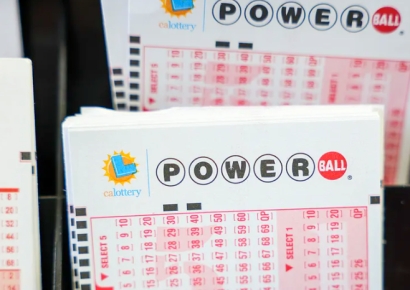 He Left It in the Car and Forgot... "I Nearly Collapsed with Joy": Man Wins $1.48 Million Lottery
- Goldman Sachs Cuts KOSPI Target by 25%... "Excessive Pessimism, Still Attractive"
- "'Nodding Off' on the Subway? Here's Why Koreans Are Getting Even Less Sleep"
- "Please Pay Me at Least 3 Million Won a Month": More Than Half of Young People Today Prioritize "Working Conditions" Over Company Size
- Beachgoer Finds 'Plastic' That Turns Out to Be Perfume Ingredient Worth More Than Twice as Much as Gold
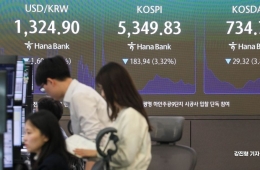
From a financial stability perspective, the situation remains concerning. The weakness of the won and the overheating of the real estate market in the Seoul metropolitan area continue unabated. Earlier this month, the won-dollar exchange rate, which had been hovering around KRW 1,450, surpassed KRW 1,500 based on the weekly closing price on May 15. On May 22, just before the end of the trading session, a surge in dollar demand resulting from foreign securities selling pushed the rate as high as KRW 1,517.2. Housing prices are also a source of instability. According to the Korea Real Estate Board, apartment prices in Seoul in the third week of May rose by an average of 0.31% compared to the previous week, marking the third consecutive week of widening increases.
© The Asia Business Daily. All rights reserved. Unauthorized AI training and use prohibited.