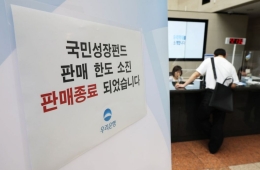
"Fried Soboro from May 1980"... Minister Kim Jungkwan Indirectly Criticizes Starbucks at Seongsimdang (Comprehensive)
Seongsimdang AI Factory Site Visit
"Serving Customers"... Remarks Seen as Alluding to Starbucks' May 18 Controversy
Manufacturing AI Applied to Fried Soboro Production Process
"Similar to Semiconductor Defect Detection AI"

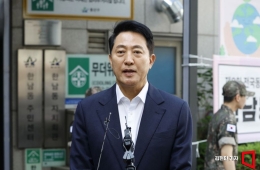
On May 27, Minister of Trade, Industry and Energy Kim Jungkwan visited Seongsimdang in Daejeon, emphasizing the importance of “businesses serving consumers with sincerity.” His remarks appeared to be an indirect reference to the recent controversy involving Starbucks Korea. At the same time, the site showcased the application of manufacturing artificial intelligence (AI) to the production process of Seongsimdang’s signature menu item, the “Fried Soboro,” highlighting it as a symbolic example of the government’s ongoing Manufacturing AI Transformation (M.AX) policy.
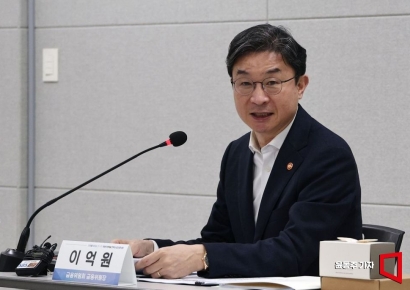
At the “Public-Experience Manufacturing AI On-Site Expansion Roundtable” held at the Seongsimdang store in Lotte Department Store, Daejeon, Minister Kim stated, “Korean companies should serve consumers and customers with the same mindset as Seongsimdang. There are companies currently facing much controversy, but I believe that in such areas, we can become a better country.”
He specifically mentioned the Fried Soboro, Seongsimdang’s signature item, saying, “Fried Soboro was launched in May 1980. Thinking of the many social changes and events that have occurred since then is moving. Ultimately, a sincere heart for people and relentless innovation are what created today’s Seongsimdang.”
In political and distribution circles, Minister Kim’s references to “May 1980” and “controversial companies” were interpreted as targeted at Starbucks Korea, which recently came under national criticism for allegedly disparaging the May 18 Democratic Uprising.
Previously, Starbucks Korea sparked controversy during a promotional campaign for a tumbler discount event held on May 18, the anniversary of the May 18 Democratic Uprising, by using terms like “Tank Day.” The incident quickly drew criticism online and on social media, prompting Shinsegae Group to replace the CEO of Starbucks Korea and issue a public apology.
On site, the automation of Fried Soboro’s production process using AI and robotics was also demonstrated. Seongsimdang’s operating company, ROSSO, has introduced an AI-based automation system in collaboration with AI company ROILABS and robotics company INTERTEK, automating processes such as dough dispensing, bread flipping, and determining the frying status.
The AI analyzes temperature, humidity, and product conditions in real time, while the robot handles dough dispensing and flipping. The goal is to automate everything up to the final packaging, including determining bread size, whether it has been flipped, and whether it is over-fried. The Ministry of Trade, Industry and Energy expects this will improve productivity by about 20%.
Minister Kim stated, “It was impressive to see the technical similarities between the vision AI used to detect semiconductor substrate defects and the AI used to determine the frying state of Soboro bread. We will not limit M.AX to advanced manufacturing industries such as semiconductors and automobiles, but will expand it to small businesses and the service sector, and eventually to the entire economy.”
Seongsimdang also expressed its anticipation for the impact of AI adoption. Lim Youngjin, CEO of Seongsimdang, said, “We expect this will reduce the burden on employees who repeatedly worked in front of hot oil. In the future, we are considering upgrading the AI model and robotic system and applying them to other stores.”
This Seongsimdang case is recognized as a representative “public experience project” of the Manufacturing AI Transformation (M.AX) policy being promoted by the ministry. While manufacturing AI has previously focused on large-scale factories in sectors such as semiconductors, steel, and shipbuilding, it is now expanding to everyday industries like food, logistics, and services, making its significance even greater.
Since launching the M.AX Alliance in September last year, the ministry has been expanding collaboration between manufacturers, AI companies, and research institutions. So far, 102 AI factories have been established, and 100 more are planned for deployment this year.
The public experience projects unveiled on this day also included cases in the food and logistics sectors. Hoegok Brewery in Andong is automating the traditional liquor fermentation process using AI and robotics, while Jangchungdong Wang Jokbal Bossam is introducing an AI-based system for defective meat selection and precise packaging. The Army Smart Logistics Center is also conducting a demonstration project with robots for supply sorting and packaging.
Hot Picks Today
 "Switching from Stocks to Savings?"... Up to 19.4% Annual Interest Rate Offered from June 22
- "What Will Retail Investors Do With No Ammo Left?... Samsung Electronics and SK Hynix See Another Rosy Outlook"
- 800 Billion Won Direct Investment: FuriosaAI Selected by National Growth Fund
- [Exclusive] Bought for 16.6 Billion Won from Kang Hodong, Sold to Noh Hongchul for 15.2 Billion Won: Even Hotspots Become Loss Sales... Gangnam Small Buildings Face 'Tearful Discounts' [Real Estate AtoZ]
- "Has the Countdown to a Major Earthquake Begun?"... Japan Shaken by Scenario Predicting '20,000 Deaths'
The ministry plans to further expand AI demonstration projects to include everyday industries such as food, cosmetics, and hotels, so that citizens can experience the benefits of AI transformation in their daily lives.
© The Asia Business Daily(www.asiae.co.kr). All rights reserved.