[Moneyverse] "I Would Welcome a Copyright Lawsuit"
Regardless of whether the value is high or low, writing produced by someone who has wracked both their brain and body deserves respect not only in form but also in substance. Here, substantive respect refers to copyright.
However, excessive protection of copyright can become an obstacle to cultural development. To address this, the Copyright Act allows certain uses of others' works within specified limits. "Freely" here means that one does not need to obtain the copyright holder’s permission or pay for the use. The relevant provision is Article 28: "Published works may be quoted, within a reasonable scope and in accordance with fair practice, for purposes such as reporting, criticism, education, or research."
Within this provision, "reasonable scope" is not defined even in presidential decrees. Supreme Court precedents are also "qualitative." The Supreme Court has stated only that "in terms of expression, the quoted work... must be recognized as having a subsidiary nature in relation to the quoting work." In other words, what you write directly must be the main component, not the quoted text.
But to what extent does "a subsidiary nature" mean? Is it a 50-50 split between quoted and original writing? Authors and publishers have long agonized over this question. The standard or practice I heard long ago was, "You don’t need the copyright holder’s permission if you quote up to a paragraph." Standards I later encountered, directly or indirectly, were even stricter. One author and publisher even sought the copyright holder’s consent when quoting a single sentence, or even a phrase, in their own writing.
Quotation not only enriches the expression of writing, but also connects, expands, and deepens the author’s thoughts and experiences with those of previous copyright holders. However, such quotation has become cumbersome due to stringent standards or customary practices. As a result, the barriers to intellectual exchange through books have grown.
One publisher, frustrated with this situation, said to me, "We should be able to quote more freely," adding, "I would actually welcome a copyright infringement lawsuit against a book published by us." They expressed their willingness to take the issue all the way to the Supreme Court to set a new legal precedent.
At last, a "quantitative" suggestion has emerged. Attorney Jeong Jiwoo proposed, "If the work being quoted is a literary work, then the portion of commentary, criticism, research, or review written in my own words must be at least three times the length of the quoted excerpt." This was presented in the book "Copyright Law for Publishers," published this past March. However, this standard is not absolute; the book explains in detail other aspects that must be considered beyond just the length. There is hope that this proposal will ease the restrictive quoting practices that have bound the domestic publishing industry.
This article itself demonstrates the importance of quotation. Attorney Jeong’s proposal is conveyed more completely here through proper quotation. Of course, this piece meets the quantitative standard he suggests, as the sentences he wrote constitute less than a quarter of the total length of this article.
Hot Picks Today
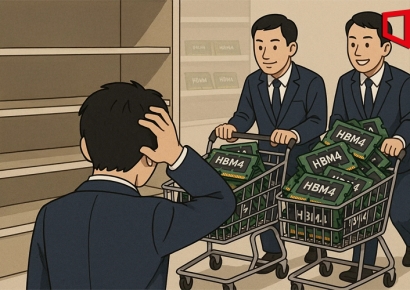 "What Will Retail Investors Do With No Ammo Left?... Samsung Electronics and SK Hynix See Another Rosy Outlook"
- "Switching from Stocks to Savings?"... Up to 19.4% Annual Interest Rate Offered from June 22
- [Exclusive] Bought for 16.6 Billion Won from Kang Hodong, Sold to Noh Hongchul for 15.2 Billion Won: Even Hotspots Become Loss Sales... Gangnam Small Buildings Face 'Tearful Discounts' [Real Estate AtoZ]
- "My Stocks Alone Crashing in a Bull Market? Turns Out... 82% Are in the Same Boat"
- Trump Urged "Buy Quickly"...Stock Soared 39% Overnight
Baek Woojin, economic columnist
© The Asia Business Daily(www.asiae.co.kr). All rights reserved.