Semiconductor Boom Outpaces Middle East War Impact... Bank of Korea Raises 2024 Growth Forecast to 2.6% (Update)
Raised by 0.6 Percentage Points in Three Months
Next Year's Growth Forecast Also Revised Up to 2.1%
Inflation Outlook Raised to 2.7% for This Year... 2.3% for Next Year
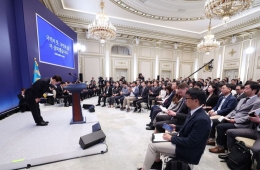
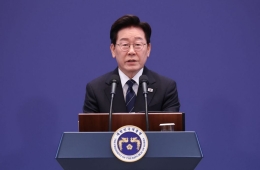
The Bank of Korea has sharply raised its economic growth forecast for South Korea this year to 2.6%. The central bank determined that the boom in semiconductor exports will more than offset the negative impact of persistently high oil prices resulting from the prolonged war in the Middle East.

In its revised economic outlook released on May 28, the Bank of Korea projected a 2.6% increase in South Korea’s real gross domestic product (GDP) for this year. This marks an upward revision of 0.6 percentage points from the previous forecast of 2.0% made in February. The growth forecast for next year was also raised from 1.8% to 2.1%.
The 2.6% growth rate for this year is higher than all other projections, including those of the Korea Development Institute (KDI, 2.5%), the government (2.0%), the International Monetary Fund (IMF, 1.9%), and the Organisation for Economic Co-operation and Development (OECD, 1.7%).
As recently as April 10, during its monetary policy direction meeting, the Bank of Korea had expected this year’s growth to fall short of the February forecast. The central bank had warned of a slowdown due to weakening economic sentiment in the aftermath of the Middle East crisis, as well as increased pressure from rising energy prices and supply disruptions.
The key reason for the Bank of Korea’s shift in economic outlook is the performance of the semiconductor industry. While the prolonged high oil prices caused by the Middle East conflict have indeed heightened inflationary pressures, the semiconductor boom is expected to outweigh these effects, offsetting the downward pressure on growth.
In fact, South Korea’s export performance has continued to improve, led by semiconductors, even after the first quarter of this year. According to the Korea Customs Service, exports last month reached $85.89 billion, up 48% from the same month last year. This nearly matches the all-time high of $86.6 billion set in March. Particularly notable is the surge in semiconductor exports, which jumped 173.5% to $31.9 billion, driving the overall increase.
Total exports for the first 20 days of this month have also set a new record for this period, reaching $52.7 billion. Of this, semiconductor exports soared 202.1% year-on-year to $22 billion, accounting for 41.7% of the total.
The continued recovery in private consumption, despite rising consumer prices, also contributed to the upward revision of the growth rate. According to the Credit Finance Association, the total value of domestic card approvals last month increased by 7.3% from a year earlier. The expansion of semiconductor exports and the resulting stock market boom have helped to revive consumer sentiment. The Consumer Composite Sentiment Index (CCSI) released by the Bank of Korea rebounded to 106.1 in May, marking the first increase in three months. The index rose by 6.9 points from the previous month, the largest monthly increase in 11 months.
This robust performance in semiconductors is believed to be boosting not only exports but also private consumption and facility investment, thereby enhancing the country’s overall growth momentum.
However, the risk of a prolonged war in the Middle East remains the biggest variable that could lower the growth rate at any time. If the conflict continues into the second half of the year, persistently high oil prices could weaken household finances, and unstable raw material supplies could lead to supply shocks that further slow economic growth.
Currently, inflationary pressures are mounting. In its May economic outlook, the Bank of Korea sharply raised its consumer price inflation projection to 2.7%, up 0.5 percentage points from the February forecast of 2.2%. Next year’s inflation forecast was also revised upward, from 2.0% to 2.3%. The central bank appears to believe that consumer prices could rise further amid the continued pressure from high oil prices and a strong dollar caused by the prolonged Middle East war.
Hot Picks Today
 "If You Become a Teacher, You Don't Have to Repay Student Loans"... Japan Pulls Out 'Repayment Exemption' After 30 Years
- "How Little Do Koreans Read? Who Will Acquire Munhakdongne Now on the Market [Weekend Money]"
- "I'll Pay Cash for This Home"... Cash Purchases Rise and Loan Share Falls as Sub-1 Billion Won Listings Increase in China
- "If You Go Late, There Are No Seats; Crowds Gather Before Sunset"... The 'Yajang' Hotspots Drawing 20-Somethings These Days
- "Raised a Stray Kitten, but..." Scientific Community Stunned: First New Wild Cat Species Discovered in 100 Years
Indeed, the producer price index—a leading indicator of consumer prices—rose 2.5% last month from the previous month, marking the highest monthly increase since the 1998 foreign exchange crisis. Another leading indicator, import prices, also posted increases in the 20% range for both March and April. The consumer price inflation rate in April was 2.6%, the largest increase in 21 months.
© The Asia Business Daily. All rights reserved. Unauthorized AI training and use prohibited.