[Exclusive] Bought for 16.6 Billion Won from Kang Hodong, Sold to Noh Hongchul for 15.2 Billion Won: Even Hotspots Become Loss Sales... Gangnam Small Buildings Face 'Tearful Discounts' [Real Estate AtoZ]
NAI Korea Analysis of 25 Small Building Deals in Gangnam-gu
Transaction Prices Averaged 13% Below Asking Price
High-Priced Properties Over 30 Billion Won Sold at 21.9% Discount
Recently, there have been a series of transactions in the Seoul Gangnam area’s small building market where properties have sold at prices more than 30% lower than the initial asking price. Analysts attribute this to a significant decline in leasing demand for buildings located on secondary streets in Gangnam, as demand has shifted toward shared office spaces and nighttime business districts have contracted. As a result, property owners unable to withstand the pressure of vacant units and loan repayments have lowered their asking prices to facilitate sales.
23 out of 25 Small Building Transactions Priced Below Asking
![[Exclusive] Bought for 16.6 Billion Won from Kang Hodong, Sold to Noh Hongchul for 15.2 Billion Won: Even Hotspots Become Loss Sales... Gangnam Small Buildings Face 'Tearful Discounts' [Real Estate AtoZ]](http://www.asiae.co.kr/news/img_view.htm?img=2026052822320680700_1779975126.png)
According to transaction data on small buildings in Gangnam District obtained by The Asia Business Daily from the NAI Korea Research Center as of May 29, the actual sales prices in 25 transactions for which both asking and closing prices could be compared averaged 13% lower than the original asking prices. Small buildings refer to mid- and low-rise properties with a total floor area of less than 1,000 pyeong (3,305.8 square meters).
The combined initial asking prices for these 25 properties totaled 504.69 billion won, but the actual total transaction value was 420.5 billion won. This means the aggregate transaction price was 16.7% below the asking price. Only two cases closed at the initial asking price, while the remaining 23 sold for less. Of these, 15 transactions were concluded at prices more than 10% below the asking price, and 4 transactions were more than 20% lower. In two cases, the properties sold at a price more than 30% below the original asking price.
The higher the property price, the greater the price reduction required to attract buyers. Among seven properties initially listed for 30 billion won or more, the average price drop was 21.9%, more than double the 9.5% decline seen in the 18 properties listed below 30 billion won. All seven high-priced properties were sold at prices at least 16% below their initial asking prices.
For example, a newly built building in Daechi-dong, Gangnam District (total floor area: 262 pyeong) was initially listed at 33 billion won but sold for 21 billion won, a drop of 12 billion won. Even though it was completed in 2023, the sale price was only 63.6% of the initial asking price. Another building in Samseong-dong (122 pyeong), located a five-minute walk from Bongeunsa Station in a restaurant district, sold for 30 billion won after being reduced by 13.5 billion won (31%) from the original listing price of 43.5 billion won. In Yeoksam-dong, a building (526 pyeong) in a food alley behind Gangnam Station changed hands for 40 billion won, down 8 billion won (16.7%) from the initial 48 billion won asking price.
Even smaller properties, worth several billion won, have been selling below the asking price. For instance, a building in Nonhyeon-dong (54 pyeong), a one-minute walk from Hakdong Station, was sold for 3.8 billion won, down 400 million won (9.5%) from the 4.2 billion won asking price. Another building in Yeoksam-dong (115 pyeong) was contracted at 5.3 billion won, 700 million won (11.7%) below the 6 billion won asking price.
![[Exclusive] Bought for 16.6 Billion Won from Kang Hodong, Sold to Noh Hongchul for 15.2 Billion Won: Even Hotspots Become Loss Sales... Gangnam Small Buildings Face 'Tearful Discounts' [Real Estate AtoZ]](http://www.asiae.co.kr/news/img_view.htm?img=2026052822325080701_1779975170.jpg)
Even among celebrities, there are cases of small buildings being sold at a loss. Singer Shin Hyesung, for example, sold a building in Nonhyeon-dong last month for 5.55 billion won, which he had purchased for 4.9 billion won in 2022. Although he sold it for 650 million won more than the purchase price, after factoring in 800 million to 900 million won for remodeling and expansion costs, as well as acquisition tax and loan interest, the sale effectively resulted in a loss. On Garosu-gil in Sinsa-dong, the corporation 'The Myu' purchased a building from broadcaster Kang Hodong for 16.6 billion won in 2024, but sold it to Noh Hongchul last month for 15.2 billion won, only a year and six months later. Industry sources estimate that the actual loss, including acquisition tax and financial costs, exceeds 2 billion won. Kang Hodong had made a profit of 2.5 billion won over six years on the property, but even Garosu-gil, once considered a trendy hotspot, has now seen properties turn into loss-making sales in a short period.
Judging solely by transaction volume, the small building market might appear to be recovering. According to the Ministry of Land, Infrastructure and Transport’s actual transaction price disclosure system, in Gangnam District this year, the number of small building transactions (standalone buildings with a total floor area of 100 to 3,305.8 square meters) rebounded from 16 in January, to 15 in February, 15 in March, and 27 in April. The number of transactions across all of Seoul also increased from 126 in January to 142 in April. However, a close look at actual transactions in Gangnam reveals that deals are often only concluded after sellers lower their prices, making it difficult to conclude that a recovery is underway.
Offices Downsized, Business Districts in Decline... Funding Pressure on Building Owners Rises
Industry experts cite the weakening leasing demand in Gangnam's secondary business districts as the main reason. In the past, small buildings on side streets near Gangnam Station or in Nonhyeon-dong were popular as startup offices during the venture boom. However, recently, with tightening liquidity, many small companies have moved en masse to shared offices to cut costs, causing a sharp rise in vacancies. Since COVID-19, a culture of refraining from corporate gatherings has taken hold, leading to a decline in nightlife-focused restaurant districts and a collapse in leasing demand for neighborhood commercial buildings on secondary streets. Jeong Eunsang, head of the NAI Korea Research Center, said, "With startups moving to shared offices and nighttime business districts shrinking, demand for secondary street properties has dropped to the point where even remodeled old buildings have struggled to find tenants for two to three years."
The influx of properties from investors who made purchases through corporations during the low-interest rate era is also adding downward pressure. Between 2019 and 2021, when both low interest rates and higher property holding taxes coincided, small buildings generating monthly rental income became a favored alternative investment. Some of those who bought at that time are now responding to rising interest rates and vacancy burdens by lowering their asking prices to sell. Additionally, as financial institutions have begun applying stricter rental interest coverage ratio (RTI) requirements when renewing commercial property loans, owners with mortgages are facing unavoidable funding pressures.
In the non-performing loan (NPL) market as well, the value of collateral for all commercial real estate, including small buildings, has been dropping. According to Samil PwC's 'NPL Market Trends' report published in January this year, the average sale price ratio for bank NPLs fell from 87.3% in 2023 to 68.4% in the fourth quarter of 2025. The NPL average sale price ratio indicates how much banks recover, relative to principal, when selling bad loans to NPL investment firms. A lower ratio means banks are recovering less when disposing of non-performing loans, and as more investors believe it is difficult to recover as much money as before by selling collateral real estate, NPL purchase prices have also declined.
There are also cautious outlooks for the market in the second half of this year. An industry insider in the commercial real estate sector commented, "Going forward, small building prices in Gangnam can no longer be defended by location alone. While demand may persist for buildings on main roads with stable leasing or in key business districts with increased tourist traffic, buildings on secondary streets facing greater vacancy risks will likely experience a clear polarization as their values are reassessed."
Hot Picks Today
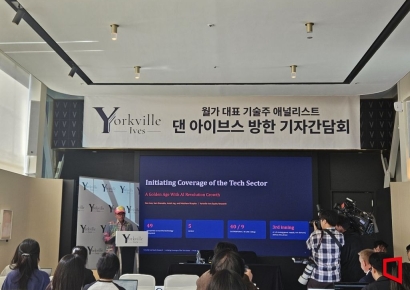 "Even New York Taxi Drivers Are Talking About the KOSPI; South Korean Market to Top 9,000 Again Within a Year"... 'Wall Street's Stock-Picking Ace' Names His Picks
- “Made 2 Billion Won in One Year in Prison,” PPP Lawmaker Retorts: “If You’re Jealous, Go There Yourself”
- “Washing Dishes and Folding Clothes 200 Times a Day”... China’s “Robot Trainers” Earn Up to 1.2 Million Won a Month
- "How indecent, expecting us to carry this around"... Consumers fume over promotion of a pouch resembling 'women's underwear'
- Idol Member Posts Letter Saying "Suspending Activities Due to Pregnancy"... Turns Out She's AI?
![[Exclusive] Bought for 16.6 Billion Won from Kang Hodong, Sold to Noh Hongchul for 15.2 Billion Won: Even Hotspots Become Loss Sales... Gangnam Small Buildings Face 'Tearful Discounts' [Real Estate AtoZ]](http://www.asiae.co.kr/news/img_view.htm?img=2026052822333980702_1779975219.gif)
© The Asia Business Daily. All rights reserved. Unauthorized AI training and use prohibited.