Park Hyungjoon Focuses on 'Statistics' vs Jeon Jaesu on 'Emotion'... What Do Their Busan Mayoral Campaign Brochures Contain?
Contrasting Campaign Strategies: A Comprehensive Look at Both Candidates’ Approaches
What ideas did each campaign team focus on as they crafted their strategy?
The campaign brochures for Jeon Jae-su, the Democratic Party candidate for the June 3 Busan mayoral election, and Park Hyung-joon, the People Power Party candidate, clearly reveal their contrasting campaign strategies. From their approaches to persuading voters to the language used to explain their pledges, the differences are stark, reflecting their intense efforts to capture the hearts and minds of Busan voters in what is shaping up to be an extremely close race.
Jeon’s campaign materials center on his personal attributes and political drive. The back of his brochure features a photo of him receiving his letter of appointment from President Lee Jae-myung, repeatedly using phrases such as “chosen by President Lee Jae-myung” to highlight his strong “hotline” with the central government.
The overall composition is more akin to a letter addressed to citizens than a detailed policy booklet. Emotional messages such as “I will comfort your difficult lives and create change together” are prominently featured. The pledges focus more on direction and empathy, rather than specific figures or detailed funding plans.
Expressions like “a city that supports young people taking their first steps in society” and “Busan that connects the futures of women” emphasize a vision for the future and value-driven messages, reflecting an emotional approach.
![Democratic Party candidate for Busan mayor Jeon Jae-su and People Power Party candidate for Busan mayor Park Hyung-joon are seen cheering at the Kwanhun Debate hosted by Kwanhun Club and Busan Ilbo, held on the morning of the 26th at Dongseo University Centum Campus in Haeundae-gu, Busan. [Image source=Yonhap News]](http://www.asiae.co.kr/news/img_view.htm?img=2026052712262978157_1779852388.jpg)
Democratic Party candidate for Busan mayor Jeon Jae-su and People Power Party candidate for Busan mayor Park Hyung-joon are seen cheering at the Kwanhun Debate hosted by Kwanhun Club and Busan Ilbo, held on the morning of the 26th at Dongseo University Centum Campus in Haeundae-gu, Busan. [Image source=Yonhap News]
View original imageIn contrast, Park’s campaign brochure is focused on achievements, statistics, and detailed pledges. It resembles a government report, with the message: “This is what we have accomplished so far, and we will do even more going forward.”
The brochure includes economic indicators such as “28-fold increase in investment attraction,” “nation’s top employment growth rate,” and “exceeding 1 million full-time workers,” all presented with graphs. This strategy quantifies the city’s accomplishments over the past five years to reinforce administrative stability and trust.
His top pledge, “Creating 100 million won for Young People,” is explained with details about the savings matching program and the funding structure, emphasizing its practicality. He also presents a total of 112 region-specific pledges—seven for each of Busan’s 16 districts—underscoring the image of a “prepared mayor.”
Analysts suggest that the strengths of both candidates could also prove to be weaknesses.
Jeon has been criticized for offering “empty promises” that lack concrete budget plans or implementation strategies. Although he sponsored the Special Act on Global Hub Cities and called for the relocation of the Korea Development Bank to Busan, he has been accused of inconsistency after changing his stance following a single remark by the president. His pledges are seen as lacking in substance, concentrated in the western part of Busan, and giving the impression of a candidate who is insufficiently prepared.
Hot Picks Today
 "Just Two Glasses a Day Dramatically Lowered Blood Pressure... The Juice That Controlled Seniors’ Blood Pressure in Two Weeks"
- Galaxy S26 Now "Free" Just Two Months After Release... Fierce Subsidy Battle Among Three Major Carriers
- There Was a Real "Money-Making Machine" Soaring 538%... A Large-Cap Stock Outperformed Samsung and SK hynix
- "Daughter Consults ChatGPT After Fight with Father, Leading to Manager’s Resignation... AI Crisis Response Sparks Debate in Japan"
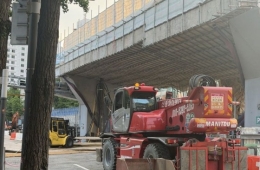
- "My Most Respected Father"... Pharmacist YouTuber Yakbbu Loses Father in Seosomun Overpass Accident
Park, on the other hand, faces criticism for claiming as personal achievements national projects—such as the Gadeokdo New Airport—that have continued since previous administrations. He is also challenged for lacking bold, imaginative ideas for the city’s future, and is held responsible for the failed Expo bid and the exodus of young people. In addition, he must address the sense of alienation felt by residents in western Busan, which has arisen from the administration’s focus on developing North Port and Haeundae.
© The Asia Business Daily(www.asiae.co.kr). All rights reserved.