U.S. Section 122 Tariffs Set to Expire in July... Greer Hints at Possible Reimposition
"It Is Unlikely Congress Intended 'Only Once Per Presidential Term'"
Buying Time Until Section 301 Tariff Investigation Concludes
Accelerating U.S.-China Trade Commission... Public Comment Process Underway
The 10% tariff imposed globally by U.S. President Donald Trump under Section 122 of the Trade Act is set to expire in July 2026. However, Jamison Greer, United States Trade Representative (USTR), has hinted at the possibility of applying the same section once again. Previously, the plan was to use Section 301 of the same law—after the 150-day period expired—to investigate unfair trade practices and impose tariffs based on those findings. However, since a U.S. court has ruled that the tariffs imposed under Section 122 are unlawful, there is doubt as to whether it can actually be applied in practice.
"Even if Section 122 Is Used Once More..."
According to reports from The Wall Street Journal (WSJ) and Bloomberg, on May 26 (local time), Representative Greer stated at a Council on Foreign Relations (CFR) event, "The law specifies when the tariff expires, but it does not state when it can be reimposed," adding, "It is hard to imagine Congress intended to limit the use of Section 122 to only once per presidential term."

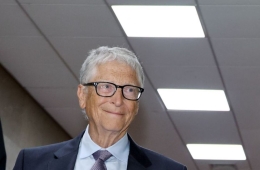
Jamison Greer, United States Trade Representative (USTR). Photo by UPI News Agency
View original imageThis suggests that, if necessary, Section 122 could be applied again to fill any tariff gap. However, he did not clarify whether the Trump administration actually intends to pursue an extension of the tariffs based on Section 122. Section 122 allows the U.S. president to impose tariffs of up to 15% for a maximum of 150 days without congressional approval in cases where the United States faces a serious balance-of-payments deficit or a sharp decline in the value of the dollar.
He also stated that the USTR is currently "highly focused" on the ongoing investigation under Section 301, which is being conducted to devise measures to replace Section 122 tariffs. On March 11, 2026, the Trump administration initiated an investigation under Section 301 against major countries, including South Korea. Section 301 authorizes the U.S. administration to respond to unfair foreign trade practices through tariffs or other actions following a USTR investigation.
Buying Time for Section 301 Application
Some analysts suggest that the discussion of applying Section 122 once more is aimed at buying additional time before invoking Section 301.
Following a U.S. Supreme Court ruling in February 2026 that deemed reciprocal tariffs illegal, the Trump administration imposed a 10% global tariff based on Section 122. It then announced plans to cite Section 301 and other legal provisions to continue tariff measures around July, when Section 122 expires. At the time, foreign media reported that the Trump administration opted to apply Section 122 because it needed to maintain tariffs immediately after the court ruling, whereas imposing tariffs through Section 301 would require more time.
As Greer noted, there is no law prohibiting a second application of Section 122, but actual implementation is expected to be challenging. On May 7, 2026, the U.S. Court of International Trade ruled that tariffs imposed under Section 122 are unlawful. According to the WSJ, Greer did not comment on the impact of this court ruling on the tariffs. Currently, tariffs under Section 122 remain in effect as the U.S. Court of Appeals for the Federal Circuit temporarily stayed the lower court's decision for 12 days.
U.S.-China Trade Commission in the Works
Additionally, Greer announced plans to soon publish a notice in the Federal Register seeking public comments on the establishment of a "Trade Commission," a consultative body to discuss tariff reductions and other matters with China. During the U.S.-China summit on May 14–15, President Trump and Chinese President Xi Jinping agreed to establish both a Trade Commission and an Investment Commission. Greer confirmed that the Trade Commission’s goal is to reduce tariffs on non-sensitive goods worth $30 billion (approximately KRW 45.135 trillion) for each country, describing this as "a positive step." He added that such tariff reductions would not prompt supply chains to return to China.
Hot Picks Today
 "I Ate at Home to Save Money, But My Account Balance Was Still a Shock"
- Suddenly Called Out During Class, Awarded $100,000 as Students Cheer in the Gym
- "She Was Fine for Six Months": What Is the 'Hamburger Disease' That Struck After Drinking Raw Milk?
- "After a Dream About Feces, Bought a Lottery Ticket and Won 20,000 Won... Scratched Again and Hit a 2 Billion Won Jackpot"
- "Uncle Will Buy Them All for Wonie"... Men in Their 30s Sweep Up 600,000 'RESCENE Bread'
Regarding the export of NVIDIA's high-performance AI semiconductor H200 to China, Greer explained that while Chinese companies have shown interest, the Chinese authorities are more focused on fostering their domestic semiconductor industry.
© The Asia Business Daily. All rights reserved. Unauthorized AI training and use prohibited.