"Chairman Chung Yong-jin Should Become a Registered Director of Emart and Be Evaluated by Shareholders"
Criticism Raised by Korea Corporate Governance Forum
High Compensation Received Without Shareholder Approval as Non-Registered Director
No Accountability for Management Performance... "Shareholder Evaluation Needed"

Chong Yongjin, Chairman of Shinsegae Group, is offering a public apology regarding the controversy over Starbucks Korea's 'Tank Day' on May 26th at the Josun Palace Hotel in Gangnam-gu, Seoul. 2026.5.26 Photo by Jang Jin-hyung
View original imageChung Yong-jin, Chairman of Shinsegae Group, who issued a public apology over the controversy surrounding Starbucks Korea's disparagement of the May 18 Gwangju Democratization Movement, has been criticized for needing to take real responsibility by becoming a registered director and being subject to shareholder evaluation. Critics argue that by avoiding appointment as a registered director, he has evaded accountability for poor management performance, with the consequences falling squarely on Emart shareholders.
The Korea Corporate Governance Forum released this commentary on May 27. Emart holds a 68% stake in SCK Company, which operates Starbucks Korea, but Chairman Chung is not an inside director at Emart. He is merely a controlling shareholder with a 29% stake. There is criticism that, by avoiding the position of registered director, Emart shareholders have been unable to evaluate his underwhelming management performance.
The Governance Forum stated, "Chairman Chung was promoted to group chairman in March 2024, but this was a 'self-promotion' recognized not by the majority of shareholders, but by his mother, Honorary Chairwoman Lee Myeong-hee, and himself. Although Chung is not an inside director, he is directly involved in major company decisions, yet he has never been held accountable before shareholders," the forum pointed out.
The company immediately dismissed Son Jeong-hyeon, CEO of SCK Company, on the day the incident occurred. Upon announcing its own internal investigation results on May 26, the company stated, "If any inappropriate intervention or intent is found related to this matter, those responsible will be held strictly accountable, regardless of their position or rank."
The forum also called attention to Chairman Chung's compensation. Last year, he received a base salary of 2.45 billion won and a bonus of 3.41 billion won, totaling approximately 5.85 billion won. Honorary Chairwoman Lee Myeong-hee and his father, Honorary Chairman Chung Jae-eun, were also classified as full-time and each received about 1.84 billion won. Emart's management performance last year amounted to a net profit margin of 1%, a return on equity (ROE) of 1%, and a price-to-book ratio (PBR) of only 0.2.
However, the Compensation Committee, composed of independent directors including Lee Jun-oh (former Commissioner of the Jungbu Regional Tax Office) and Choi Ji-hye (Research Fellow at Seoul National University), approved a 58% year-on-year increase in Chairman Chung’s compensation and performance bonuses. The Governance Forum also noted that because Chairman Chung, Honorary Chairwoman Lee, and others are not registered directors, the 9.5 billion won in family compensation paid out does not require approval at the general shareholders’ meeting.
The Governance Forum proposed that the Emart board immediately proceed with the process of appointing Chairman Chung as a registered director and convene an extraordinary general shareholders’ meeting. Otherwise, they urged a transition to a professional management system with Chairman Chung stepping back from the frontlines. The forum cited the current challenging situation and the limited prospects for improvement under the existing system as reasons for this recommendation.
Emart's market capitalization stands at about 2.6 trillion won, which is only one-fifth of its total borrowings of 12 trillion won. The share price has also remained stagnant for an extended period. Even as the KOSPI exceeded 8,400, Emart’s share price fell 42% over the past five years.
Hot Picks Today
 "Just Two Glasses a Day Dramatically Lowered Blood Pressure... The Juice That Controlled Seniors’ Blood Pressure in Two Weeks"
- Galaxy S26 Now "Free" Just Two Months After Release... Fierce Subsidy Battle Among Three Major Carriers
- There Was a Real "Money-Making Machine" Soaring 538%... A Large-Cap Stock Outperformed Samsung and SK hynix
- "Daughter Consults ChatGPT After Fight with Father, Leading to Manager’s Resignation... AI Crisis Response Sparks Debate in Japan"
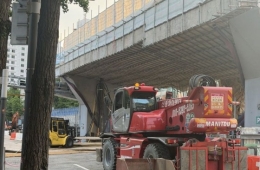
- "My Most Respected Father"... Pharmacist YouTuber Yakbbu Loses Father in Seosomun Overpass Accident
Such borrowing is seen as a consequence of aggressive mergers and acquisitions (M&A). Chairman Chung reportedly made frequent acquisitions at premium prices due to urgency, and there were many unrelated transactions—such as wineries—that should have been made with personal funds. The Governance Forum stated, "With companies such as Shinsegae Engineering & Construction and Chosun Hotel & Resort also facing difficulties, it is urgent to reduce the group’s overall debt, but Chairman Chung seems unaware of the seriousness. Despite amendments to the Commercial Act, disregard for ordinary shareholders continues, as seen in comprehensive share swaps between Emart and Shinsegae Food," the forum criticized.
© The Asia Business Daily(www.asiae.co.kr). All rights reserved.