Kwon Daeyoung: "No More Nominally Productive Finance"... Proposes White Paper Disclosure for Financial Institutions
"Fourth Productive Finance Council" Held
Sharing Best Practices in Energy Finance Support
KB, Hana, and Others Expand Investments in Renewable Energy and Infrastructure
Proposal for Financial Companies to Disclose White Papers and Annual Reports
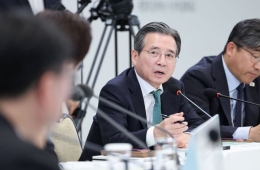
Kwon Dae-young, Vice Chairman of the Financial Services Commission, emphasized the need to systematize the capabilities of productive finance to prevent it from becoming merely nominally productive. He also proposed that, to share the achievements of productive finance with the market, financial institutions should prepare and release a white paper or annual report each fourth quarter documenting their efforts in promoting productive finance.

The Financial Services Commission announced on the 27th that it held the fourth meeting of the "Productive Finance Consultative Body" at the Government Complex Seoul the previous day, presided over by Vice Chairman Kwon. The meeting discussed the outcomes of productive finance initiatives and the financial sector's role in response to changes in the energy industry. Attendees included representatives from KB Financial Group, Hana Financial Group, NongHyup Financial Group, BNK Financial Group, JB Financial Group, Korea Investment Holdings, Shinhan Investment Corp., Woori Investment & Securities, Kyobo Life Insurance, Samsung Fire & Marine Insurance, Korea Development Bank, Industrial Bank of Korea, and partners from BCG.
On this day, the financial holding companies shared best practices and challenges related to energy finance support. KB Financial Group announced that it had provided 6.9 trillion won over the past five years for transition finance, renewable energy, and energy infrastructure. Hana Financial Group supplied 3.5 trillion won to the renewable energy sector and plans to make additional investments through the Hana Growth Together Infrastructure Fund. NongHyup Financial Group explained that it had provided 3.8 trillion won for transition finance and renewable energy sectors.
JB Financial Group supported 3.1 trillion won, mainly in solar-based renewable energy, and launched a dedicated solar loan product for RE100. Korea Investment Holdings stated that it had supplied a total of 2.34 trillion won for transition finance, renewable energy, and energy infrastructure.
In the securities sector, Shinhan Investment Corp. has been arranging projects for offshore wind and solar power generation industries and is working to diversify its portfolio by expanding investments in core infrastructure, such as energy highways. Woori Investment & Securities plans to arrange financing for energy-related projects amounting to 3.1 trillion won this year and to provide more than 1 trillion won in funding.
Policy finance institutions are also strengthening their support. Korea Development Bank, together with the five major commercial banks, is establishing a future energy fund worth 9 trillion won by 2030 and has already completed the first phase with the formation of a 1.26 trillion won fund. Industrial Bank of Korea announced a plan to supply a total of 8 trillion won in productive finance to the energy sector over the next five years.
In the insurance sector, Kyobo Life Insurance has built an energy infrastructure investment portfolio focused on solar, wind, and LNG terminals, and plans to expand support into new businesses such as fuel cell power generation and battery energy storage systems (BESS). Samsung Fire & Marine Insurance has supported a total of 3.1 trillion won in renewable energy and energy infrastructure sectors and, over the past three years, has committed about 800 billion won to 22 energy projects, continuing to expand its related investments.
At the conclusion of the meeting, Vice Chairman Kwon reiterated, as the government has emphasized multiple times, that the financial sector and the government must work together to systematize productive finance capabilities to prevent it from becoming merely nominally productive.
He stated, "Since the financial sector has established its own standards for productive finance, it must also implement a self-verification system to ensure that these standards genuinely reflect productive finance, so as to avoid any misunderstanding of inflating performance."
Hot Picks Today
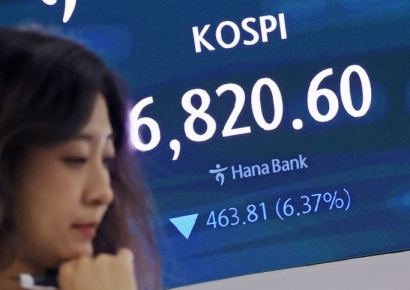 Securities Firms Reverse Course as KOSPI Falls Below 7,000... More Downgrade Reports Than Upgrades in July
- Turned on the Air Conditioner All Night and Woke Up with a Sore Throat... It's Not Just a Cold [Kok! Health]
- "Crisp and Stress-Relieving: K-Fruit Exports Hit KRW 130 Billion, Which New Star Is Rising in Japan?"
- "Spiders Crawling Across Faces While Sleeping"... Naju Apartment Complex Plagued by Spider Infestation
- Even Without Overdue Card Payments... Everyday Habits That Lower Office Workers' Credit Ratings
Vice Chairman Kwon further suggested that financial institutions should prepare and release a white paper or annual report each fourth quarter detailing their productive finance performance, thereby sharing and subjecting their outcomes to market evaluation. He also stressed the need to strengthen industry research capabilities, expand organizations and personnel, and reflect these efforts in KPIs to establish productive finance as a core part of the financial sector’s culture.
© The Asia Business Daily. All rights reserved. Unauthorized AI training and use prohibited.



![[Breaking] Coupang Apologizes for Incheon Logistics Center Fire…“Will Fully Cooperate With Authorities’ Investigation”](https://cwcontent.asiae.co.kr/asiaresize/307/2026071820375349810_1784374673.jpg)