Minimum Wage to Be Displayed as Monthly Amount; Contract-Based Application to Be Discussed on June 4 (Comprehensive)
Second Plenary Session Held on the 26th, Decision Made to Display Monthly Conversion Amount
Both Labor and Management Cite "Samsung Performance Bonus" as Key Argument
The plenary session of the Minimum Wage Commission to determine next year's minimum wage resumed after a month-long hiatus. The employer side argued that, although Korea's economic performance has improved thanks to a boom in semiconductor exports, underperforming small businesses that are most affected by the minimum wage continue to struggle. They insisted that the minimum wage should be set with due consideration for the payment capacity of these businesses. In contrast, the labor side demanded a minimum wage increase sufficient to prevent a decline in real wages, citing the significant burden on workers' cost of living resulting from price hikes triggered by the war in the Middle East.
Meanwhile, at the meeting, both the employer and labor representatives referenced the controversy over Samsung Electronics' performance bonuses, using it respectively as grounds for either raising or lowering the minimum wage.

Kwon Sunwon, Chairperson of the Minimum Wage Commission, is presiding over the 2nd plenary meeting held on the 26th at the Minimum Wage Commission in the Government Complex Sejong. Photo by Yonhap News
View original imageThe Minimum Wage Commission held its 2nd plenary session at the Government Complex Sejong on the afternoon of the 26th. Ryu Gijeong, Executive Managing Director of the Korea Employers Federation and an employer representative, stated in his opening remarks, "Although our economy posted solid results in the first quarter due to export growth, sectors heavily impacted by the minimum wage remain sluggish." He continued, "Production in the accommodation and food service industry, which is sensitive to domestic demand, fell by 1.3%, and as of the end of April, the total outstanding loans for sole proprietors reached a record high of 460 trillion won." Ryu stressed, "Given these circumstances, the payment capacity of small and micro businesses must be the top priority in this year's minimum wage review." He also called for differentiated application by industry. Ryu added, "At the very least, the most vulnerable sectors that currently cannot bear the minimum wage should be subject to differentiated standards."
Employer representative Yang Okseok, Head of the Workforce Policy Division at the Korea Federation of SMEs, argued, "While a boom in semiconductors has led to record-breaking results, the vast majority of small and micro businesses, as well as their workers, are suffering from a sense of relative deprivation." He went on to emphasize that "these small businesses, microenterprises, and self-employed individuals have fallen into the lowest income brackets and simply have no capacity for further minimum wage hikes."

On the 26th, at the second plenary meeting of the Minimum Wage Commission held at the Government Sejong Complex, Lee Miseon, Deputy Chairperson of the Korean Confederation of Trade Unions and a worker representative, is speaking. Photo by Yonhap News Agency
View original imageOn the other hand, labor representatives highlighted the livelihoods crisis facing workers, which lies beneath the surface of dazzling economic indicators such as the KOSPI surpassing 8,000 points. Ryu Giseop, Secretary-General of the Federation of Korean Trade Unions and worker representative, criticized the growing income gap in the labor market by mentioning both the Samsung Electronics performance bonus controversy and the surge in the KOSPI. Ryu pointed out, "The compensation gap, which instantly surpasses decades' worth of annual wages for minimum wage workers, is simply too vast to be explained as a matter of individual 'luck.'" He further noted, "With mounting inflationary pressures, most low-wage workers are struggling to make ends meet." Ryu emphasized, "We must clearly demonstrate the effect of raising the minimum wage in order to break the vicious cycle of deepening polarization of labor income." He also insisted that platform and contract-based workers should be covered by the minimum wage. Ryu urged, "The scope of minimum wage protection must be expanded to reflect the growing diversity of work forms."
Lee Miseon, Deputy Chair of the Korean Confederation of Trade Unions and worker representative, stated, "Even though the minimum wage has surpassed 10,000 won, workers still have empty pockets and feel increasingly hopeless, believing that working more only leads to a net loss." She added, "We must seriously consider the harsh reality in which workers are barely surviving on less than 2 million won in net monthly income amid soaring prices." Lee strongly called for "this Minimum Wage Commission to ensure a just increase that safeguards the survival of low-wage workers and to decide on comprehensive application for all workers."
At the meeting, opinions gathered during this month's labor-management stakeholder hearings, as well as feedback from workers and employers at workplaces, were shared. Reports were also presented on analyses conducted by the subcommittee, including "Analysis of Living Expenses for Single, Unmarried Workers," "Wage Status Analysis," and "Survey on the Impact of Minimum Wage Application."
Hot Picks Today
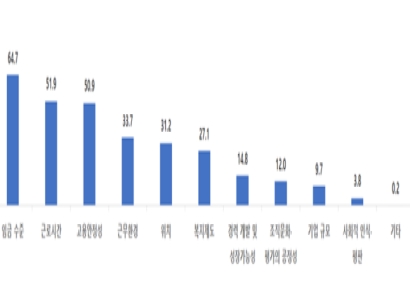 "Please Pay Me at Least 3 Million Won a Month": More Than Half of Young People Today Prioritize "Working Conditions" Over Company Size
- Selling Like Crazy Every Year... 30-Year-Old Hetbahn Takes on a New Challenge: Tastes Better Than "Mom's Home Cooking" [On-Site Report]
- "Americans Would Be Amazed If They Came": Wide-Eyed at a Sight They've Never Seen Before... Foreigners Also Fall for K-Baseball [K-Holic]
- "Hey, Lady, Teach Your Kids to Behave!" ... 300,000 Won in Cash and a Bodily Injury Claim Demanded Over Child's Door Ding
- Beachgoer Finds 'Plastic' That Turns Out to Be Perfume Ingredient Worth More Than Twice as Much as Gold
The Minimum Wage Commission decided that the final minimum wage will be set by hourly rate, but will also be displayed as a monthly amount based on a 209-hour work month. The 3rd plenary session is scheduled for June 4. From the next review, discussions will begin on whether to apply the minimum wage to contract-based workers. By law, the deadline for the minimum wage review is the end of June, 90 days after the request for review from the Minister of Employment and Labor. However, in most cases, reviews have extended beyond the deadline into July.
© The Asia Business Daily. All rights reserved. Unauthorized AI training and use prohibited.