After the Local Elections: Eyes on Kim Minseok as Focus Shifts to Second-Term Cabinet and Blue House Reshuffle
Changes in Ruling Party Power Structure Expected as Public Sentiment Shifts After Local Elections… Speculation Mounts
First Anniversary and Local Election Coincide… Blue House: "We Will Know After the Election"
If Kim Runs for Party Leadership, Prime Minister Appointment Is Unavoidable
Kang Hunsik, Woo Wonshik, Jeong Seongho Among Potential Successors
Attention on Blue House Key Staff Appointments… Middle East Situation and Economic Response Remain Key Variables
Following the June 3 local elections, speculation surrounding President Lee Jae-myung's "second-term Cabinet" is spreading among the ruling party and government circles. With the nationwide elections and parliamentary by-elections coinciding with the first anniversary of President Lee's inauguration, there is growing demand for personnel changes to re-energize state affairs. The upcoming Democratic Party national convention and the dispatch of key Blue House staff to election campaigns are further fueling early discussions about a Cabinet reshuffle. There is also speculation that this may not be a simple replacement of a few ministers, but could expand into a comprehensive personnel overhaul encompassing the Prime Minister, Cabinet members, and Blue House advisors as part of the second-term team.
This local election is the first nationwide vote since the launch of the Lee Jae-myung administration. Parliamentary by-elections will also be held in 14 constituencies across the country, 13 of which were originally held by Democratic Party lawmakers, meaning the results are likely to directly affect the internal power dynamics of the ruling party. The local elections serve as both an assessment of the administration’s first year and as the starting point for a reshuffling of party power heading into the Democratic Party's national convention in August. Multiple Blue House officials have not denied the possibility of a Cabinet or Blue House staff reshuffle after the elections, saying, "We will know after seeing the post-election situation."
Prime Minister Kim Minseok Holds the Key

President Lee Jae-myung is speaking at the Cabinet meeting and Emergency Economic Inspection Meeting held at the Blue House on May 20, 2026. Photo by Yonhap News
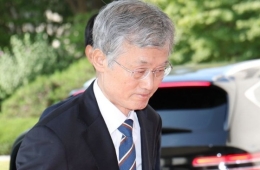
View original imageThe biggest focus is on the future of Prime Minister Kim Minseok. While carrying out his responsibilities in government management and legislative support under President Lee's direction, Prime Minister Kim has recently increased his engagement with the National Assembly. On May 11 and 12, he invited ruling and opposition lawmakers from the National Assembly’s Land, Infrastructure and Transport Committee and the Political Affairs Committee to the official prime minister’s residence in Samcheong-dong, Seoul, for dinner. On May 19, he also met with Han Byungdo, the Democratic Party's floor leader, and the newly appointed leadership team for dinner. While the Prime Minister's Office described these gatherings as opportunities to request cooperation for a "legislative speed drive," some in the ruling party interpret them as efforts to broaden support ahead of the August national convention.
Prime Minister Kim’s activities are closely linked to the Democratic Party’s next leadership race. After the local elections, the party is expected to shift rapidly into preparations for its August convention. While there is speculation that Jeong Cheongrae may seek re-election as party leader, attention is also focused on both Prime Minister Kim and Song Younggil, candidate for Incheon Yeonsu-gap. Should Prime Minister Kim actually run for party leadership, a change in the prime minister would be inevitable, making the appointment of his successor the starting point for the second-term Cabinet.
Potential candidates for the next prime minister are being discussed both inside and outside political circles. Names mentioned include Kang Hunsik, Chief Presidential Secretary, Woo Wonshik, Speaker of the National Assembly, and Jeong Seongho, Minister of Justice. Other figures with experience in policy coordination, such as Han Jeongae, chairman of the Democratic Party's Policy Committee, are also being considered. Some observers speculate that a traditional bureaucrat may be appointed to speed up government achievements. Since the prime minister’s appointment requires National Assembly approval, stability in governance, relations between government and party, and interactions with the opposition all need to be carefully considered.
A ruling party official analyzed, "If a political figure is appointed, it could signal an intent to strengthen the ruling party’s control and response to the National Assembly after the local elections. On the other hand, if someone with experience in labor, social dialogue, or the economic sector is selected, the next prime minister will likely have a ‘managerial’ role focused on responding to the Middle East-driven economic crisis and livelihood issues." If the initial Cabinet was characterized as a "crisis management team" establishing the administration’s framework, the second-term Cabinet is expected to be evaluated on policy performance and execution capabilities.
There are also calls for a ministerial-level reshuffle. The government is reportedly conducting performance evaluations of the heads of central administrative agencies ahead of the June 3 local elections. Since these evaluations, typically held in September or October, have been moved up before the elections, some in government circles believe this may be a preliminary review in anticipation of a post-election Cabinet reshuffle. Unlike agency evaluations, these reviews focus on the personal competencies and leadership of ministers and vice ministers. However, the Office for Government Policy Coordination has drawn a line, stating, "These are regular evaluations," and denying any special intent for a reshuffle.
Growing Demand for Blue House Staff Reshuffle

President Lee Jae-myung is entering the 48th UNESCO World Heritage Committee Preparation Status Meeting held on May 27 in Haeundae District, Busan. 2026.5.27 Photo by Yonhap News
View original imageThere is also significant demand for a reshuffle of Blue House advisors. Ha Jungwoo, former Chief Presidential Secretary for AI Future Planning, resigned to run in the Busan Buk-gap by-election, and former Blue House spokespersons Kim Namjun and Jeon Eunsu are running in the Incheon Gyeyang and Chungnam Asan by-elections, respectively. With key Blue House aides now on the front lines of the election campaign, immediate appointments to fill vacancies such as Chief Secretary for AI Future Planning and spokesperson are unavoidable after the local elections. In addition, some Blue House staff members have informally expressed their intention to return to their original posts after leaving the Blue House. Some observers also expect changes in the diplomatic and security lines, including the National Security Office.
Blue House personnel moves mean more than just filling vacancies. Since its launch, the Lee Jae-myung administration has emphasized "visible governance" through public Cabinet meetings, live-streamed work briefings, on-site visits, and direct communication via social media. The post-election reshuffling of advisors is directly tied to whether the administration will maintain this style of governance. In particular, the Chief Secretary for AI Future Planning is closely linked to President Lee’s core policy initiative to position Korea as one of the world’s top three AI powers. The appointment of a new spokesperson is also tied to the ability to explain policy achievements to the public and respond to opposition attacks after the elections.
Hot Picks Today
!["Just by Parking Money at the Bank? Unusually High Parking Account Rates Lately [Practical Asset Management]"](https://cwcontent.asiae.co.kr/asiaresize/93/2026092308565839400_1790121417.png) "Just by Parking Money at the Bank? Unusually High Parking Account Rates Lately [Practical Asset Management]"
"Just by Parking Money at the Bank? Unusually High Parking Account Rates Lately [Practical Asset Management]"
- "The 'Financial Tip' Known Only to Gangnam Mothers Now Available to All: How Will the National Pension Change for 18-Year-Olds?"
- "Such an Extent?" Shocking Change Observed in Japan... How Severe Is the 'Economic Stagnation'?
- Minister Kim Younghoon: "Researching Introduction of Minimum Remuneration System for Platform Workers... Tripartite Dialogue Needed"
- "If Captured, You're a Traitor"... Why the North Korean POW in Ukraine Suffered Severe Facial Injuries
Key variables include the situation in the Middle East and economic policy responses. Given ongoing high oil prices, exchange rate instability, and supply chain pressures stemming from the Middle East, a large-scale reshuffle of economic ministries could spark concerns about policy gaps. Another Blue House official commented, "As the focus for the Lee Jae-myung administration's second term is on delivering results, we have no choice but to carefully consider the selection of Blue House staff accordingly."
© The Asia Business Daily. All rights reserved. Unauthorized AI training and use prohibited.