Aftermath of Business Expense Competition: Insurance Companies Face Growing Surrender Value Reserve Burden
More Than Half of New Contract CSM Allocated to Reserves
Burden Remains Despite Higher Capital Ratios
"1,200% Rule" to Take Effect in July Draws Attention
Insurance companies are facing growing pressure from increased surrender value reserve burdens as they aggressively expand agent commissions and business expenses in an effort to boost new insurance contracts. This is because the costs are surging alongside efforts to secure contractual service margin (CSM), which represents future profits. Experts point out that securing sustainable CSM with less cost burden is more important than simply increasing the scale of contracts.

According to the insurance industry on May 27, the surrender value reserve accumulated by the top five non-life insurers in the first quarter of this year—Meritz Fire & Marine Insurance, Samsung Fire & Marine Insurance, Hyundai Marine & Fire Insurance, DB Insurance, and KB Insurance—reached 1.43 trillion won, equivalent to about 55% of the 2.58 trillion won in new contract CSM. This means that even if insurers secure future profits through new contracts, more than half of that amount is being set aside as surrender value reserves.
The burden is also significant for the life insurance sector. Samsung Life Insurance set aside 819 billion won, about 97% of its first-quarter new contract CSM, while Hanwha Life Insurance accumulated 601 billion won, about 98%, as surrender value reserves.
The pressing issue is that the surrender value reserve burden is growing faster than expected. Industry analysts point out that the competition structure, centered on sales channels, is exacerbating the surrender reserve problem. A significant portion of the value added generated by insurers is being paid out as agent commissions and other costs, weakening the quality of CSM that remains within the insurers. Lee Byung-geon, Head of Research at DB Financial Investment, explained, "High initial contract expenses, which are the main cause of rising surrender value reserves, continued in the first quarter. Excessive spending has widened the gap between expense deferral and amortization, and this structure is leading to a sharp increase in surrender value reserves."
Although insurers' new risk-based capital (K-ICS) ratios have generally improved recently due to rising interest rates and increased asset values, the industry explains that improvement in capital ratios and the burden of surrender value reserves stem from separate causes. The financial authorities have decided to partially ease the reserve accumulation burden for insurers with solid financial soundness—those with a K-ICS ratio of 170% or higher—but the industry believes that unless the excessive business expense structure inherent in the process of securing new contracts is fundamentally addressed, it will be difficult to fully resolve the overall burden on shareholder returns and capital.
Financial authorities are also monitoring excessive competition for new contracts and the expansion of business expenses, and have begun revising related regulations. A key measure is the "1,200% rule," which will apply to corporate insurance agency (GA) channels starting in July. The rule aims to limit advance commissions exceeding 1,200% of monthly premiums in order to curb excessive business expense competition.
Hot Picks Today
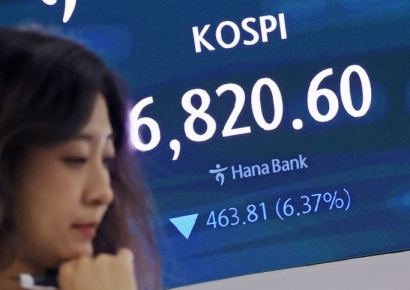 Securities Firms Reverse Course as KOSPI Falls Below 7,000... More Downgrade Reports Than Upgrades in July
- Turned on the Air Conditioner All Night and Woke Up with a Sore Throat... It's Not Just a Cold [Kok! Health]
- "Crisp and Stress-Relieving: K-Fruit Exports Hit KRW 130 Billion, Which New Star Is Rising in Japan?"
- LH Restructuring Plan to Be Announced in September... New Type of Public Rental Housing Targeting Middle Class Prepared [Work Report]
- Even Without Overdue Card Payments... Everyday Habits That Lower Office Workers' Credit Ratings

An industry official said, "Securing sustainable CSM is more important than simply increasing its scale. If excessive competition for new contracts and business expense expansion continue, the burden of surrender value reserves will keep growing. Therefore, improving business expense efficiency and stabilizing competition among sales channels are key challenges."
© The Asia Business Daily. All rights reserved. Unauthorized AI training and use prohibited.




![[Breaking] Coupang Apologizes for Incheon Logistics Center Fire…“Will Fully Cooperate With Authorities’ Investigation”](https://cwcontent.asiae.co.kr/asiaresize/307/2026071820375349810_1784374673.jpg)