Merger Recommended for Information and Broadcasting Communication Funds... National Pension Fund Maintains 'Good' Global No. 1 Return
Ministry of Economy and Budget Affairs Releases 2026 Fund Assessment Results
Four Funds, Including Tourism and Culture & Arts, Receive Conditional Continuation
National Pension Fund Achieves 18.97% Return, Score Rises to 80.4
In the 2026 fund assessment, a recommendation was issued to merge the Information and Communication Promotion Fund and the Broadcasting and Communications Development Fund. In contrast, the Rural Household Savings Promotion Fund received a rating of "Very Insufficient" in the operational assessment due to poor asset management performance. The National Pension Fund recorded the highest return among global pension funds, raising its score from the previous year, but maintained the same "Good" rating as last year.
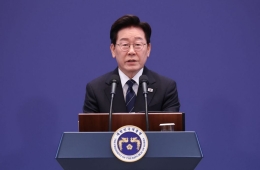
On May 26, the Ministry of Economy and Budget Affairs reported the "2026 Fund Assessment Results" at a Cabinet meeting held at the Government Complex Seoul. The fund assessment is carried out by a fund management evaluation panel consisting of 36 private-sector experts. The assessment is divided into two parts: the persistence assessment, which evaluates the necessity of maintaining the fund and the appropriateness of its financial structure, and the operational assessment, which evaluates the management performance and system adequacy of surplus assets. The persistence assessment is conducted once every three years, and this year, 24 funds, including the Broadcasting and Communications Development Fund, were evaluated.
As a result of the persistence assessment, the Information and Communication Promotion Fund and the Broadcasting and Communications Development Fund received a "merger recommendation" because their policy targets and support areas largely overlap, due to the convergence of information and communication technology (ICT), digital transformation, and the expansion of the artificial intelligence (AI) industry. It was also taken into account that both funds have frequency allocation fees as their main source of revenue. Related legislation is currently under discussion in the National Assembly.
Four funds—including the Tourism Promotion and Development Fund, the Culture and Arts Promotion Fund, the Industrial Technology and Commercialization Promotion Fund, and the Asbestos Damage Relief Fund—received a "conditional persistence recommendation." The Tourism Promotion and Development Fund was advised to strengthen financial stability, for example, by increasing the departure tax, while the Culture and Arts Promotion Fund was urged to restructure its projects around basic arts and to identify new sources of revenue. The government also mentioned the need to consider integration measures to resolve the imbalance of resources among the arts, tourism, and sports sectors.

In the financial adequacy assessment, seven funds (Inter-Korean Cooperation, Economic Cooperation, Culture and Arts Promotion, Film Promotion, Information and Communication Promotion, Electric Power Industry Infrastructure, and Industrial Technology and Commercialization Promotion Funds) with insufficient medium-term available assets were advised to adjust their programs and seek new revenue sources. For nine funds (National Sports Promotion, Asbestos Damage Relief, Press Promotion, Military Welfare, Veterans, and Four Major Rivers Geum River Basin Management Funds) with excessive reserves, it was recommended to develop new programs and strengthen monitoring of expenditure demands.
The fund management assessment was conducted for 24 large and small to mid-sized funds, excluding the National Pension Fund. The average score was 72.9 points, a decrease of 0.8 points from the previous year's 73.7 points. This decline was attributed to lower short-term asset returns and poor assessment results for some funds.
Three funds—the Private School Teachers’ Pension Fund, the SME Start-up and Promotion Fund, and the Employment Promotion and Vocational Rehabilitation Fund for Persons with Disabilities—received an "Excellent" rating for their strong asset management performance. Conversely, the Rural Household Savings Promotion Fund received a "Very Insufficient" rating due to poor operational outcomes and inadequate asset management systems; the government recommended the introduction of a fully consigned pension investment pool system.
The National Pension Fund maintained a "Good" rating in a comparative assessment against the world's five largest pension funds. This "Good" rating has continued for seven consecutive years since 2020. Last year, driven by higher returns from domestic equities and the expansion of overseas assets, the fund achieved an operational return of 18.97%, outperforming the U.S. CalPERS (15.46%), Norway's sovereign wealth fund GPFG (15.11%), and Japan's GPIF (12.29%). The score increased from 77.5 points last year to 80.4 points.
Hot Picks Today
 "If You Become a Teacher, You Don't Have to Repay Student Loans"... Japan Pulls Out 'Repayment Exemption' After 30 Years
- "How Little Do Koreans Read? Who Will Acquire Munhakdongne Now on the Market [Weekend Money]"
- "I'll Pay Cash for This Home"... Cash Purchases Rise and Loan Share Falls as Sub-1 Billion Won Listings Increase in China
- "If You Go Late, There Are No Seats; Crowds Gather Before Sunset"... The 'Yajang' Hotspots Drawing 20-Somethings These Days
- "Raised a Stray Kitten, but..." Scientific Community Stunned: First New Wild Cat Species Discovered in 100 Years
The government plans to reflect these assessment results in next year's fund management plans and public institution management evaluations. After submitting them to the National Assembly together with the national settlement report at the end of this month, the results will be released through the Open Fiscal Data website.
© The Asia Business Daily. All rights reserved. Unauthorized AI training and use prohibited.