LG Uplus: "Delivering the North and Central America World Cup Without Disruptions Through Six Diversified Broadcast Circuits"
Increased Transmission Reliability from North and Central America to Korea
Contingency Measures in Place for Local Internet Network Issues
LG Uplus is working hard to prepare for international broadcast coverage in order to deliver the excitement of the "2026 FIFA World Cup North and Central America," which will kick off next month.

LG Uplus announced on the 25th that it will strengthen its "three-stage contingency system," which has been applied to international sports event broadcasts, to completely prevent any signal disruptions. The company has already demonstrated its stable broadcasting capabilities through events such as the "2026 Milano Winter Olympics" and the "2024 Paris Olympics."
Broadcasting international sports events involves a variety of variables during long-distance transmission, such as undersea cable damage and power outages. Even brief signal interruptions can be critical to the quality of live broadcasts. To address this, LG Uplus will diversify the undersea cable routes into six separate paths from Dallas, Texas, where the International Broadcast Center (IBC) for the World Cup is located, to the domestic broadcasting hub, covering approximately 14,000 kilometers.
Specifically, four routes will be established from Dallas via the LG Uplus LA point of presence (PoP), across the Pacific Ocean to the LG Uplus Anyang headquarters. In addition, two separate routes will operate from Dallas through San Jose and Los Angeles in California, across the Pacific Ocean, and connect to the LG Uplus Bangbae headquarters. Due to the ongoing war in the Middle East, no transmission routes have been established through the Atlantic-Indian Ocean corridor. LG Uplus expects that, by adding two more circuits on top of the four used during the Milano Winter Olympics, broadcast reliability will be further enhanced.
Hitless protection technology will be applied throughout the entire video transmission process. This technology simultaneously receives signals from all circuits, analyzes packets in real time, and instantly switches to another route if any abnormality is detected in one of the circuits. As a result, screen interruptions experienced by viewers will be minimized.
LG Uplus is also preparing an SRT protocol video transmission system using local internet networks as a contingency plan in case of undersea cable circuit failures. If even the local internet network becomes unavailable, a wireless transmission system using MNG equipment will be activated. This system connects to local mobile networks using a portable network device weighing about 1 kg, enabling the transmission of necessary video footage in emergency situations.
In addition, LG Uplus will conduct around-the-clock inspections of the entire communication infrastructure from its Anyang headquarters, which oversees wired platform services during the World Cup period. To achieve this, four staff members will be dispatched to Dallas, and 18 dedicated employees will be stationed at the Anyang headquarters, while a real-time collaboration system will be established with overseas partners.
Hot Picks Today
!["Afraid Korea Might Restart Production, The Tide Turns"...Taiwan Shaken by Korean Memory Expansion [Taiwan Chip Dispatch]](https://cwcontent.asiae.co.kr/asiaresize/93/2025092314141644857_1758604457.png) "Afraid Korea Might Restart Production, The Tide Turns"...Taiwan Shaken by Korean Memory Expansion [Taiwan Chip Dispatch]
"Afraid Korea Might Restart Production, The Tide Turns"...Taiwan Shaken by Korean Memory Expansion [Taiwan Chip Dispatch]
- "Securities Analysts Explain Why Samsung Electronics and SK hynix Stock Plunge Is Excessive and Irrational [Weekend Money]"
- Jungbok Today: How About This Instead of Samgyetang?... Monks Recommend 'Vegetarian Health Foods'
- President Lee Unites with Jensen Huang, Lee Jay-yong, and Chey Tae-won over Fish and Chips Dinner... Toasts to 'AI Alliance' with Beer in Hand
- "No Matter How Hot It Is, This Crosses the Line": Outrage as Woman Bathes and Scrubs Herself in Broad Daylight at Cheonggyecheon, Stirring 'Most Notorious Villain' Scandal
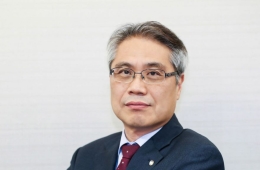
Jung Hajoon, Senior Vice President and Head of Wired Platform at LG Uplus, stated, "Even minor signal disruptions can cause great inconvenience to viewers of the World Cup, which attracts nationwide attention, so we are making thorough preparations to address every possible variable. Based on LG Uplus's differentiated expertise accumulated in international sports event broadcasting, we will reliably deliver the excitement from the field."
© The Asia Business Daily. All rights reserved. Unauthorized AI training and use prohibited.