[2026 Financial Forum] Paul Blustein: "Stablecoins Are Not the Solution to Dollar Hegemony... May Disrupt Financial Order"
Industry’s Claims of ‘Maintaining Dollar Hegemony’ Called “Exaggerated Logic”
Risks of Weakened AML and KYC Regulations...Control of Dollar Settlement Network Is Key
Concerns Over Threats to Monetary Sovereignty in Emerging Markets...Attention o
"Even if dollar hegemony is shaken, stablecoins are never the solution. On the contrary, there is a risk that they could undermine anti-money laundering frameworks and seriously weaken the monetary sovereignty of individual countries."

Paul Bluestein, an economic journalist, is attending the "2026 Asia Finance Forum" hosted by The Asia Business Daily at the Chosun Hotel in Jung-gu, Seoul on the 21st. He is delivering a lecture titled "Stablecoins and the Dollar: Between Expectations and Reality" via Zoom connection. 2026.5.21 Photo by Kang Jinhyung
View original imagePaul Blustein, an economic journalist and author of "King Dollar," issued this warning on May 21 at the Asian Financial Forum 2026, held at The Westin Chosun Seoul in Jung-gu, Seoul. The forum was themed "The Great Transformation of Future Finance: The Era of Productive Capital and the New Financial Order."
Dollar Hegemony Stems from Treasury Market Liquidity... The 'Stablecoin Solution' Is a Myth
Blustein noted that the current virtual asset industry views stablecoins as a key tool for maintaining U.S. national security and dollar hegemony. He pointed out, "The original idea behind virtual assets was to create a system that would operate without intermediaries like governments and banks, but now they are actually being promoted as a 'technology to defend dollar hegemony.'"
Regarding these claims from the industry, Blustein stated, "They are highly exaggerated or outright misguided." He asserted, "The international status of the dollar already stands on a very strong foundation, even without stablecoins." He went on to explain that, historically, crises over dollar hegemony have repeatedly emerged—such as the collapse of the Bretton Woods system, high inflation in the 1970s, the launch of the euro, the global financial crisis, and the rise of China—yet the dollar-centered system has been maintained.
He identified the overwhelming liquidity of the U.S. Treasury market and the openness of U.S. capital markets as the core foundations of dollar hegemony. The fact that enormous volumes of U.S. Treasury bonds can be bought and sold at any time with minimal market shock, and that capital from all over the world can move freely in and out of the U.S. market without regulation, is, in his analysis, the true driving force behind the dollar's dominance.
Blustein then highlighted the fatal risks posed by the spread of stablecoins, citing the potential for illegal financial transactions and the circumvention of U.S. financial sanctions. "Stablecoins have the nature of being a kind of anonymous asset that does not pass through the banking system," he said. "This could fundamentally undermine the anti-money laundering (AML) and know-your-customer (KYC) regulatory frameworks that underpin the international financial order," he warned.
He also explained that the dollar-based sanctions system does not operate simply by banning the use of the dollar. The core of dollar-based sanctions is that banks worldwide need access to the dollar payment network for international transactions, and the United States leverages this to create powerful sanction effects. The U.S. can exclude banks that transact with sanctioned entities from the dollar payment network, and this is what drives the global financial order.
"Emerging Market Currency Sovereignty at Risk"

Paul Bluestein, an economic journalist, is attending the "2026 Asia Finance Forum" hosted by The Asia Business Daily at the Chosun Hotel in Jung-gu, Seoul on the 21st. He is giving a lecture titled "Stablecoin and the Dollar: Between Expectations and Reality." 2026.5.21 Photo by Kang Jinhyung
View original imageHe also issued a warning about "dollarization"—the excessive use of the dollar—spreading rapidly in emerging markets. If citizens of emerging countries with unstable macroeconomic environments begin indiscriminately using dollar-based stablecoins instead of their own national currencies, the influence of central bank monetary policy in those countries will inevitably be neutralized. Blustein predicted, "In countries with stable financial systems like Korea, the problem may be less severe, but in less developed countries or emerging markets with high risks of capital flight, it could become a flashpoint for financial crises." Regarding the optimism that sound government policies could resolve these issues, he said, "That is an excessively unrealistic diagnosis; the weakening of monetary sovereignty is an unavoidable reality."
However, he did not entirely dismiss the technological innovation and some positive aspects of stablecoins. He acknowledged that, for small business owners who do not benefit from the global banking system, or for citizens of countries facing hyperinflation or capital controls, stablecoins could, to some extent, serve as an alternative means of storing asset value. He also highly rated the scalability of programmable money, such as automated payments or automatic crop insurance payouts based on blockchain smart contracts.
Nevertheless, he pointed out that the touted cost-saving effects for remittances promoted by the industry are still overhyped. While some fees may be reduced in cross-border transfers, in many cases the foreign exchange and withdrawal costs incurred at the final stage—when the recipient converts the funds into local fiat currency—offset these savings. He argued that, in fact, existing advanced fintech services may be more efficient in terms of cost and speed.
In conclusion, Blustein suggested that rather than imposing a blanket ban on the new technology represented by stablecoins, it is necessary to recognize the potential for innovation while managing risks through a strict regulatory framework—a "principle-based regulation" approach.
Hot Picks Today
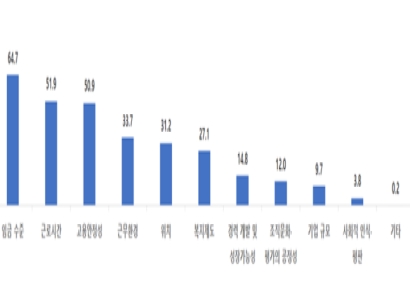 "Please Pay Me at Least 3 Million Won a Month": More Than Half of Young People Today Prioritize "Working Conditions" Over Company Size
- Selling Like Crazy Every Year... 30-Year-Old Hetbahn Takes on a New Challenge: Tastes Better Than "Mom's Home Cooking" [On-Site Report]
- Sleep Is Koreans' 'No. 1' Health Interest, but They Averaged Under 7 Hours a Night This Year
- "Hey, Lady, Teach Your Kids to Behave!" ... 300,000 Won in Cash and a Bodily Injury Claim Demanded Over Child's Door Ding
- "Don't Trust This Woman": Documentary on 'Investment Scammer' Earns KRW 22 Billion in One Week
Finally, he emphasized, "Korea is already serving as a global benchmark in the process of digital financial transformation and infrastructure building," adding, "The deposit tokenization model currently being piloted by Korean financial institutions, and the won-based stablecoin model controlled under government regulation, will become highly significant international case studies in the future reorganization of the global monetary order."
© The Asia Business Daily. All rights reserved. Unauthorized AI training and use prohibited.





![[Market ING] KOSPI Seeks Rebound in Superweek Packed with Corporate Earnings and FOMC](https://cwcontent.asiae.co.kr/asiaresize/307/2026102514484873155_1792907327.jpg)