Seo Joono, Nowon District Mayor Candidate: "Gwangwoon Univ. Station Area and Chang-dong Train Depot Development Will Make Nowon a Northeastern Economic Hub" [Interview]
"Reinvigorating Nowon through a Reconstruction Support System and the Garden City Paradigm"
Seo Joono, Democratic Party Candidate for Nowon District Mayor
"When I ran for city council four years ago, it was common to see vacancies on the second floors of commercial buildings. Now, we even see empty first-floor spaces. We need to attract businesses to create quality jobs and stimulate reconstruction and redevelopment to increase the supply of new apartments that residents prefer."
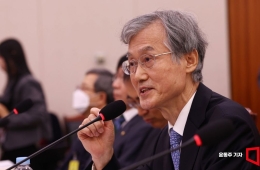
Seo Joono, candidate for mayor of Nowon District, whom we met at his campaign office, said, "The population of Nowon District peaked at 650,000 in 2010, but has dropped to the 480,000 range this year. If the city fails to secure competitiveness, the population could fall below 400,000 by 2030." His assessment was solemn and grave. Seo emphasized, "We must transform Nowon District into an economic hub in the northeastern region," adding, "We can address these issues through the development of the Gwangwoon University station area and the Chang-dong train depot redevelopment."

Seo Joono, candidate for mayor of Nowon District, is explaining his main campaign promises in an interview with The Asia Business Daily. Provided by the election office.
View original imageSeo has worked on the frontlines of Nowon's administration and policy for over 20 years—as an aide to Assemblyman Woo Wonshik (currently Speaker of the National Assembly) for 13 years, as chief of staff when Kim Sungwhan, now Minister of Climate, Energy and Environment, served as Nowon District Mayor, and as a Seoul city council member. We met with Seo on the afternoon of the 15th. The following is a Q&A from our conversation.
-What is the most urgent issue facing Nowon District?
The most pressing issues are population decline, the resulting stagnation of neighborhood economies, and the weakening of urban competitiveness as their root cause. It is essential to attract businesses and expand employment, secure convenient transportation—especially improved access to Gangnam—and pursue rapid reconstruction and redevelopment. These three elements must work in tandem, like interconnected gears.
If companies move in and new transit routes offer swift access to Gangnam, the business case for reconstruction and redevelopment improves. For example, when the plan to relocate the headquarters of IPARK Hyundai Development Company to the Gwangwoon University station area was announced, nearby housing prices and the calculation of reconstruction contributions changed significantly.
-You have emphasized Nowon's role as a self-sufficient city and economic hub in the northeastern region.
To become a self-sufficient city and an economic hub in the northeastern region, three projects must succeed: the development of the Gwangwoon University station area, the creation of the Seoul Digital Bio City (S-DBC) at the Chang-dong train depot, and the development of the KEPCO Human Resources Development Center site. Hyundai Development Company will relocate its headquarters to the Gwangwoon University station area in 2028, but one company alone is not enough. I understand that around 10 additional companies are expected to move in as well.
The Chang-dong train depot project aims to begin infrastructure construction in 2028 in line with the S-DBC plan announced last year. The original discussion about relocating the train depot began with an agreement led by Assemblymen Woo Wonshik, Park Gichoon, and Lim Chaejeong in 2007. Nearly 20 years of accumulated effort are now entering the stage of fruition. Many outstanding bio companies are expected to move into this area.
We must also consider the flow connecting Dobong and Nowon. With the Seoul Arena set to open in Chang-dong next year, five-star hotels and reconstruction complexes such as Misung·Mirung·Samho (MimiSam) and Wolgye Dongsin in Nowon will be linked with the Gwangwoon University station area, creating a northeastern corridor for walking and cultural activities. This will naturally channel flows of jobs, tourism, and consumption from Dobong and Nowon toward Nowon Station. There are also plans for a complex that combines a five-star hotel with shopping and convention facilities.
I have asked Hyundai Development Company to contribute to the local community. The company should participate in welfare, cultural, and sports projects as part of its corporate social responsibility (CSR).
The KEPCO Human Resources Development Center site, located between Seoul National University of Science and Technology and Seoul Women’s University, is still in the planning stage, but the vision is to utilize the site as a bio and research complex after the center is relocated.
-You have proposed the 'garden city' concept as the next paradigm for Nowon.
The welfare and environmental foundations, and the healing city infrastructure established by previous mayors, are valuable assets for Nowon. The direction for upgrading to a 'garden city' involves connecting and promoting existing assets such as the Suraksan and Bulamsan mountain trails, the Gyeongchun Line forest path, the Jungnangcheon and Danghyeoncheon riverside trails, and the Azalea Park and Butterfly Garden, which currently exist but are scattered and underpublicized.
The underground 'Running Station' at Junggye Station, for which funding was secured during my city council term, will be completed this year. It can be linked to the Danghyeoncheon running hub and the K Mountain (Suraksan and Bulamsan) program to attract foreign visitors. We are also preparing for international urbanization.
-If elected, what will be your 'first approval' as mayor?
My first signature will be to restore the reduced budget. More than 80% of Nowon's budget is fixed costs such as welfare and personnel expenses, so there is not much discretionary funding. That is why I have set clear priorities. Projects that yield immediate results and are highly visible to residents, facilities in urgent need of personnel expense support, restoration of operating budgets for grassroots organizations, and then new campaign promises will be the order of focus.
In terms of policy, the first approval will be to establish an 'administrative support system for reconstruction and redevelopment.' Instead of leaving everything to maintenance firms, the district office will operate a separate advisory group to provide pre-consulting from the planning stage of maintenance projects.

In an interview, candidate Junho Seo stated, "I will make Nowon District an economic hub in the northeastern region." Provided by the campaign office.
View original image-Nowon District has the largest number of complexes eligible for reconstruction.
Fifty-eight complexes in the Sanggye, Junggye, and Hagye residential districts have officially entered the reconstruction phase following the announcement of the district unit plan. The original six-year schedule was shortened to two years, and the district unit plan was finalized in December last year. Now that the starting line has been drawn, we must push ahead with projects for each complex. The business feasibility adjustment coefficient is currently capped at 2.0. If we apply the average officially assessed land value, many complexes in Nowon and Gangbuk should exceed 2.0 for normal operation.
If it becomes possible to raise this cap in the next Seoul city administration, I will advocate for a higher adjustment coefficient. The MimiSam complex in Wolgye gained momentum for the project when the adjustment coefficient was combined with regulatory relaxation for station areas, as it is located right next to the Gwangwoon University station area. For the Dongsin Apartment complex in Wolgye, the district office and the city reviewed the business feasibility calculation—after the maintenance company omitted some factors—and helped improve the project by about 35 million won per household, totaling 3 billion won. This process must be systematized.
-You cite the four-year master plan for reconstruction of Nowon's 58 complexes, the realization of business feasibility adjustment coefficients, and securing 298.4 billion won for regional development as key legislative achievements during your city council term.
Ultimately, the work of the metropolitan council must be implemented at the district level to bear fruit. I have handled all of Nowon's major issues in practice for over 20 years as an aide to a National Assembly member, a district mayor's chief of staff, and a city council member. My strength lies in being a direct extension of the efforts of National Assembly Speaker Woo Wonshik, Minister Kim Sungwhan, and Mayor Oh Seungrok.
Hot Picks Today
 "Wow, Have Middle-Aged Men Had This All to Themselves?"... Women in Their 20s and 30s Find Comfort in a Standing Drink
- "Koreans Spend 1 Million Won Each and Come Back"... 'They Said They Were Going for Value for Money,' but Open Their Wallets Wide in Japan
- They Earn “430 Million Won a Year” Yet Receive Government Aid... AI Hub Declares Emergency Over “8.8 Million Won Monthly Rent”
- "Naked Again?" Controversial Actress Crosses a Line... Slammed for Sexualizing 'Child Characters'
- "They Get a Good Night's Sleep and Earn Twice My Salary... Honestly, I'm So Jealous I Could Die": Civil Servant's Post Targeting Firefighters Sparks Outrage
Minister Kim, as a two-term mayor, restructured Nowon's administrative system and built a foundation as a welfare and environmental city despite difficult conditions. Mayor Oh has elevated Nowon to a healing city over the past eight years. Now, it is time to build on this foundation and enhance the city's competitiveness.
© The Asia Business Daily. All rights reserved. Unauthorized AI training and use prohibited.