[KOSPI 10,000 Era]② Barings Asia Head: "It's Not Just About the Numbers... Market-Wide ROE Improvement Is Key"
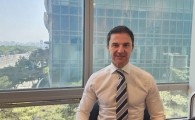
Interview with Soohai Lim, Head of Asia (ex-China) Equities at Barings
"Sustained Earnings Momentum and ROE Improvement Needed for Continued KOSPI Rally"
① [Interview] "Among global AI stocks, Samsung Electronics and SK hynix are the cheapest"
② [Interview] "The key to the 10,000-point era is improving ROE"
③ "KOSPI 10,000 possible this year," according to heads of domestic securities firms
④ "To promote long-term investment, tax reform is inevitable... The financial investment tax needs to be revisited"
⑤ Will Korea be included in the MSCI Developed Markets Index? Remaining upgrade tasks for the Korean stock market
"The key lies not in the KOSPI index itself, but in the underlying structural improvement in valuation."
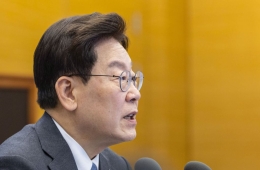
Soohai Lim, CEO of Barings Asia (excluding China), a global asset management firm, recently told The Asia Business Daily in an interview that the most important condition for the KOSPI to reach the 10,000-point era is "the sustained rise in return on equity (ROE) across the market as a whole."
First, CEO Lim cited two main factors behind the sustained rally in the Korean stock market since last year: 1) a recovery in corporate earnings led by semiconductors, and 2) policy improvements related to capital efficiency. He said, "With the initial signals of structural reform, there is greater visibility regarding corporate earnings," adding that "the Korean market is now perceived by (foreign) investors as one where the valuation discount could narrow." This is in sharp contrast to just a year ago, when the KOSPI hovered around the 3,000-point level and many foreign investors remained skeptical about government-led capital market reforms, including amendments to the Commercial Act.

He further diagnosed that whether the KOSPI rally can be sustained will depend on how long the momentum in earnings and structural indicators like ROE can be maintained. Lim also identified the fundamental causes of the "Korea Discount" as structurally low ROE and inefficient capital allocation. While the KOSPI's 12-month forward ROE has recently surpassed 20%, outpacing Taiwan and reflecting improved profitability, there are growing concerns about the concentration in certain sectors. In terms of valuation, the Korean market still trades at a significant discount compared to other major markets with similar ROE levels.
CEO Lim pointed out, "Despite the strong industrial competitiveness of the Korean stock market, valuation multiples have remained limited. Many Korean companies have prioritized financial stability or group-level decision-making over shareholder returns, resulting in constrained capital efficiency." He stressed, "Whether the Korea Discount can be further narrowed ultimately hinges on capital efficiency and governance reform. It is crucial for companies to adopt ROE as a core management indicator, focusing on it over simple growth."
He also said, "Building a more consistent and transparent shareholder return framework—such as by clarifying dividend policies and share buyback plans—can enhance investor trust. Strengthening board independence and accountability will also help ensure the effective implementation of governance reform." Lim particularly emphasized that these changes must spread across the entire market, and not be limited to certain leading companies.
He added, "Foreign investors pay close attention to whether policies and corporate actions are repeatedly carried out throughout the economic cycle, and whether these changes are spreading market-wide rather than being confined to a few companies. If structural improvements continue, the Korean market could establish itself as a more important investment destination from a global asset allocation perspective."
Related Articles
 "If the AI Cycle Ends, Will KOSPI Plunge?...Why Investors Should Still Stay in Korea [KOSPI 10,000 Era]①"
Barings, a subsidiary of the major US life insurer MassMutual, is a global asset manager overseeing more than $470 billion in assets.
© The Asia Business Daily. All rights reserved. Unauthorized AI training and use prohibited.