"Groups of 5 or More Now Restricted"... Unrelenting Running Craze Leaves Citizens and Police Exhausted
20 Marathon, Running, and Walking Events Scheduled in Seoul This May
Unauthorized Nighttime Marathons Leave Safety Blind Spots
2,757 Police Mobilized and 498 Complaints Filed
On a weekend afternoon, more than 10 members of a running crew surged along the bicycle path at Ttukseom Hangang Park in Gwangjin-gu, Seoul, making "shh!" and "chik!" noises behind pedestrians as if urging them to move aside. Without so much as a word asking people to step aside, they weaved between the walking and cycling paths, forcing citizens to hastily move to the edge of the path, and even cyclists had to slow down or stop. Lee Sojin, 39, who was walking with her child, remarked, "These days, the Hangang area feels like a running event venue every weekend. I have no idea whether these people are running with permission or just gathering and running on their own."
Driven by the recent running craze, the number of marathons and running events in downtown Seoul and around the Hangang parks has surged, leading to growing inconvenience for citizens. The emergence of unauthorized, unapproved races has also sparked increased concerns about safety blind spots.

Last April, participants gathered at the starting line of a marathon event held in the Gwanghwamun area of Jongno-gu, Seoul. Recently, with the running craze, marathons and running events have been held across downtown Seoul, leading to growing controversy over traffic control, citizen inconvenience, and the burden of safety management. Photo by Hosoo Park
View original imageAccording to a compilation of reports by The Asia Business Daily on May 20, there have been or are scheduled to be a total of 20 marathon, running, and walking events in Seoul this May alone. That averages to about four events per week. The types of events are diverse, ranging from women-only marathons and events combined with animated character games to 10km runs inspired by dating programs, as well as walking events along the Hangang and streamside areas. Large-scale running events are being held almost every week at Ttukseom Hangang Park in Gwangjin-gu and at Peace Park in Sangam, Mapo-gu.
The number of marathon events in Korea as a whole is also rising rapidly. According to the marathon information website 'Marathon Online,' there were 530 marathon events held nationwide last year. This is a steep increase compared to 346 events in 2022, 354 in 2023, and 394 in 2024. As events become more frequent, citizens are experiencing increasing fatigue from traffic controls in city centers. Baek Seongmin, 42, an office worker who commutes to a company near Gwanghwamun in Jongno-gu on weekends, said, "Every weekend, buses take detours, adding 20 to 30 minutes to my commute. Now, I even check marathon schedules before making plans."

Related complaints have also surged. In Seoul, the number of civil complaints related to traffic congestion caused by marathons rose from 15 in 2021 to 69 in 2022, soared to 498 in 2023, and reached 461 last year.
The repeated deployment of police officers for traffic control has also led to mounting fatigue among law enforcement. According to data submitted by the Seoul Metropolitan Police Agency to Assemblyman Chae Hyunil of the National Assembly's Public Administration and Security Committee, a total of 2,757 police officers were mobilized for marathon events held in Seoul last year. One officer in charge of marathon traffic management in Seoul shared, "Every weekend, we set up vehicle barriers and provide detour guidance, so weekend shifts have become the norm during marathon season. Many citizens who did not see advance notices raise their voices or complain on-site, which adds significant pressure to the scene."
There have even been cases where organizers attempted to push ahead with events without permission from local governments or district offices. On May 16, the organizers of the "Seoul Hangang Ultramarathon" tried to hold a nighttime marathon without approval; in response, the Seoul city government announced its intent to consider criminal charges and took a tough stance, leading the organizers to postpone the event. Afterward, as participant inquiries surged, they temporarily closed and later reopened the official website, and they have now announced that the first round of refunds for applicants will be processed until May 23. This event was also held last year without approval from the Seoul Metropolitan Government's Future Hangang Headquarters. At that time, the city reportedly only learned of the event's existence belatedly because the number of participants was not large.

On the 15th, a banner stating "The Seoul Hangang Ultramarathon is an unauthorized illegal event" was hung on the walking trail at Seoul Hangang Park. Seoul Hangang Ultramarathon official website
View original imageAn official from the Seoul Metropolitan Government explained, "We first learned of the event's existence at the Ttukseom drone show venue when participants asked at the on-site booth, 'How do we get through?' At that time, we instructed them to go through the official application process in the future." Another city official added, "It's not a matter of individuals needing permission just to run along the Hangang, but if participants are recruited and the event is run in a competition format, that's a different story. Consultations and safety reviews are needed not only for the Hangang section but also for every local government area the route passes through."
Some district offices have begun implementing their own measures. Seocho-gu has restricted group running of five or more people at Banpo Sports Complex, while Songpa-gu has advised against running in groups of three or more at Seokchon Lake. Seongbuk-gu is running a "run in a single line" campaign targeting running crews along Seongbuk Stream. Starting this year, the Seoul city government is also moving the starting time for city-hosted or sponsored marathons to before 7:30 a.m.—earlier than the previous 8–9 a.m.—and is limiting the number of participants per location.
Hot Picks Today
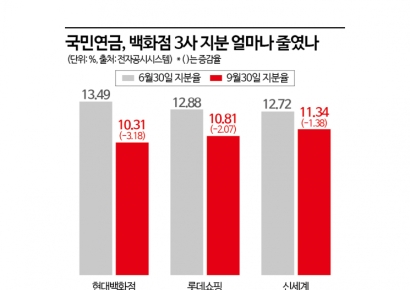 'Big Investor' NPS Has Already Cut Its Losses... Sold Department Store Stocks in Q3 Despite Strong Earnings Outlook
- "There's a Drink Like This?"... Chinese Beverage With "Korean" in Its Name Rakes in 85 Million Won in Monthly Sales
- "Bump," Then "My Phone's Broken"... Man in His 20s Arrested for Scamming 22 Million Won in Repair Costs
- "I Put in 10 Million Won, but Only 2 Million Won Is Left" ... 77% Plunge Leaves Retail Investors in Samsung Electronics and SK hynix Leveraged ETFs Crying Out
- "The leggings are all see-through. It's so embarrassing to look at," complaints prompt Lululemon to fire development staff.
Experts point out that rather than trying to suppress running culture itself, there should be clear reporting and safety standards for group running events above a certain scale. Kang Kyungwoo, a professor of Transportation and Logistics Engineering at Hanyang University, said, "In major overseas cities like New York or Boston, marathons are centered around a few symbolic events, and it is rare to have large-scale events every week in the city center as in Seoul. Since issues like traffic congestion, wasted administrative resources, and safety problems are recurring, it is necessary to consider dispersing events to the outskirts of the city and to establish management standards for group running events."
© The Asia Business Daily. All rights reserved. Unauthorized AI training and use prohibited.