Financial Services Commission Requests Reexamination of 'Hong Kong ELS Sanctions Plan' from Financial Supervisory Service ... First Time in 8 Years Since Samsung Biologics Case
FSC Requests Supplementation of Certain Facts and Legal Principles
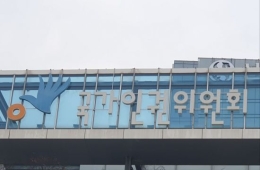
On May 13, the Financial Services Commission (FSC) requested the Financial Supervisory Service (FSS) to review its proposed sanctions related to incomplete sales of Hong Kong H Index (Hang Seng China Enterprises Index, HSCEI) equity-linked securities (ELS) by banks and other institutions. This is the first time in eight years that the FSC has returned a major sanction proposal from the FSS, the last instance being in 2018 when it requested a re-audit regarding accounting standard violations by Samsung Biologics.

According to the FSC on May 13, the issue concerning incomplete sales of Hong Kong H Index ELS was tabled at a regular meeting that day, after which the FSC asked the FSS for a review.
The FSC stated, "Based on the discussions of the agenda review subcommittee regarding the proposed measures following the inspection results of banks and securities firms in relation to incomplete sales of Hong Kong H Index ELS, we requested the FSS to supplement certain facts, applicable laws, and legal interpretations."
This effectively means that the FSC determined it could not accept the FSS's proposed sanctions as they were. In February, the FSC received a sanction resolution proposal from the FSS targeting the banking sector. At that time, the FSS disciplinary committee decided to impose a total fine of 1.4 trillion won and institutional warnings on five banks: KB Kookmin Bank, Shinhan Bank, Hana Bank, NH NongHyup Bank, and Standard Chartered Bank Korea. However, the disciplinary committee's decision is not legally binding, so the final level of sanctions is up to the FSC.
The background to the FSC's request for a review after more than three months of delay appears to be differences of opinion regarding the original sanction proposal. There have been indications within the FSC that the fine calculated by the FSS is excessive.
In particular, the FSC reportedly took issue with the fact that, after the FSS set the fine at 1.4 trillion won, it raised the need for further reduction during discussions with the FSC. The FSS's position is that it had initially considered a fine of 1.9 trillion won, but reduced it to 1.4 trillion won after accounting for voluntary compensation by banks, and that it lacked the authority to further reduce the amount through discretionary mitigation.
Furthermore, the FSC found itself in a dilemma between maintaining its consumer protection policy stance and expanding productive finance. There were significant concerns that finalizing the fine at the originally proposed level would weaken banks' capital buffers, potentially undermining the productive finance initiatives being pushed by the Lee Jae-myung administration. On the other hand, since the Hong Kong ELS incomplete sales case is the first major instance since the Financial Consumer Protection Act took effect in 2021, there were also concerns that lowering the fine too much could send the wrong message to the market.
The recent trend of financial authorities losing a series of administrative lawsuits against financial firms also appears to have influenced the FSC's decision to request a review.
Hot Picks Today
 Chey Tae-won's One Remark Sends Stocks Soaring to 'Limit-Up'... This Stock Jumps Despite SK hynix's 3% Drop
- Cho Kuk: "90 Searches of My Family ... 'Zero' Searches in Han Donghoon's Daughter's 'Fake Credentials' Probe"
- "Now We're in Our 30s and 40s, and My Husband's the Only One Still Going Strong?" ... Women Tire First While Shopping: What's Happening in Japan?
- "Apparently, you can easily make 3.3 million won a month in Korea"... The "easy-money gig" making waves among international students
- "'100% Cat Fur' - It Seemed Unbelievable, but It Was Real... Chinese Shopping Mall Rocked by Shocking Revelation"
An FSC official stated, "As soon as the proposed measures are supplemented, we will review them swiftly and thoroughly and proceed with the disposition."
© The Asia Business Daily. All rights reserved. Unauthorized AI training and use prohibited.