[Drugged Nation]⑧ Medical Narcotics Exploit Legal Loopholes as "Weight Loss Pills"
■ Chapter 2. Narcotic Crimes Targeting Teenagers
9.5 Billion Medical Narcotics Prescribed in the Past Five Years
Abuse of Diet Pills and Study Enhancement Drugs
'Teenage Drug Addiction' Temptation Within Legal Boundaries
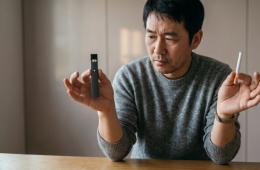
In South Korea, two out of every five people are prescribed medical narcotics. Prescriptions issued by a lax healthcare system have effectively become passes leading teenagers toward drug addiction. Reckless prescriptions of so-called 'weight loss drugs' and 'study-enhancing drugs' are luring adolescents with the promise of effectiveness rather than warning them about the dangers of addiction. Over the past five years, nearly 9.5 billion medical narcotics pills have been prescribed, with misuse occurring within the bounds of legality.
According to law enforcement and medical professionals as of May 19, the use of 'medical narcotics' as the first gateway to drugs among teenagers is on the rise. Appetite suppressants containing phentermine are referred to as 'diet butterfly pills' because of their butterfly-shaped appearance. Methylphenidate-based medications for treating attention deficit hyperactivity disorder (ADHD) are commonly known in private education circles as 'focus-enhancing drugs.' Fentanyl-based painkillers, which have instilled fear in the United States, are now becoming the starting point for teenagers to fall into addiction for hallucinogenic purposes.

Hee Sun Chung, former head of the National Forensic Service and current distinguished professor in forensic science at Sungkyunkwan University, warned, "Phentermine, the ingredient in what is commonly called butterfly pills, can be extremely dangerous," adding, "Its chemical structure falls into the same category as methamphetamine." Professor Chung explained, "While the action of these drugs is milder than that of narcotics, both appetite suppressants and ADHD medications are psychotropic drugs. As law enforcement points out, students exposed to these substances are more likely to develop addiction to narcotics."
Haeguk Lee, professor of psychiatry at Catholic University, also singled out butterfly pills and other medications that are easily accessible to teenagers. Professor Lee said, "It is still difficult to definitively say that medical narcotics are a gateway to illegal drug addiction," but added, "In reality, there are many cases in which teenagers, especially in their late teens, take diet pills to lose weight and subsequently fall into drug misuse."
According to prescription data for medical narcotics obtained from the Ministry of Food and Drug Safety by The Asia Business Daily via Nam Insoon, a member of the National Assembly’s Health and Welfare Committee from the Democratic Party of Korea, there were 98.41 million patients prescribed medical narcotics from 2021 to 2025, approaching 100 million. The number of prescriptions surpassed 20 million for the first time in 2024, with 20.19 million prescribed last year.
Over five years, the number of medical narcotics prescriptions reached 513.59 million, averaging more than 100 million prescriptions per year. Although prescriptions for appetite suppressants dropped from 5.86 million in 2021 to 4.59 million last year, the increasing number of prescriptions for teenagers is cause for concern. The most notable trend is in ADHD medication. Prescriptions for methylphenidate-based drugs rose from 1.72 million in 2021 to 3.22 million last year, nearly doubling every year. Among teenagers, it has been reported that proxy prescriptions, identity theft, and resale are occurring.
![[Drugged Nation]⑧ Medical Narcotics Exploit Legal Loopholes as "Weight Loss Pills"](http://www.asiae.co.kr/news/img_view.htm?img=2026051514274764981_1778822867.png)
The underlying factor connecting this misuse of prescription drugs to illegal narcotic addiction is the issue of drug tolerance. Professor Chung noted, "There are concerns that medical narcotics could serve as a stepping stone to illegal drugs," explaining, "As people build tolerance, they tend to take higher doses or seek more potent drugs."
The actual volume of prescriptions shows just how sharply the use of medical narcotics has increased. During this period, 9.47946 billion medical narcotics pills were prescribed. If each pill is assumed to be 1.5 centimeters long and placed in a line, they would wrap around the earth three and a half times. Last year, 923.81 million anti-anxiety pills such as diazepam were prescribed. Given that 5.92 million patients received these drugs, this amounts to 156 pills per person. Last year, 108.15 million ADHD medication pills were prescribed, more than twice the 45.38 million prescribed in 2021.
To prevent the misuse of medical narcotics from tempting even teenagers, an integrated response that breaks down silos between government ministries is needed. Professor Lee said, "Establishing model guidelines or protocols for medical prescription is an issue that should be discussed from the perspective of disease management by the Ministry of Health and Welfare. However, with no stakeholders involved, discussions have been limited to the Ministry of Food and Drug Safety focusing on how to regulate the increasing volume of prescriptions," emphasizing, "A thorough crackdown is also necessary on the illegal distribution and consumption of these drugs."
Professor Chung stated, "Treatment and rehabilitation are critical for overcoming narcotics addiction, but currently, the Ministry of Health and Welfare and the Ministry of Food and Drug Safety are handling treatment and rehabilitation separately," stressing, "There is an urgent need for a control tower that can oversee the entire process." He further emphasized, "We need a comprehensive approach that covers how to curb supply, reduce demand, respond to treatment and rehabilitation, and develop preventive policies overall."
Hot Picks Today
 "She Comes Every Three Months to Stock Up"... Surge of Foreign Visitors Entering Korea for Olive Young Sale
- "SK hynix Soars Again" KOSPI Recovers 9,100 Level... Market Cap Gap Between Samsung and Hynix Narrows to 30 Trillion Won
- [Report] "Chicken and Cola for 3,000~15,000 Won" Draws Opening Crowd... Surging in Popularity After Leaving the Freezer
- "Forced to Pay 500,000 Won for Team Lunches in a Week"... Company Culture Drives New Employee to Quit, Sparks Outcry
- Foods That Make Your Face Look Worse, According to a Plastic Surgeon... What Ranked Above Ham and Ramen?
Special Reporting Team|Jang Heejun, Oh Jieun, Park Hosu, Lee Jiye, Park Jaehyeon
![[Drugged Nation]⑧ Medical Narcotics Exploit Legal Loopholes as "Weight Loss Pills"](http://www.asiae.co.kr/news/img_view.htm?img=2026052210215573751_1779412916.jpg)
© The Asia Business Daily(www.asiae.co.kr). All rights reserved.