[Drug Nation] ① The Distributor Asked: How Much Do You Really Know About the Nightlife Scene?
■ Chapter 1. Drugs Have Swept Across Our Society
Interview with an Incarcerated Drug Distributor
"The Reality of Distribution Is Far Worse Than What Appears"
"Structurally Dangerous—Stay Away from Nightlife"
"How much do you think you know about the nightlife district? I doubt you know even half of it."
Dressed in a blue prison uniform that revealed his sturdy build, and wearing a sky-blue name tag, the distributor brushed his long hair aside and began to speak in the visitation room. The sky-blue name tag indicates a drug offender. He was a higher-level distributor overseeing the supply of ketamine to the Gangnam nightlife scene. The Asia Business Daily met with Mr. K, a man in his 20s currently incarcerated at Busan Prison, to investigate the realities of drug distribution. This report exposes the reality we uncovered through two interviews and written correspondence.
"Far More Serious Than What Is Revealed"... Exposing the Reality of the Nightlife Scene

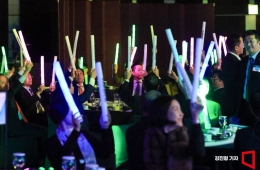
Mr. K asserted that the visible state of drug use in South Korea is only the tip of the iceberg. He said it has become as easy to obtain drugs as it is to buy alcohol or cigarettes. "When you go to a room salon or karaoke, you pay for alcohol, TC (the cost of female attendants), and the drugs all together," he explained. If you give the staff a signal that you want drugs, they will connect you with a seller, and the cost is bundled with the bill for alcohol—done this way to avoid leaving any traces.
Mr. K had supplied ketamine to nightlife establishments known as 'Jjeom-O' or 'Public.' He said there are many people in these venues who have made quick money. "Those who make big money illegally tend to get involved in sexual entertainment first, and then the next step is drugs," he pointed out, adding, "This is the lowest point that people addicted to nightlife reach."
Mr. K spent his teenage years studying abroad in the United States and South America, where he was first exposed to drugs starting with marijuana. By his twenties, he was regularly using ecstasy, ketamine, and other substances. Seeking drugs for nightlife, he entered the distribution network in his early twenties. He purchased drugs in bulk from the so-called "boss" (the domestic distributor) who imported the products from the overseas kingpin, and supplied them to the Gangnam nightlife scene, where demand was high.
Hand-to-Hand... A More Clandestine Distribution Method Than Telegram

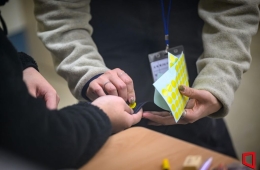
The distribution method Mr. K used is called "hand-to-hand" or "hand-hand." It is based on mutual trust, with drugs and cash exchanged directly. "People like us only deal hand-to-hand with trusted counterparts," he said. "It literally means passing the drugs with one hand and receiving the cash with the other."
In this distribution structure, the higher-level distributor like Mr. K remains thoroughly hidden. When a buyer appears, the drugs change hands several times through partners before reaching the end user. The intermediary, having received the drugs on the basis of trust, adds a commission during the distribution process and earns a profit. If a buyer makes a mistake or an accident occurs, the intermediary blocks any investigation by claiming, "I got it from Telegram, so I don't know the seller."
Recently, there have been many reports that non-face-to-face transactions via Telegram and virtual assets are making investigations difficult for law enforcement. However, Mr. K had a different view. He said, "Even if drugs are distributed through Telegram, the police could catch everyone if they wanted to, but I think they simply don't bother. Even if they catch someone, it's usually a low-level dealer, and if it's a first offense, prosecution is often suspended—so why would they go to the trouble?"
Distribution through Telegram involves more steps than hand-to-hand transactions but spreads the drugs to a much wider, unspecified population. Mr. K summarized the process as follows: Drugs are smuggled into Korea by the domestic distributor (the "boss") through international mail (EMS) or carriers ("porters") working for the overseas kingpin. The drugs are then handed over to a "warehouse" manager responsible for the stock. Next, a "coordinate dealer" (Telegram seller) uses a "dropper" (courier) to distribute the drugs using the "throwing" method.
How Did He Evade the Investigation Net... Police and Prosecutors Must Block These Methods

How did Mr. K, who maintained such strict security, end up getting caught? He shared several strategies he used to evade law enforcement. As a rule, he and his partners used aliases even after building trust. For communication, they used only burner phones or prepaid SIM cards. Instead of using commercial rental cars with special license plates, he always used personal rentals. For accommodation, he used "Kkalse" (short-term rentals with no deposit), moving every three months.
Kkalse refers to a short-term rental method where tenants pay monthly rent in advance without a deposit. It is essentially illegal, as it involves subleasing the property to a third party under a sublease contract. Mr. K explained, "There are places that sign long-term leases for places like Gangnam officetels and then sublease them at a higher monthly rent. By paying extra, you can stay in an already-leased property for three months at a time, leaving no trace."
Even with these methods, law enforcement was already on his tail. "If a partner gets caught and reveals the higher-ups, you become an investigation target. The police will monitor you for three to six months," he explained. "They checked mobile base station records and knew the exact dates of major drug transactions."
He also described the practice of cooperating with law enforcement, known as "Yadang." In exchange for information, offenders can reduce their sentences or escape the investigation net. "Most people involved in Yadang are in their 40s to 60s, more so than our generation," he said. "It's common for them to negotiate directly with prosecutors for reduced sentences or non-custodial investigations."
Even Inside Prison... "The End of Nightlife Is Drugs, Never Do It"

Exterior view in front of Busan Prison in Gangseo-gu, Busan, visited last April to meet a drug distributor. Photo by Heejoon Jang
View original imageMr. K is serving a three-year sentence for drug use and distribution. Even in correctional facilities, the grip of drugs is hard to break. He confided that there are many inmates who are seriously addicted.
He revealed that "indirect use" is commonplace. "There are many ways to use drugs even while incarcerated," he said. "If you make a scene demanding drugs, you might be prescribed a certain cold medicine, and some people collect dozens of pills to take all at once for hallucinogenic effects." He also pointed out frequent cases of abusing medications containing narcotic ingredients, such as treatments for neuralgia and sleeping pills, for the wrong purposes.
Mr. K is determined to break away from drugs. "When I saw people in my cell getting intoxicated from cold medication, I wondered, 'Does it really need to come to this?'" he said. "I definitely want to quit when I am released." However, he added, "To be honest, no one can guarantee what will happen after getting out. Even now, friends who use drugs contact me often." It is easy to get involved with drugs but extremely difficult to escape.
To those curious about drugs, he issued a strong warning: "It's truly dangerous." He emphasized, "Whether you're a student or an office worker, never go near the nightlife scene. People who begin to enjoy sexual entertainment through prostitution eventually end up using drugs." He repeated his warning until the very end.
"I've met so many people. Those who chase pleasure always end up turning to drugs. Whether you want it or not, the nightlife scene is structured to draw you in. Never go near it."

Busan = Special Reporting Team | Photo by Heejun Jang, Oh Jieun, Park Hosu, Lee Jiye, and Park Jaehyun

© The Asia Business Daily. All rights reserved. Unauthorized AI training and use prohibited.