[JipTech] Seoul Apartments: Not About Price, But Structural Change
Rising Entry Barriers for Jeonse in Gangnam
Emergence of Seongdong, Yangcheon, and Yeongdeungpo as New Hotspots
Market Dynamics Shift Away from Following Gangnam
Whenever the topic of Seoul apartments comes up, people's attention always focuses on prices. However, when looking at the trends from 2021 to 2026, what is more important in the current Seoul market is not price itself, but the fundamental change in the market structure.
In the past, there was a fixed rule that when prices in Gangnam rose, the rest of Seoul would follow. But things are different now. Over the past five years, the areas with the highest price increases were not in Gangnam, but in districts such as Seongdong, Yangcheon, and Yeongdeungpo. These areas have seen price increases of 50% to over 80%, rapidly rising as new leading districts on par with Gangnam. In contrast, districts like Jongno, Geumcheon, and Eunpyeong have not even reached the average increase for Seoul. This means that, even within Seoul, the market trends now differ completely by region.
The same goes for transaction volumes. As of the first quarter of 2026, transaction volume in outlying areas increased by nearly 60% to 100% compared to the previous year, while volumes in Gangnam and Seocho actually dropped to less than half. Rather than the old pattern of Gangnam moving first and outlying areas following, the current trend shows demand shifting to regions where entering the market is relatively more feasible financially.
Signs of structural change are also emerging in the jeonse rental market. The jeonse rate, which represents the ratio of jeonse prices to sale prices, has declined across all 25 districts of Seoul. This is not because jeonse prices are falling, but because sale prices have risen much more rapidly than jeonse prices.
In areas like Gangnam, where the gap between sale and jeonse prices has widened significantly, the market is quickly shifting to one focused on investment demand. In contrast, some outlying areas of Seoul, where sale and jeonse prices have moved in a more similar pattern, are still characterized primarily by demand for actual residence.
![[JipTech] Seoul Apartments: Not About Price, But Structural Change](http://www.asiae.co.kr/news/img_view.htm?img=2026051310313860814_1778635898.png)
The difference in entry barriers between Gangnam and outlying areas has become even more pronounced. The gap between sale and jeonse prices is about 1.6 billion won in Gangnam-gu and about 1.5 billion won in Seocho-gu. In contrast, in outlying areas, the gap is only around 200 million to 300 million won. Even within Seoul, the amount of initial capital needed to move from a jeonse rental to purchasing an apartment in the same neighborhood can differ by as much as a factor of seven. As a result, high-preference areas like Gangnam are being restructured into markets dominated by asset holders with substantial cash liquidity. Meanwhile, the structure of actual demand-driven buyers with limited financial resources moving to other regions is growing stronger.
As the gap in sale prices widens, there are also changes in rental yields. In outlying areas where sale prices have not increased as much, rental yields remain in the 2% range, but in Gangnam, they are barely above 1%. The issue is that rental yields in most of Seoul are now lower than deposit interest rates. In other words, the current Seoul apartment market is not a market focused on monthly rental income, but rather one centered on capital gains driven by expectations of future price rises.
Ultimately, the 25 districts of Seoul can no longer be seen as a single, homogeneous market. The market is being subdivided into core areas where capital is concentrated, rapidly rising new leading districts, stable areas focused on actual residence, and outlying absorption markets where transactions are active but price rises are limited.
The current Seoul real estate market is neither a classic rising nor falling market. It is in the midst of a structural reorganization. Simply tracking price fluctuations may cause you to miss the long-term trends. Going forward, what matters most is the ability to read which types of capital are flowing into which regions, and to understand the underlying structure.
Hot Picks Today
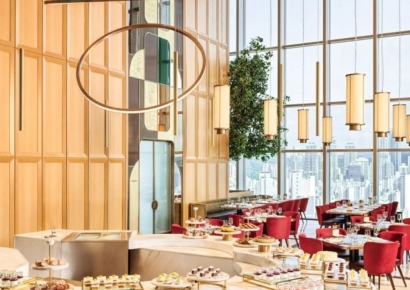 "You Can't Settle for Less Just Because You're Eating Alone" Dining Alone for 100,000 Won a Meal... Solo Buffet Reservations Soar by 216%
- "Each 10-Won Drop in Exchange Rate Boosts Profit by 2.5 Billion Won"...Stocks Benefiting from the Strong Won at 1,340 Won Level
- "Unimaginable in Korea"...Koreans Surprised by Secondhand Smoke in Japan and China Restaurants
- From 1.75 Million to 140 Million Won a Month... Former National Team Player Earns '80 Times More' After Putting Down the Racket
- "Canceled After Five Days and Lost 770,000 Won"... Hit by Steep Fees After Pressing the Cancel Button
Hyosun Kim, Chief Real Estate Specialist, KB Kookmin Bank Star Advisory Group
![[JipTech] Seoul Apartments: Not About Price, But Structural Change](http://www.asiae.co.kr/news/img_view.htm?img=2026051212461759299_1778557577.jpg)
© The Asia Business Daily. All rights reserved. Unauthorized AI training and use prohibited.


![How Did Tacos Come to Have Two Shells [Delicious Stories]](https://cwcontent.asiae.co.kr/asiaresize/307/2026091410392626963_1789349966.jpg)