Assemblyman Chungho Seo Proposes Bill for 100% Capital Gains Tax Exemption on Self-Managed Mountain Land Transfers
Easing of Self-Managed Mountain Land Capital Gains Tax Exemption: Requirement Reduced from 10 to 8 Years
Expansion of Exemption Rate from Maximum 50% to 100% Proposed
"We Aim to Correct Tax Inequity Between Agriculture and Forestry"
Assemblyman Chungho Seo (representing Sacheon, Namhae, Hadong in Gyeongnam; member of the National Assembly’s Agriculture, Food, Rural Affairs, Oceans & Fisheries Committee; People Power Party) announced on May 11 that he has sponsored a bill to amend the Restriction of Special Taxation Act, which includes a provision to fully exempt capital gains tax on self-managed mountain land that has been directly managed for over eight years.
Under current law, those who transfer farmland that has been directly cultivated for more than eight years are granted a 100% exemption from capital gains tax. In contrast, for mountain land, even if it has been directly managed for more than ten years, the exemption rate is only 10% to 50% depending on the period of management, resulting in relatively higher tax burdens for forestry workers.
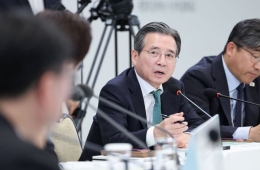
![[Photo by Chunho Seo, National Assembly Office] Congressman Chunho Seo is leading the representative sponsorship of the "Partial Amendment to the Restriction of Special Taxation Act," which includes provisions to fully exempt capital gains tax on self-managed forestlands that he has directly managed for over eight years.](http://www.asiae.co.kr/news/img_view.htm?img=2026051116063858014_1778483198.jpg)
[Photo by Chunho Seo, National Assembly Office] Congressman Chunho Seo is leading the representative sponsorship of the "Partial Amendment to the Restriction of Special Taxation Act," which includes provisions to fully exempt capital gains tax on self-managed forestlands that he has directly managed for over eight years.
View original imageIn particular, even those who have directly managed mountain land for several decades are often required to pay taxes on about half of their capital gains, which has consistently raised issues regarding tax equity between agriculture and forestry.
This amendment stipulates that if someone resides in the area where the mountain land is located and has obtained approval for a forest management plan, the capital gains tax will be fully exempted—just like farmland—when transferring mountain land that has been directly managed for more than eight years.
Accordingly, the required period of self-management for the tax exemption will be reduced from the current ten years to eight years, and the exemption rate will be expanded from a maximum of 50% to a full exemption.
According to data submitted by Assemblyman Seo from the Korea Forest Service, the annual average amount of capital gains tax exemption on self-managed mountain land under the current system is estimated at approximately 1.67 billion won. If the amendment passes, the tax support effect for forestry workers is expected to be further expanded.
Hot Picks Today
 Securities Firms Reverse Course as KOSPI Falls Below 7,000... More Downgrade Reports Than Upgrades in July
- Turned on the Air Conditioner All Night and Woke Up with a Sore Throat... It's Not Just a Cold [Kok! Health]
- "Crisp and Stress-Relieving: K-Fruit Exports Hit KRW 130 Billion, Which New Star Is Rising in Japan?"
- After 10 Months of Investigation, Both Byung-Ki Kim and Complainant Submit Statements Urging Prompt Conclusion
- Even Without Overdue Card Payments... Everyday Habits That Lower Office Workers' Credit Ratings
Assemblyman Chungho Seo stated, "Forests have tremendous public value as carbon sinks, but forestry workers have faced difficulties for a long time due to tax imbalances. I hope this amendment will resolve the outdated tax disparities between agriculture and forestry and serve as a foundation for sustainable forest management."
© The Asia Business Daily. All rights reserved. Unauthorized AI training and use prohibited.