Same Apartment, But Ours Is 800 Million Won and Next Door Is 1.9 Billion... Seoul Jeonse 'Dual-Price' Gap Widens
Average Gap Between New and Renewal Jeonse Contracts in Seoul Reaches 55 Million Won
In Some Complexes Like Seocho, Price Difference for Same Unit Size Exceeds 1.1 Billion Won
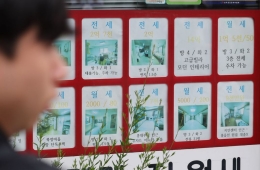
As nearly six years have passed since the implementation of the two key tenancy laws (right to request contract renewal and the rent cap system), a distinct price gap has emerged in Seoul’s apartment jeonse market between 'renewal contracts' for existing tenants and 'new contracts' for incoming tenants. Even within the same complex and for the same apartment size, the difference in security deposits can exceed 1 billion won, highlighting the intensification of a 'dual-price' phenomenon.

According to Yonhap News on May 4, Yang Ji-young, a senior specialist at Shinhan Premier Pathfinder, conducted a comprehensive analysis of 74,407 jeonse and monthly rental transactions for apartments in Seoul from January 5 to April 30 this year, based on data from the Ministry of Land, Infrastructure and Transport’s real transaction disclosure system. The analysis revealed a clear price divergence between renewal contracts and new contracts.
Among the 38,246 jeonse transactions during this period, the median security deposit for new contracts (17,825 cases) was 585 million won, which is 55 million won (10.4%) higher than the median for renewal contracts (19,166 cases), which stood at 530 million won. This indicates that renewal contracts, which are subject to the statutory maximum increase of 5%, and new contracts, which are determined by market supply and demand, are forming at roughly a 10% difference.
By region, the gap was most pronounced in the Gangnam area. In Seocho-gu, the median security deposit difference between new and renewal contracts was the largest at 200 million won. Gangdong-gu and Eunpyeong-gu also showed differences of about 100 million won each, followed by Songpa-gu (88 million won), Dongdaemun-gu (75 million won), Seongbuk-gu (60 million won), and Gangnam-gu and Seongdong-gu (each at 50 million won).
On an individual complex basis, some locations showed much more extreme differences. For example, in the Banpo Xi complex in Banpo-dong, Seocho-gu, the lowest renewal price for an 85㎡ unit in January was 773.41 million won (4th floor), while the highest new contract price in March reached 1.9 billion won (21st floor), resulting in a gap exceeding 1.1 billion won. Similarly, for the 124㎡ unit at the LECENTZ complex in Jamsil-dong, Songpa-gu, the highest new contract price on April 17 was 2.05 billion won—over 680 million won higher than the lowest renewal price (1.366 billion won) recorded on January 12.
The use of the tenants' renewal right is also gradually declining. The overall renewal right utilization rate dropped from 45.5% in January to 42.2% in April, and for jeonse contracts alone, it fell more sharply from 57.1% to 50.6% during the same period. This suggests that a growing number of tenants, having exhausted their renewal rights, are being directly exposed to market price shocks in subsequent contracts.
Hot Picks Today
!["Am I Eligible Too?" Up to 700,000 Won Provided... Who Qualifies for Government Support for Heating and Cooling Costs? [The Essentials of Benefits]](https://cwcontent.asiae.co.kr/asiaresize/93/2026061714290212856_1781674141.jpg) "Am I Eligible Too?" Up to 700,000 Won Provided... Who Qualifies for Government Support for Heating and Cooling Costs? [The Essentials of Benefits]
"Am I Eligible Too?" Up to 700,000 Won Provided... Who Qualifies for Government Support for Heating and Cooling Costs? [The Essentials of Benefits]
- A Healthy Habit? The 'Shortcut' to Cancer...Experts Warn About This Craze Among Youths [The World is Z Gold]
- "I Can't Buy at These Prices"... Experts Recommend This Instead of Samsung Electronics and SK hynix
- "I Lost 700 Million Won Saved Over a Lifetime in Just One Year Through Stocks": YouTuber’s Confession
- "Side Effects Have Already Begun" A Startling Sight at the Supermarket... How Naphtha Shortage Has Changed Daily Life in Japan [Mwonilissu]
Yang commented, "The 'protected price' restrained by the rent cap system and the 'market-driven price' shaped by supply and demand continue to coexist with a significant gap. In particular, from 2026 to 2027, when the first renewal cycle for newly built complexes arrives, the shock of market prices may become much more pronounced."
© The Asia Business Daily(www.asiae.co.kr). All rights reserved.