Democratic Party Announces Local Election Pledges for Children: Woori-Ai Self-Reliance Fund, 24-Hour Pediatric Medical Care System
Four Major Areas: Child Welfare, Care, and Basic Academic Skills
Expansion of Child Allowance Eligibility and Additional Support in Areas with Declining Population
On May 4, the Democratic Party of Korea announced a set of pledges for children, including the phased introduction of the Uri Child Independence Fund, the establishment of a 24-hour regional pediatric medical responsibility system, and expanded support for after-school programs.
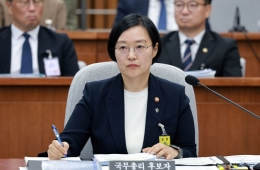
Han Jeongae, Policy Committee Chair of the Democratic Party, and Yoo Dongsoo, Senior Vice Chair of the Democratic Party’s Economic Committee, unveiled these pledges for children ahead of Children's Day and in connection with the pledges for the June 3 local elections.
Han stated, "The core of our pledges for children is to strengthen the safety and welfare of children, expand support for care and after-school learning, and promote a major transformation in education to ensure individual academic achievement in preparation for the age of artificial intelligence (AI)." She outlined plans to ▲ strengthen child welfare ▲ create a safer environment ▲ expand support for care and after-school programs ▲ and establish a system to guarantee basic academic skills.

Regarding the strengthening of child welfare, the pledges include the phased introduction of the Uri Child Independence Fund, expanding the eligible age for child allowances and additional payments in areas with declining populations, as well as expanded support for self-reliance among adolescents from migrant backgrounds. Yoo explained that the Uri Child Independence Fund is “a system in which the government registers children in a fund at birth, makes regular deposits, and accumulates savings until they reach adulthood. The state will prioritize support for children under state protection, those from low-income families, and children from vulnerable groups.”
For creating a safer environment, the Democratic Party proposed establishing a 24-hour regional pediatric medical responsibility system, a multi-layered support system for students facing emotional or behavioral crises, and measures to address digital stress and addiction, as well as prevention and support for victims of sexual crimes. Yoo stated, “We plan to implement a '24-hour regional pediatric medical responsibility system' by having Moonlight Children's Hospitals, pediatric emergency centers, and pediatric urgent care centers cooperate, so that children can receive treatment at night, on weekends, and on holidays.”
Pledges to expand support for care and after-school programs include scaling up the 'All-Neighborhood Elementary Care' nationwide, starting with overcrowded classes and large schools; providing high-quality care and after-school education both inside and outside schools; and revitalizing physical education and supporting health experience activities. Han added, “We plan to minimize the burden on schools by supporting local governments with available spaces, programs, and instructors, and by strengthening cooperation systems between schools and public institutions.”
Hot Picks Today
 Prices Jump Overnight on July 1: "My Morning Soft-Boiled Eggs Now 3,000 Won for 2" — Convenience Store Price Hikes Make Summer Hotter
- "I'm Afraid of Being Invited"... In This Country, Attending a Wedding Costs 640,000 Won
- [Exclusive] Kim Eo-jun Opens Restaurant in Paris: First Guest Shares "How Was the Food..." Experience
- Samsung Electronics Target Price Raised to 580,000 Won: "World's Most Profitable and Cost-Competitive Memory Maker" [Click eStock]
- "Don't Hang Your Head": Warm Words as Son Heung-min, Lee Jae-sung and Others Return Home with Encouragement [2026 World Cup]
To establish a system guaranteeing basic academic skills, the Democratic Party pledged to build a state-managed system for basic academic achievement, expand the number of specialized teachers for foundational learning, and innovate elementary, middle, and high school education to enhance digital literacy. Regarding this system, Yoo explained, “We will prioritize funding and specialized personnel for schools with high rates of underachievement, and redevelop national diagnostic tools to include cognitive, emotional, and health aspects, thereby establishing a state-managed system for guaranteeing basic academic skills.”
© The Asia Business Daily. All rights reserved. Unauthorized AI training and use prohibited.


![[Urgent Survey] Lessons from the World Cup... What Should the Football Association Reform First?](https://cwcontent.asiae.co.kr/asiaresize/307/2026063013521728513_1782795137.jpg)