"No More Accidents Involving High-Risk Pregnant Women and Newborns"... Emergency Overhaul of the Maternal and Child Healthcare System
Ministry of Health and Welfare Holds On-Site Meeting After Cheongju Pregnant Woman Transfer Delay Incident
Establishing a Real-Time Transfer System and Strengthening State Responsibility for Medical Accidents
The government has announced a comprehensive review of the medical safety net for high-risk pregnant women and newborns following the recent fetal death incident in Cheongju, North Chungcheong Province. The government plans to operate a system that enables real-time monitoring of each hospital's resources, so that hospitals to which pregnant women and newborns will be transferred can be selected quickly. At the same time, institutional measures to reduce the burden of medical accidents on healthcare professionals will also be significantly strengthened.

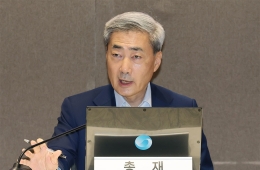
On May 3, Minister of Health and Welfare Jeong Eun-kyeong made an emergency visit to the Regional Maternal and Child Medical Center at Chungbuk National University Hospital. On May 4, she held a meeting in Seoul with the Regional and Critical Maternal and Child Medical Centers, the Korean Society of Obstetrics and Gynecology, and the Korean Society of Neonatology to discuss measures for improving the safety of the childbirth environment.
This meeting was convened in response to an incident on May 1 in Cheongju, North Chungcheong Province, where a 29-week pregnant woman experienced an emergency due to a drop in fetal heart rate. Because nearby hospitals were unable to accept her, the patient was being transferred to Busan when the fetus died en route. Minister Jeong stated, "As the minister in charge, I feel a heavy sense of responsibility," and promised, "We will promptly create an environment where pregnant women can give birth with peace of mind."
Starting in June, the government intends to operate an information system that provides real-time status of resources at hospitals designated for the transfer and transport of mothers and newborns, enabling quick hospital selection. In order to ensure that the actual transfer takes place swiftly after the hospital is selected, collaboration with 119 emergency teams will be further strengthened.
In addition, the government will reorganize the multi-tier maternal and child healthcare system—from critical, regional, to local centers—to address the increasing demand for high-risk deliveries due to rising maternal age and multiple births, alongside the severe shortage of specialists in obstetrics and neonatology. At Chungbuk National University Hospital, where the recent incident occurred, there is only one obstetrician at the Regional Maternal and Child Medical Center, creating limitations in responding during nights and holidays.
Hot Picks Today
 "They Came to Spend: Chinese Tourists Swipe Over 2 Trillion Won in Korea... Where Did the Money Go?"
- While Retail Investors Flocked to Semiconductors, Investment Giants Bet 47.8 Billion Won on Overlooked Stocks
- 'Big Short' Burry: "Couldn't Bet Against SpaceX... Gave Up Due to High Costs"
- Manager Writes Apology Letter After Resident Complains of "Nausea from Riding Elevator with Sanitation Worker"... Netizens Outraged
- NAVER Rebounds from 190,000 Won Slump to "Targeting 450,000 Won"... Revalued Through Partnership with Nvidia [Stock of the Week]
The safety net for medical accidents will also be reinforced so that healthcare professionals can focus on high-risk surgeries. From July, severe disability in mothers will be added as a category eligible for compensation in cases of unavoidable childbirth accidents. In addition, the government will expand its support for high malpractice insurance premiums in essential medical fields such as obstetrics and pediatric neurosurgery to include the emergency medical sector. The government also plans to devise measures to provide appropriate compensation to maternal and child healthcare centers and medical staff.
© The Asia Business Daily(www.asiae.co.kr). All rights reserved.