4 Trillion Won Offshore Wind Power Project Planned off Yeonpyeong Island in Incheon, Construction Targeted for 2031
Hanwha Ocean to Construct 480 MW 'Gyeongin Peace Wind Offshore Wind Power' Project
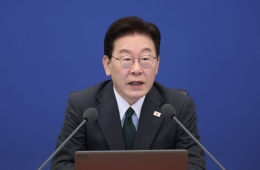
Heo Jongsik: "A Driving Force for Enhancing Regional Energy Self-Sufficiency"
An offshore wind power generation project worth over 4 trillion won is set to launch in the northernmost waters of Yeonpyeong Island in the West Sea.
According to data received by Heo Jong-sik, a Democratic Party lawmaker representing Dong-gu and Michuhol-gu Gap in Incheon, from Hanwha Ocean, the company is pushing ahead with the ‘Gyeongin Peace Wind Offshore Wind Power’ project. This initiative aims to build a 480 MW offshore wind farm 18 km south of Yeonpyeong Island and Soyeonpyeong Island in Ongjin-gun, Incheon.
The project plans to install either 32 turbines with a capacity of 15 MW each or 48 turbines with a capacity of 10 MW each, with total investment estimated at 4.1 trillion won. Hanwha Ocean completed the installation of offshore measuring instruments in December last year and aims to obtain power generation business approval next year, conduct an environmental impact assessment in 2029, and break ground in the third quarter of 2031.

According to Heo’s office, this project is particularly significant as it will be the northernmost offshore wind power project in Korea, symbolizing both energy security and peaceful values. In particular, the activation of offshore wind power in Incheon is expected to not only supply renewable energy but also help mitigate inter-Korean tensions and security risks.
Currently, global energy companies such as Orsted and OW, along with domestic firms that have obtained power generation business licenses, are preparing to build offshore wind farms. Once completed, the area could become a space of international interest, lowering the likelihood of provocations from the North and providing an opportunity to gain international recognition for easing tensions in the West Sea.
In addition, by using high-performance CCTV and other monitoring equipment to maintain and service the offshore wind farm, there is the potential to supplement military surveillance and security capabilities, enhance deterrence against accidental clashes, and establish both physical and economic buffer zones.
Hot Picks Today
 "Two Spend 500,000 Won in a Flash, Yet Wait Two Hours?" ... 'Dreamland' Shunned by Kids and Foreign Tourists
- The Era of Getting 200 Million Won After 30 Years Is Over... A Japanese Bank's "Perpetual Department Head" Who Just Clocked In Cries Out
- Spain Hit by Its Worst Tragedy... Lee Kangin, Moreno and Real Madrid Join Soccer World in Mourning
- They Said, “Make It Your Home for Life” - Then Suddenly Kicked 200 Passengers Off... What Happened to the Around-the-World Cruise?
- "130 Rice Bowls Sold Out in a Day"... 'Unfiltered Face' Adds 8 Million Won to Night Market Sales: China's Bungeunwoo
Heo stated, “This investment will serve as a critical driver for Incheon to become a hub for offshore wind power and raise the region’s energy self-sufficiency. The large-scale project should not only revitalize the local economy but also lead Incheon companies toward a low-carbon transition and boost their industrial competitiveness.”
© The Asia Business Daily. All rights reserved. Unauthorized AI training and use prohibited.