"Union Consent Required for Hiring and Evaluations"... Samsung Biologics Strike Expands Into Management Intervention Controversy
Dialogue to Be Held on the 4th Under Labor Office Mediation
Union Draws a Line, Says This Is Not the Final Negotiation
"Without Key Decision-Makers, the Situation Cannot Be Resolved"
Union Demands Prior Consent on Hiring and Personnel Evaluations
Controversy Over Management Intervention... Concerns Over Prolonged Strike
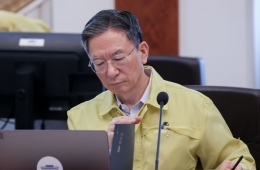
As the full-scale strike by the Samsung Biologics labor union entered its fourth day on May 4, the labor-management conflict has expanded beyond wage negotiations to disputes over personnel and management rights. Although a meeting between labor and management has been arranged for the day through government mediation, it is expected to be difficult to find a clear breakthrough, as the union is firmly demanding a more substantial revised proposal from the management side and the attendance of key decision-makers.

The Samsung Biologics Win-Win Chapter, which operates under the Samsung Group's super-company labor union, stated ahead of the mediation session organized by the Central Regional Employment and Labor Office in Songdo, Yeonsu-gu, Incheon, that "this meeting cannot serve as the final negotiation to resolve all issues," and emphasized that "unless the management presents a practical revised proposal and a responsible decision-maker, the situation cannot be resolved through dialogue alone." It has been reported that the union will be represented by Chapter Chief Park Jaeseong, while the management will be represented by executives at the executive director and department head levels. The union has raised the pressure, stating, "We cannot persuade our members with only verbal promises or discussions with those lacking authority," and stressed that "a responsible revised proposal and a written commitment to implementation are essential for a true resolution."
This hardline stance by the union, coupled with the key issues that have stalled previous negotiations, is making resolution increasingly difficult. The union has stipulated in its collective bargaining demands that the management must obtain union consent in advance for major business decisions such as new hiring, setting personnel evaluation criteria, and mergers and acquisitions. In response, management argues that this represents "excessive intervention in areas that are the unique authority and responsibility of the management." They point out that restricting hiring and strategic decision-making in the rapidly evolving and globally competitive biopharmaceutical contract development and manufacturing industry would inevitably undermine the company's market responsiveness and overall competitiveness. Experts in human resources and labor relations note, "While protecting workers' job security is a legitimate role of labor unions, restricting hiring or management strategy itself can significantly reduce a company's market responsiveness and ultimately lead to a decline in the competitiveness of the entire organization."

There is still a significant gap between the two sides when it comes to wage and welfare negotiations. The company has proposed a 6.2% increase in base salary and a one-time bonus of 6 million won, taking into account its payment capacity, but the union has rejected this, demanding a 14% base salary increase and a 30 million won incentive payment. As a result, the conflict has escalated to a work stoppage, and the union launched a surprise strike in some production lines on April 28—ahead of the originally planned May 1 start date—causing immediate disruption to production. The suspension of the fill-finish process, one of the most important steps in pharmaceutical manufacturing, has led to a chain reaction of disruptions throughout the entire production line. Due to the nature of biopharmaceuticals, strict quality control and on-time delivery are critical; if even one process stops, delays in the overall finished product production schedule become inevitable. Management estimates the monetary losses caused by this partial process strike to be approximately 150 billion won.
Hot Picks Today
 "30,000 Won in Korea, 70,000 Won in Japan"—Koreans Fill Suitcases as Illegal Direct Purchases Soar
- [Breaking] President Lee on Jeju Missing Persons Case: "Devastated... Orders Thorough Investigation and Police Reform"
- "Never Experienced This in My Aviation Career": Crew Shocked as Stranger Unexpectedly Enters First-Class Suite
- "SG$70,000 by Age 17 for Every Childborn"... Singapore Unveils Drastic Measures as Fertility Rate Sinks to 0.87
- "Monster That Eats Gold" Turns Out to Be Real: Uproar in China as 5-Year-Old Swallows $7,500 Gold Bar, Sparking Questions About Family's Wealth
The controversy has further intensified after it was revealed that the union chief, who should have been leading the full-scale strike, left for an overseas trip immediately after the surprise strike began. In addition, during a tripartite meeting on April 30, the union demanded that all management-side negotiators be replaced as a precondition for dialogue. With ongoing demands for intervention in management rights, production disruptions amounting to hundreds of billions of won, and a continued hardline standoff from both sides, it is widely expected that an immediate substantive agreement is unlikely to be reached at today’s meeting due to the union’s uncompromising position.
© The Asia Business Daily. All rights reserved. Unauthorized AI training and use prohibited.



![[Regional Finance Survival Strategy]①While Commercial Banks' Net Profit Soars 54%, Regional Banks Grow Only 6%...Why They Face a Survival Crisis](https://cwcontent.asiae.co.kr/asiaresize/307/2026082413361361927A.jpg)