"Basic Pension: Maintaining Bottom 70% Coverage Will Double Fiscal Spending by 2048"
Public Finance Association Proposes Basic Pension Reform for Super-Aging Era
"One in Four Recipients Has Income Above Poverty Line"
Proposal to Introduce 'Elderly Livelihood Benefit' Integrated with Basic Livelihood Security System
A warning has been issued that if the basic pension continues to be provided to the "bottom 70% income group" among the elderly, as is currently the case, its share of the national budget will double in about 20 years. Additionally, it has been argued that one out of every four basic pension recipients actually has an income above the policy poverty line and does not require livelihood support.

According to the Korean Association of Public Finance on May 4, Hong Woohyung, Professor of Economics at Dongguk University, and Lee Sangyeob, Professor of Economics at Gyeongsang National University, made these points in their recent paper, "A Study on the Reform of the Basic Pension in Response to the Era of Super-Aging," published in the Journal of Public Finance. The basic pension is a system in which a fixed monthly pension is provided to those aged 65 or older in the bottom 70% income group to ensure income security in old age. As of last year, the monthly pension amount was about 340,000 won.
The research team analyzed the fiscal outlook if the current system is maintained, applying the average economic growth rate and inflation rate over the past 10 years, as well as the median projection of future population estimates. As a result, the share of the basic pension budget relative to the government budget is expected to rise from 3.08% in 2024 to 6.07% in 2048. The share of the basic pension budget relative to the nation’s gross domestic product (GDP) is also projected to increase from 0.79% in 2024 to 1.70% in 2048.
Based on these findings, the researchers pointed out the problem of the basic pension being paid to elderly people who are not part of the poor. They defined the policy poverty line—where government-level livelihood support is needed—as "below 50% of the median income (the median of all household incomes)." However, as of August last year, an analysis of basic pension recipients showed that 24.68% had incomes above this policy poverty line. In other words, one in four basic pension recipients is not actually poor.
The research team stated, "There is doubt as to whether the bottom 70% income group can be considered a valid benchmark for representing poor elderly people in the welfare blind spot," and added, "Providing the basic pension to people whose income is sufficient and who do not need government support may undermine the efficiency of fiscal operations." They also noted that the Organisation for Economic Co-operation and Development (OECD) has previously pointed out that the coverage of Korea's basic pension is too broad, and that the same amount is paid regardless of income.
The researchers presented a three-stage roadmap for reforming the basic pension. First, Proposal 1 would gradually reduce the eligibility group by 1 percentage point each year over the next 20 years to reach the bottom 50%; at the same time, the pension for the bottom 30% would be increased by 50%, and the middle group would either continue to receive the current amount or see a reduction—thus introducing a differentiated payment system. Proposal 2 is a scenario in which only those with income below 50% of the median receive the standard pension amount. Proposal 3 would integrate the basic pension with the national basic livelihood security system and create a new "elderly livelihood benefit" (tentative name). This plan would expand eligibility from 32% to 40% of the median income while focusing support on the absolutely poor. In this case, the actual benefit for eligible elderly people would increase by an average of about 250,000 won.
The researchers recommended, "In the short term, it is necessary to minimize policy shock by reducing the eligible group through Proposal 1, and then, in the medium term, to transition to Proposal 2, which reflects the poverty level." They continued, "In the long run, the basic pension should be integrated into the national basic livelihood security system, which more universally addresses poverty, so that the absolute poverty issue among elderly households can be dealt with within a unified framework. Ultimately, we should move toward Proposal 3, which introduces an elderly livelihood benefit with increased payments."
Hot Picks Today
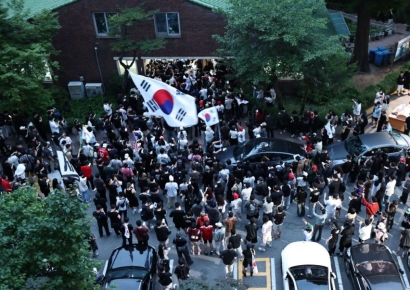 "Election Fraud" "Invalidate the Count": All-Night Standoff at Jamsil 7-dong as Ballot Boxes Blocked... 470 Police Deployed
- Yoo Eui-dong of People Power Party Secures Fourth Term in Pyeongtaek Eul, Defeating Cho Kuk and Kim Yong-nam After Upset Over Exit Polls
- Each SpaceX Employee Poised for $1.5 Million Windfall Ahead of IPO... Musk Could Become World's First Trillionaire
- [Breaking] US State Department: "Israel and Lebanon Reach Ceasefire Agreement"
- [Breaking] Oh Sehoon Overtakes Jung Wono... Takes the Lead at 93.9% of Ballots Counted
The government has already begun work on basic pension reform, aiming to include specific policy directions in next year’s budget proposal to be submitted to the National Assembly in September.
© The Asia Business Daily(www.asiae.co.kr). All rights reserved.



![[Breaking] Oh Sehoon Overtakes Jung Wono... Takes the Lead at 93.9% of Ballots Counted](https://cwcontent.asiae.co.kr/asiaresize/307/2026060407431450944A.jpg)