"Germany Could Lose 25.9 Trillion Won If U.S. Raises Auto Tariffs to 25%"
Tariff Pressure Linked to Middle East Tensions
Controversy Over EU Agreement Implementation
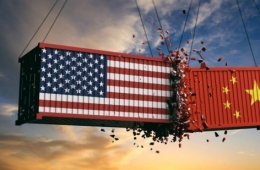
If U.S. President Donald Trump raises tariffs on automobiles imported from the European Union (EU) to 25% as previously announced, Germany could face losses of up to 15 billion euros (approximately 25.9 trillion won), according to a recent analysis.

Trucks are moving quickly on the highway in Bavaria, Germany. Photo by Getty Images Korea
View original imageMoritz Schularick, President of the Kiel Institute for the World Economy (IfW) in Germany, stated in an interview with Reuters on May 2 (local time) that, in the long term, losses could expand to 30 billion euros (approximately 51.9 trillion won).
However, the specific basis for this estimate was not disclosed. Volkswagen Group, which accounts for about 40% of Germany’s automobile production, previously stated that even with the current 15% tariff, it incurs approximately 4 billion euros in additional annual costs. Mercedes-Benz and BMW, which have a high proportion of local production in the United States, are considered to have a relatively lower tariff burden.
President Trump imposed a 25% tariff on EU-manufactured automobiles in April last year but reduced it to 15% from August of the same year following an agreement with the EU. Recently, however, he announced that since the EU is not fulfilling the agreement, the United States will reintroduce a 25% tariff on passenger cars and trucks starting next week.
Within the EU, there are also doubts about the feasibility of the trade agreement. The agreement includes the purchase of 750 billion dollars’ worth of U.S. energy over three years and an additional 600 billion dollars in investment, but critics point out that actual implementation remains uncertain.
In Germany, some interpret the recent tariff hike pressure as a political message aimed at Chancellor Friedrich Merz, following recent tensions over his remarks concerning the situation in the Middle East.
Hot Picks Today
 "The Transfer Failed, but 'Ding-Dong,' Money Came In"... KRW 32.5 Billion Financial Incident at Toss Bank
- "People with money have already moved," they say... 1,700-ton underground vault full as the wealthy flock to this country
- Legend Who Turned 40-Store Olive Young into a "KRW 1 Trillion Giant"... Returns to Shinsegae After 25 Years as a Rescuer
- Saemaul Geumgo Posts 3.6 Trillion Won in Net Losses Over 3.5 Years... "Comprehensive Measures Needed"
- 'Hangover Legend' Returns After 11 Years... Lee Sunmin Hyung's 'Captain Q' Sells Out
Jens Suedekum, advisor to the finance minister, questioned the consistency and legal basis of the policy, noting, “There are many cases where the threat of tariffs is quickly postponed or withdrawn.” The German weekly magazine Der Spiegel also commented, “Europe’s economy needs to reflect on why it finds itself in this situation.”
© The Asia Business Daily. All rights reserved. Unauthorized AI training and use prohibited.