Despite Stable Building Values...Why Did JR Global REIT Collapse?
Entered Rehabilitation Despite Assets Exceeding Liabilities
'Cash Flow' Blocked...Cash Trap, Rate Hikes, and Debt Maturity Collide
JR Global REIT Management Real Estate Investment Company (JR Global REIT) has entered rehabilitation procedures, drawing significant market attention as this marks the first default among listed REITs. This is because it has become clear that even when asset values and rental income are stable, a blockage in cash flow can lead to a liquidity crisis.
A REIT refers to a company that invests in commercial offices and similar properties to earn rental income and capital gains, typically paying investors annual dividends of around 5-7%. However, there is growing consensus that the REIT market is facing a crisis, as the value of overseas commercial buildings has declined and interest burdens have increased in recent times.
"Why Did a Company That's Not Failing Default?"...Not Business Insolvency, But a Cash Flow Mismatch
Previously, on April 27, JR Global REIT filed for rehabilitation after failing to repay 40 billion won in short-term bonds that matured. Its credit rating, which had been maintained at A- until just before, plummeted to D in a short period, and the Korea Exchange suspended trading and designated it as an issue under management. The share price plunged from 2,800 won at the end of last year to 1,182 won. As a result, about 28,000 minority shareholders, including retirees who prioritize cash flow, have been affected.

The first noteworthy point is the value of the company’s assets. The value of real estate assets, such as buildings, stands at about 2.078 trillion won, which exceeds the total borrowings (debt) of about 1.7005 trillion won. The tenants (institutions leasing the buildings) are the Belgian government office and a U.S. healthcare union. Rental income is being received on time.
In relation to this, Sangman Kim, a researcher at Hana Securities, stated, "It is not a problem of poor business fundamentals," adding, "The event was caused by a combination of factors, including a mismatch in funding due to changes in the structure and conditions of financing." This means that the issue did not arise from the assets themselves but from the cash flow.
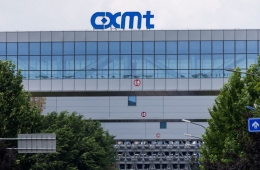
The starting point of the crisis was the differing perspectives between the company and overseas lenders regarding real estate valuation. For the Finance Tower in Brussels, Belgium, the company estimated the value at about 1.35 billion euros, while the lenders assessed it at around 920 million euros. Although differences of opinion about property values are common, this particular loan agreement included a clause that would restrict funding if the loan-to-value (LTV) ratio exceeded a certain level. When the LTV based on the lenders' assessment rose to 61%, surpassing the agreed threshold of 52.5%, a "cash trap" was triggered.
A cash trap is a mechanism in which rental income from the building is transferred into a controlled account managed by the lenders before it reaches the company. In this case, even if the company generates revenue, it cannot use the funds. This situation is similar to that of a commercial property investor whose rental income becomes frozen due to a single collateral revaluation by the bank.
Rapid Rate Hikes and Debt Maturity Concentration...2 Trillion Won Repayment Pressure in Two Weeks
Changes in the interest rate environment also played a significant role. The company secured funding in January 2020 at a low annual rate of 1.05%, but during the 2024 maturity extension, the rate surged to 4.398%. Additionally, a new requirement to repay 3% of the principal each year was added, sharply increasing the cash burden.
The rise in interest rates also affected asset values. Building prices are usually calculated by dividing annual rental income by a market interest rate, such as the expected yield. Thus, even if the rental income remains the same, an increase in market rates leads to a decrease in building value. As rates spiked, building values became volatile, which widened the valuation gap between the company and its lenders. On top of this, the crisis was realized as short-term debt matured all at once. In just two weeks, the company needed nearly 200 billion won to cover 40 billion won in short-term bonds, 60 billion won in corporate bonds, and currency hedge settlement payments. However, a rights offering fell through, and it was difficult to secure funding from the corporate bond market.
Simultaneously with the rehabilitation process, the company applied for the ARS (Autonomous Restructuring Support) program. ARS is a system that allows the decision to initiate rehabilitation to be postponed during a period of voluntary negotiation with creditors under court supervision. This suggests an intention to attempt a creditor-driven workout before foreign lenders exercise their collateral rights through formal court receivership.
Direct Hit to Individual Investors...REIT Structural Risks in Focus

This incident has also raised alarms regarding the individual investor-centered REIT investment structure. Soohee Cho, a researcher at LS Securities, noted, "REITs have been sold primarily to retail and wealth management (WM) clients based on the appeal of high interest rates, so the proportion of individual investors is believed to be high," and pointed out the possibility that this could develop into a case of misselling. This event could also lead to tighter supervision and regulation of REIT bond issuance and sales procedures.
Overall investor sentiment in the REIT market has also been shaken. After JR REIT filed for rehabilitation, the stock prices of listed REITs fell across the board, but most market participants view this as an isolated incident. There is also an expectation that the distinction between overseas asset-focused REITs and domestic asset-focused REITs will become even clearer. As of April 29, domestic listed REITs fell by a weighted average of 5.6% in market capitalization, with Hanwha REITs (-10.02%), Mastern Premier REITs (-9.85%), and Lotte REITs (-8.11%) seeing the steepest declines.
Hyejin Lee, a researcher at Daishin Securities, said, "The polarization structure that has continued since last year—between domestic and overseas assets, and between major conglomerate sponsors and financial institution or asset manager-affiliated REITs—will intensify further due to this incident." She added that a differentiated approach centered on large REITs holding portfolios of core office properties in key regions would be effective.
Hot Picks Today
 "The Transfer Failed, but 'Ding Dong' Money Came In"... 32.5 Billion Won Financial Incident at Toss Bank
- [Breaking] SK hynix: "Solidigm IPO review process suspended... Considering shareholders' choice"
- "They Wouldn't Give It a Second Look When Offered to Ancestors"... MZ Goes Wild for 80-Year-Old Ceremonial Liquor as a Household Must-Have
- Stocks Smiled as the Market Reeled... Shares That Defied October's Plunge [1-Minute Brief]
- "Baek Jongwon Had Been Quiet, Then Hit It Big"... Waits in the 100s in U.S. Despite KRW 46,000 Pork Belly
Meanwhile, the company is pursuing legal procedures to challenge the lenders’ valuation, such as appointing a third-party appraisal firm. If the new appraisal result is favorable to the company, restructuring could be completed sooner than expected. The scale of investor losses is expected to depend greatly on how the lenders holding the collateral rights respond. Researcher Kim explained, "Regardless of the restructuring approach, whether the overseas lenders exercise their collateral rights is the key variable that will determine the recovery rate for unsecured creditors."
© The Asia Business Daily. All rights reserved. Unauthorized AI training and use prohibited.