Convenience Store Coffee by Dongseo Foods, Capsules by Nestle?... The Truth Behind the Starbucks Logo [Matjalal X-File]
The Green Circle Logo Featuring the Siren
Starbucks Headquarters Assigns Different Local Distributors by Product
Stores Operated by SCK Company, a Subsidiary of E-Mart
RTD by Dongseo Foods; Capsule Coffee by Nestle Korea
"The weather is getting warmer. I was thirsty, so I bought a 'Starbucks coffee' at a convenience store. Then, when I looked at the back of the coffee bottle, I saw that it said Dongseo Foods. So, is this Starbucks coffee or Dongseo Foods coffee?"
Kim Daeun (an alias, 33), an office worker, was recently surprised when she purchased a cold bottled coffee with a Starbucks logo at a convenience store. As a 'Gold' member, the highest tier in the Starbucks membership program, she enjoys buying a cup of coffee on her way to work and often purchases seasonal tumblers at the store. She is the epitome of a loyal Starbucks customer. However, the coffee she bought at the convenience store, attracted by the familiar green logo, had an unexpected manufacturer's name printed on it.
![Convenience Store Coffee by Dongseo Foods, Capsules by Nestle?... The Truth Behind the Starbucks Logo [Matjalal X-File]](http://www.asiae.co.kr/news/img_view.htm?img=2026042811524743481_1777344766.jpg)
The iconic green siren logo, inspired by Greek mythology, has become a symbol in South Korea. This Starbucks logo is seen everywhere — not only in stores across the nation but also in supermarkets, convenience stores, and even home cafes. In this edition of Matjalal X-File, we delve into the truth behind the Starbucks logo that we commonly encounter in our daily lives. We will explore how the Starbucks logo is applied to product packaging and delivered to consumers through various companies.
According to the food industry on May 3, the domestic distributor of Starbucks products varies depending on the product type. Starbucks stores found on the street are operated by SCK Company. Ready-to-drink (RTD) coffee beverages in bottles or cans with the Starbucks logo, available at supermarkets and convenience stores, are manufactured by Dongseo Foods. Capsule coffee and drip bag products, which can be easily brewed at home with a coffee machine, are handled by Nestle Korea.
![Convenience Store Coffee by Dongseo Foods, Capsules by Nestle?... The Truth Behind the Starbucks Logo [Matjalal X-File]](http://www.asiae.co.kr/news/img_view.htm?img=2026042814202143724_1777353620.jpg)
Starbucks Stores on the Street... E-Mart Is the Largest Shareholder
First, there are the Starbucks stores you commonly see on the street. SCK Company, responsible for Starbucks' business in South Korea, is a domestic company with E-Mart holding a 67.5% stake. In 2021, E-Mart became the largest shareholder after acquiring an additional 17.5% share from Starbucks headquarters, raising its ownership from 50%. In the same year, the company changed its name from "Starbucks Korea" to SCK Company.
SCK Company has entered into licensing agreements with Starbucks headquarters for the brand, logo, recipes, and store operation systems. According to its audit report, the company has signed "contracts for store development and operation" and "contracts for the use of trademarks and technology." It explains that "under these contracts, royalties amounting to a certain percentage of net sales are paid." Although the exact royalty rate is not disclosed, it is known that the company pays a significant amount to the U.S. headquarters.

Given the broad licensing agreement, SCK Company can make most business decisions independently.
At Starbucks stores, customers can purchase a variety of products, including beverages such as coffee, baked goods, and merchandise like tumblers. SCK Company directly plans most of the products sold in its stores, signing contracts with various manufacturers for production and distribution. The recipes for beverages prepared in stores, including coffee, are developed by SCK Company's beverage division. For bottled products like juices, SCK Company handles the planning, while contracted beverage manufacturers handle production. Some bakery products are supplied by Shinsegae Food, a 'sibling' company, under contract with SCK Company, which is a wholly owned subsidiary of E-Mart.
Starbucks at Convenience Stores... Why Dongseo Foods Appears
So, why does Dongseo Foods appear alongside the Starbucks logo? Since 2005, Dongseo Foods has had a contract with Starbucks headquarters in the United States to sell RTD products domestically. Starbucks headquarters signs contracts with beverage manufacturers in each country to sell RTD products, typically partnering with local companies that operate beverage manufacturing plants. Dongseo Foods, which offers a range of coffee beverages such as Maxim, Kanu, and canned Maxim T.O.P, is a staple for Korean coffee drinkers. Starbucks has maintained a partnership with Dongseo Foods for over 20 years, considering them a suitable manufacturer for RTD products. Dongseo Foods pays royalties and licensing fees to use the Starbucks logo.
At the same time, refrigerated cup coffee products under the Starbucks brand are handled by Seoul Dairy Cooperative, which has a contract with Dongseo Foods. While Dongseo Foods primarily focuses on shelf-stable coffee products, Seoul Dairy Cooperative, which has the necessary dairy production facilities and cold chain logistics, takes charge of the refrigerated cup coffee products.

Starbucks ready-to-drink products manufactured and sold by Dongseo Food are displayed at a convenience store in Seoul. Photo by Hyunjin Jung
View original imageHowever, the contractual relationship between Dongseo Foods and Starbucks is different from that of SCK Company, which operates Starbucks stores. Even though Dongseo Foods manufactures and distributes Starbucks products in Korea, it cannot freely create Starbucks coffee as it wishes. All product recipes are determined by Starbucks headquarters, and 100% Arabica beans are used, just as in Starbucks stores. Even packaging with the logo and the release of related press materials must be approved by Starbucks headquarters. Dongseo Foods only participates in recipe development for certain specialized products tailored to domestic market trends.
Any promotion for Starbucks products also requires approval from headquarters or the Asia regional office. In particular, it is reported that no price promotions have ever been conducted for Starbucks RTD products. To maintain brand value, Starbucks does not implement common convenience store promotions such as "2+1" deals or price discounts on these products. An industry insider commented, "Because it is difficult to offer discounts, Starbucks products have less price competitiveness and cannot be scaled up in terms of volume, but the distinctive Starbucks logo still attracts many loyal customers."
Starbucks Coffee Capsules Not Sold at Stores... Why?
Another Starbucks-branded product, capsule coffee or drip bags, is also actively sold in South Korea. These products are available through various channels such as Coupang and Kurly. However, these products are not produced by SCK Company, which operates Starbucks stores. Instead, they are imported and sold by Nestle Korea, the local subsidiary of Nestle, which owns the Nespresso brand and specializes in capsule coffee.

Nespresso Vertuo products by Starbucks by Nespresso placed in the Nespresso pop-up space in Seongsu-dong, Seoul, which opened on the 24th of last month. Photo by Hyunjin Jung
View original imageIn 2018, Starbucks headquarters and Nestle headquarters signed a global coffee licensing agreement worth USD 7.15 billion (about KRW 10.5 trillion), allowing Nestle to sell Starbucks coffee products such as capsules outside of Starbucks stores. Just like RTD products, Starbucks directly plans these capsule and drip bag products, while Nestle handles manufacturing. These products also use 100% Arabica beans and Starbucks roasting methods, as used in Starbucks stores, to ensure consistency in flavor.
For a period, imported capsule products were distributed by Nestle Korea and sold in Starbucks stores. However, since March last year, sales have been discontinued, and these products are no longer available at Starbucks stores, nor are they sold on the Starbucks app or website. To purchase these products, consumers must visit the 'Starbucks At Home' site operated by Nestle or the Nespresso website. Offline sales of Starbucks-branded capsule coffee in supermarkets and other channels are now handled by Nongshim, which established a distribution partnership with Nestle Korea this past March.
Hot Picks Today
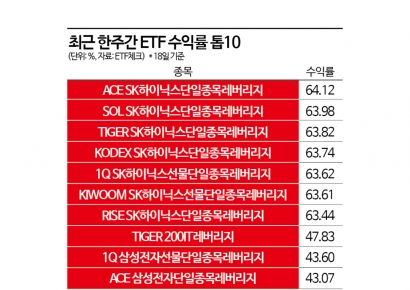 The Single Stock Behind ETFs That Soared Over 60% in Just One Week
- "Everyone Gets Rich But Me?" Impatient Retail Investors Flock In... Foreign Media Issues Warning
- "Anyone Without Hynix Now Is Guilty"... Chey Tae-won Memes Erupt as KOSPI Hits 9000
- 1-Year Return Surpasses 1,100%: Domestic Equity Funds Boom as 'Forced Long-Term Investment' Pays Off
- "Performance Bonus Shortfall" Spurs Samsung Employees' 'Black Attire' Protest... Labor-Labor Conflict Continues
Many different companies are involved in the production and distribution of products bearing the Starbucks logo. Does this mean the taste of Starbucks coffee is always the same? Industry experts say, "It is difficult for RTD or capsule coffee, which must undergo various manufacturing processes, to taste the same as freshly brewed coffee from a store." Ultimately, the final judgment is up to the consumers.
© The Asia Business Daily(www.asiae.co.kr). All rights reserved.